
Rouen is often overlooked by tourists who only catch a glimpse of it from a bus while travelling to other destinations in Normandy. However, this historic city deserves more than just a passing glance. Known as the historic capital of Normandy, Rouen is famous for its medieval architecture, its association with Joan of Arc, and the grand Gothic cathedral, famously depicted in Claude Monet’s paintings. Situated along the River Seine, about 1.5 hours northwest of Paris, Rouen boasts stunning Gothic cathedrals, beautifully preserved Renaissance architecture, and world-class museums. With its rich history and heritage, there is plenty to explore in this beautiful city. Consider taking a self-guided walking tour to fully appreciate all that Rouen has to offer.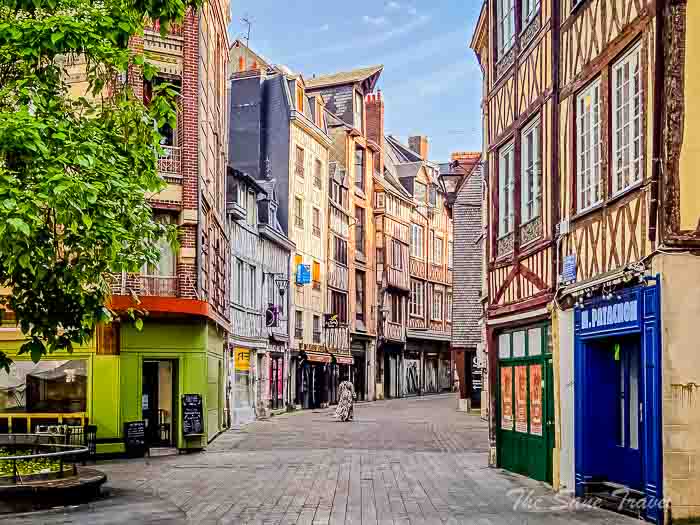
Right Bank Station
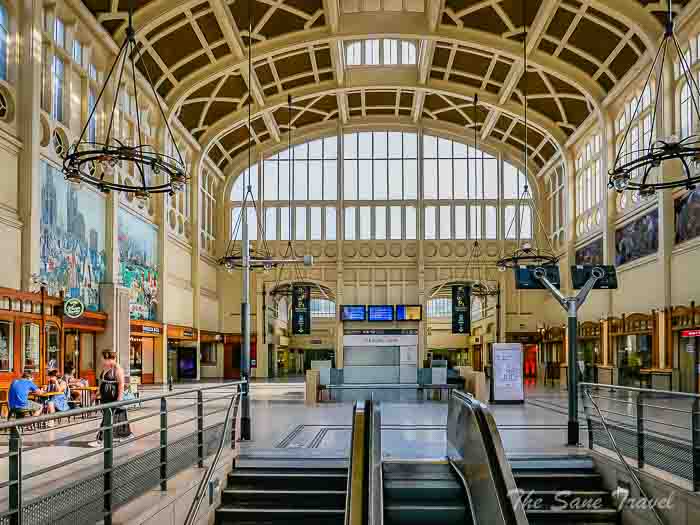
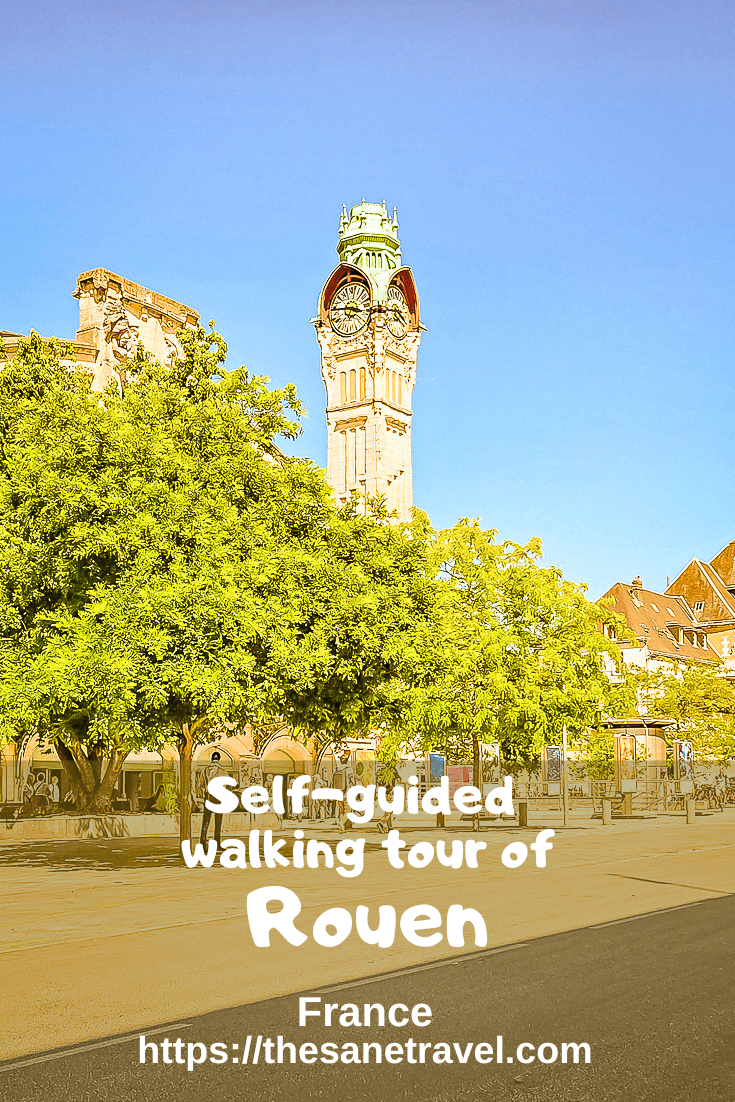
Upon arriving in Rouen by train, visitors can admire the distinctive architecture of the Right Bank Station, often described as an example of Late Art Nouveau. Construction of the station took 15 years, from 1913 to 1928, resulting in a hybrid style that combines 19th-century Classicism, Art Nouveau, and Art Deco. Noteworthy architectural features include the concrete vaults of the Salle des pas perdus and the station’s rear section. The station’s façade is elegantly adorned with plant motifs and statues of workers, while its rounded shape reflects the influence of Art Nouveau. Easily recognisable from afar thanks to its 34-metre-tall copper clock tower, it serves as a popular gateway to the city for visitors. 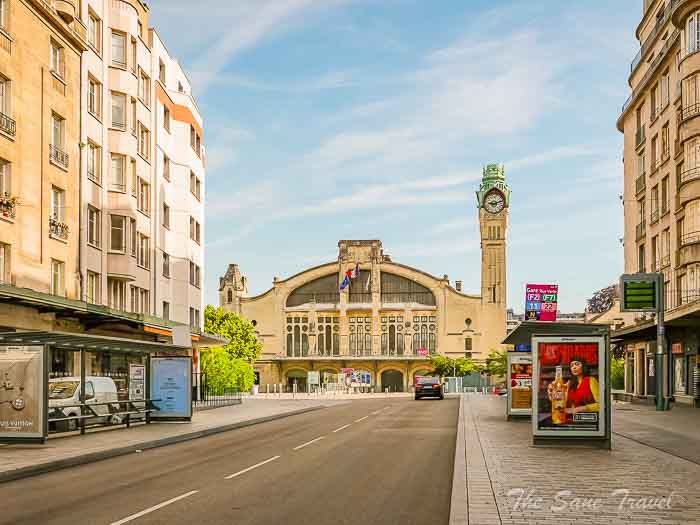
 Make sure to check out the brightly colored restrooms at the station when you are there.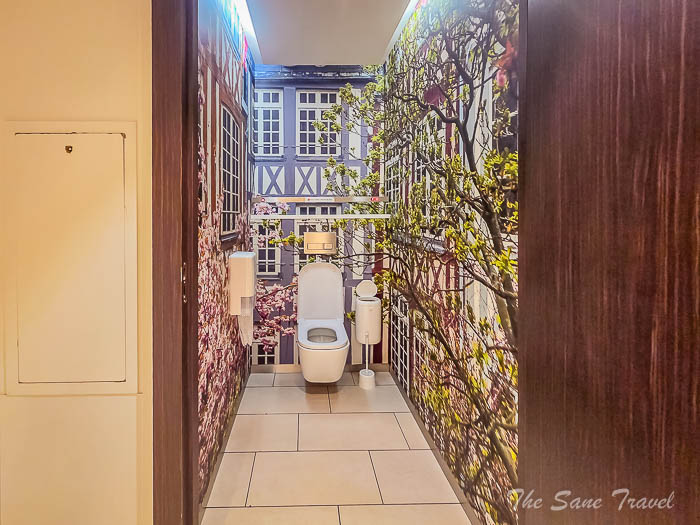
Saint-Romain Church
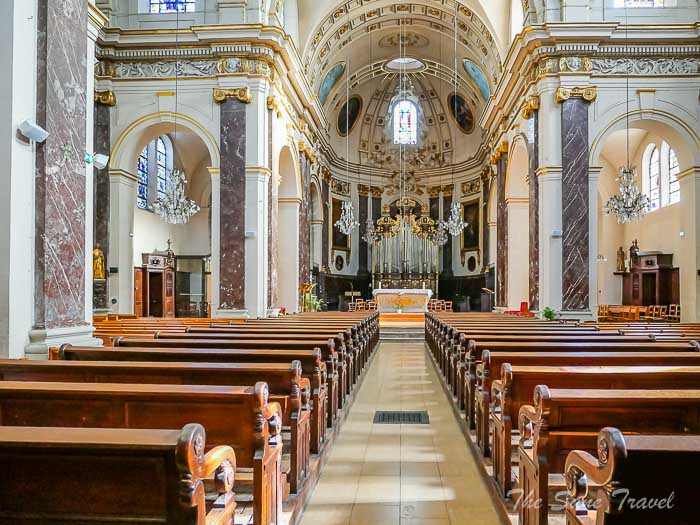
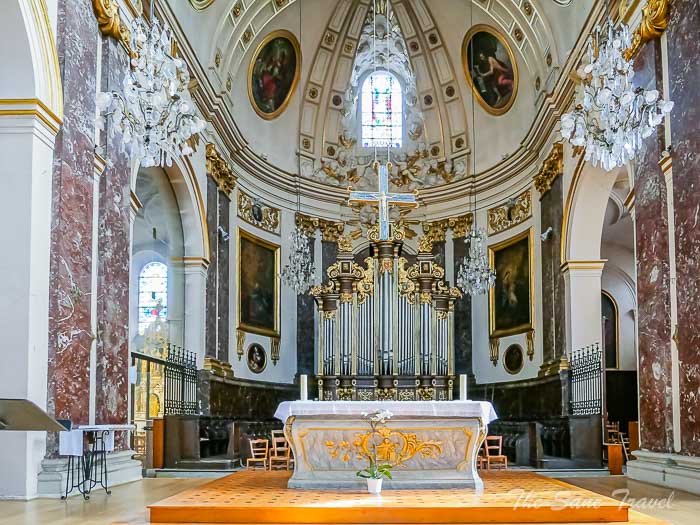
Just a short walk from the train station stands Saint-Romain Church, built in 1729 and dedicated to Saint Romain. Although its exterior may seem unremarkable, the interior is considered one of the most beautiful in Rouen. The church combines the harmonious contrasts of form and colour characteristic of the Louis XIV style with around twenty Renaissance stained-glass windows. Along with Saint Joan of Arc Church and Saint Patrick’s Church, it is known in Rouen for its extensive collection of stained-glass windows.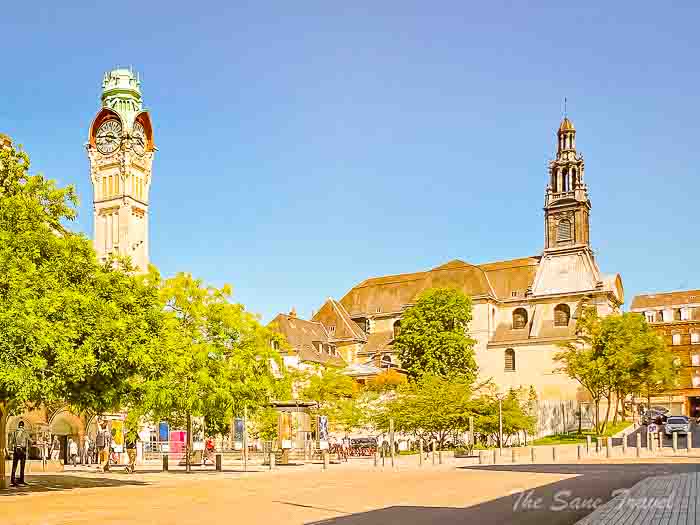
Rouen Keep
The Rouen Keep, also known as the “Joan of Arc Tower”, is the only surviving part of Philip Augustus’ castle in Normandy. This castle, constructed in 1204, was where Joan of Arc was threatened with torture by her judges, although she was ultimately imprisoned in a now-vanished tower. Standing at approximately 35 metres tall, the tower is a rare example of a round keep in Normandy. By the 16th century, the castle had fallen into disrepair and was eventually demolished in 1590, with only the keep, some towers, and fragments of walls remaining. In the 19th century, the Joan of Arc Tower was restored.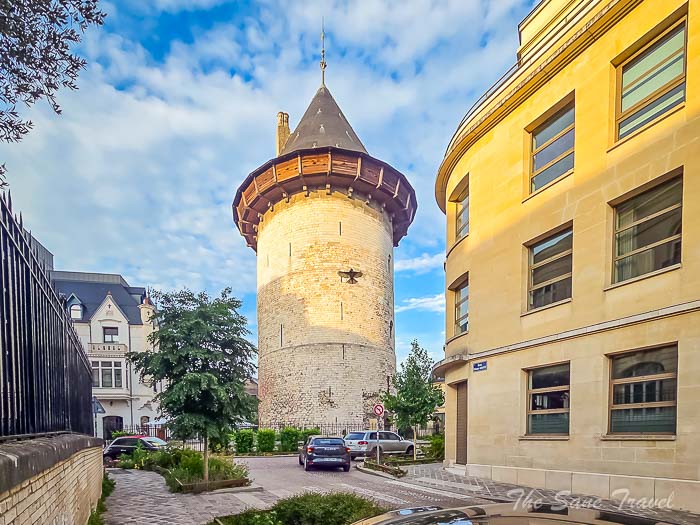
Address: Rue du Donjon
Musée des Beaux-Arts de Rouen
The Musée des Beaux-Arts de Rouen was established in 1801, and the current building, which also houses the library, was completed in 1888. A century later, the museum underwent a major renovation. Today, it is home to an impressive collection of art from various schools, spanning the 15th century to the present day. Notable artists such as Perugino, Gerard David, Clouet, and Veronese are represented, along with a remarkable selection of 17th-century paintings by Rubens, Caravaggio, Velázquez, Vouet, La Hyre, Poussin, and Le Sueur.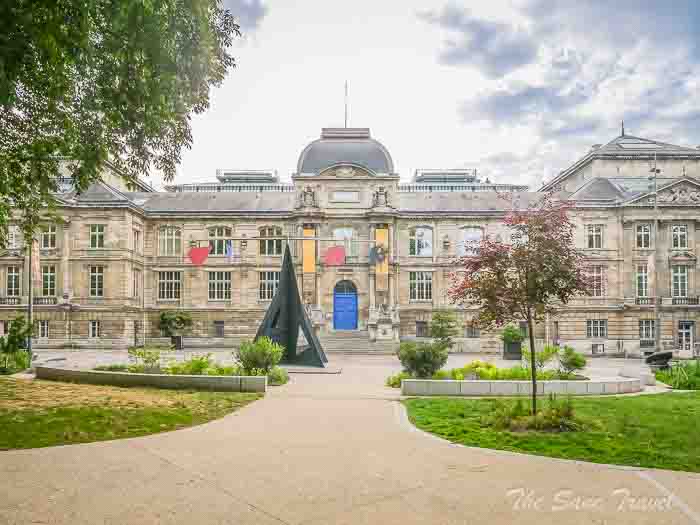
Palais de Justice
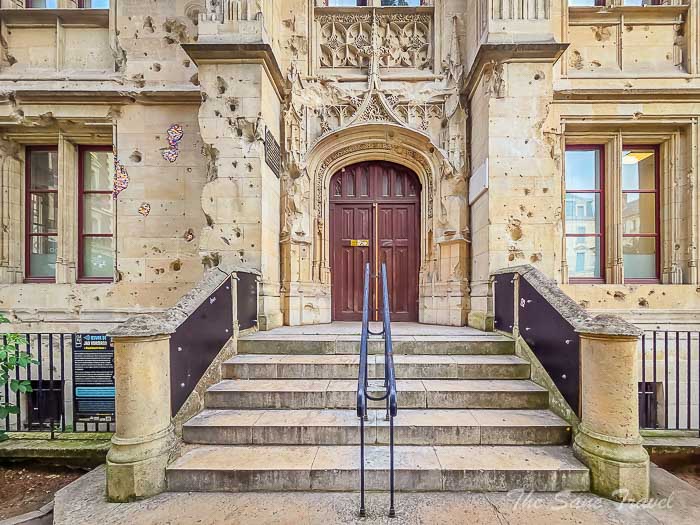
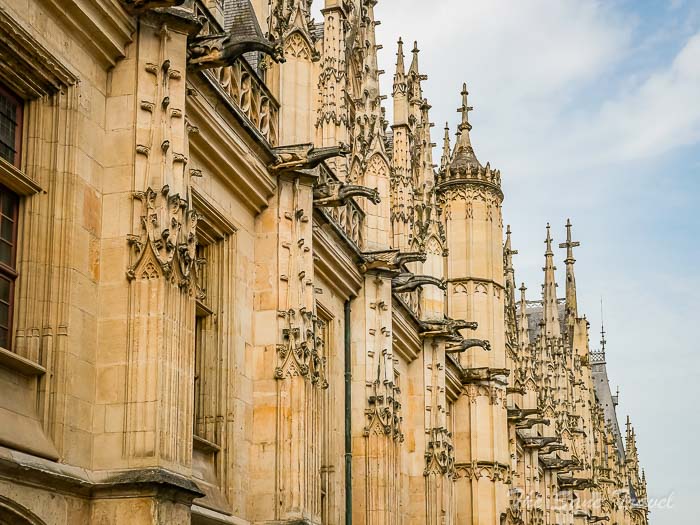
The impressive Palais de Justice de Rouen was constructed between 1499 and 1507 to house the Exchequer of Normandy. It later served as the Parliament of Normandy before becoming a courthouse following the French Revolution. A visit to the Palais de Justice in Rouen, a significant example of late-medieval secular Gothic architecture in France, primarily offers an opportunity to appreciate its exterior design. The courtyard also contains the underground Maison Sublime.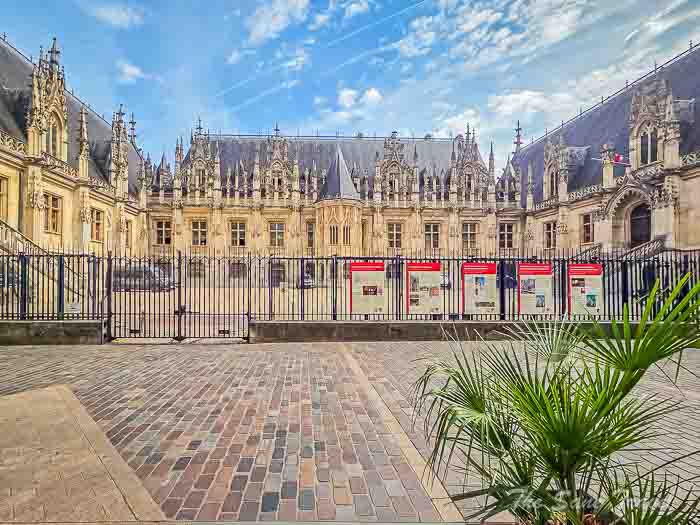
Half-timbered houses
While strolling through the historic district, one cannot help but notice numerous Fachwerk houses, also known as half-timbered houses. Rouen boasts approximately 2,000 of these structures, making it the largest concentration in France, with more than 200 dating back to the Middle Ages. This is much more than in Rennes, for example. Constructed with oak frames filled with clay or brick, these buildings have helped preserve the city’s medieval appearance for centuries. Look out for them as you explore the old town.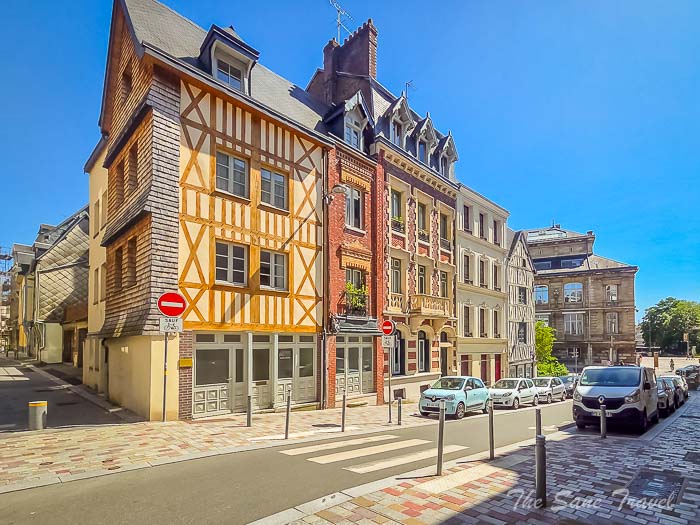
Bourgtheroulde Mansion
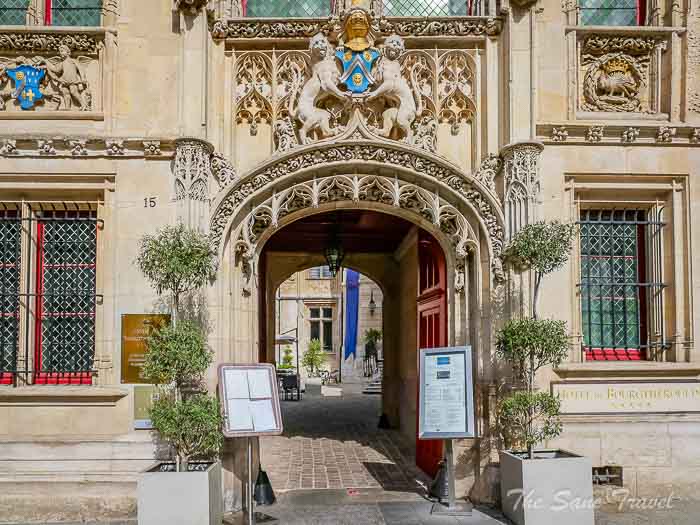
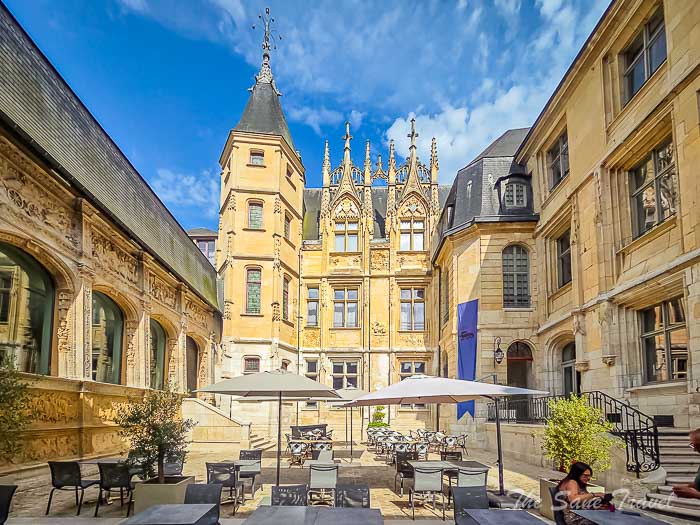
The Bourgtheroulde Mansion is considered one of the finest examples of 16th-century Flamboyant Gothic architecture. It has been transformed into the Hôtel de Bourgtheroulde, a luxury hotel situated on the Place de la Pucelle near the Place du Vieux-Marché. Originally designed as a residence for Guillaume II le Roux, Lord of Bourgtheroulde and a member of the Exchequer of Normandy, the mansion reflects his esteemed status. While predominantly Flamboyant Gothic in style, it also displays some Renaissance influences visible from the courtyard.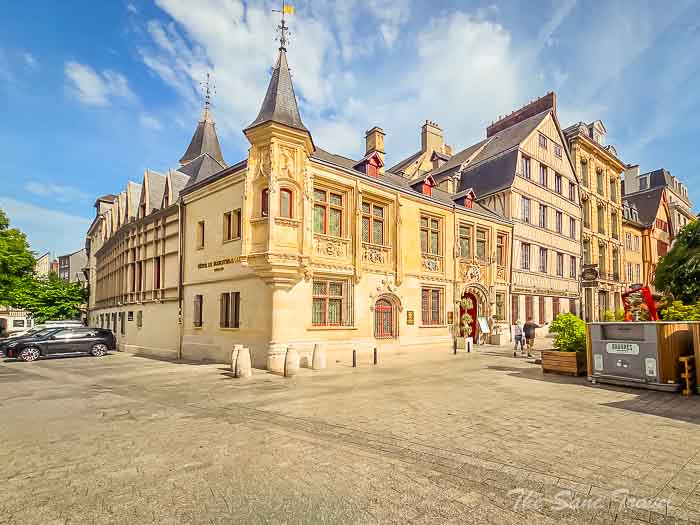
Church of St Joan of Arc
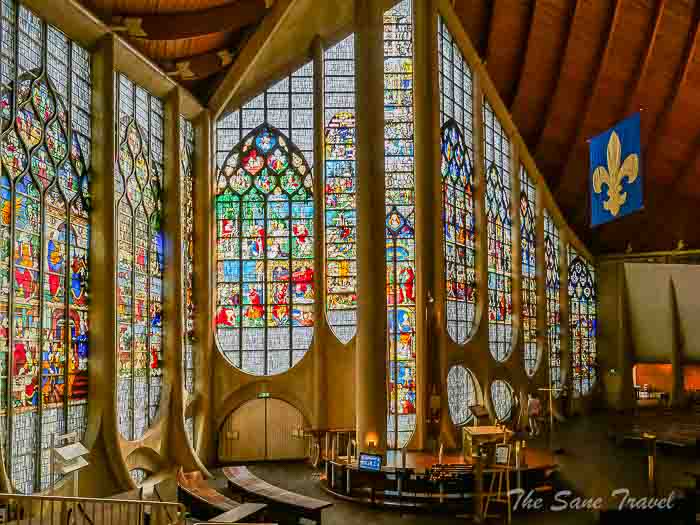
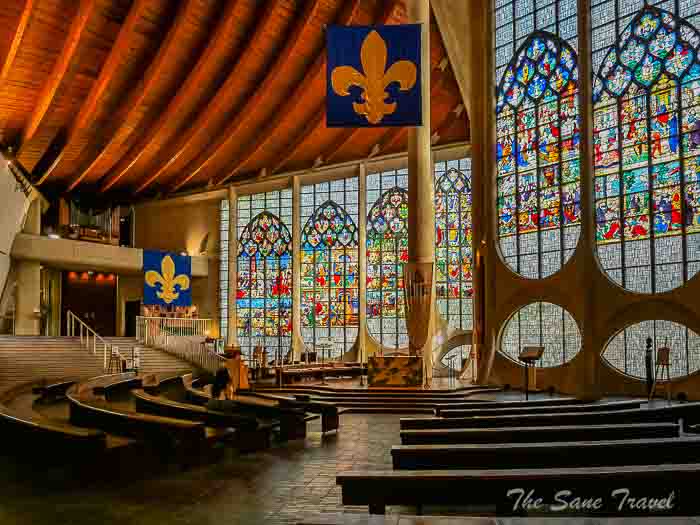
In Rouen, reminders of historical events can be found throughout the city, including at the Place du Vieux-Marché, where Joan of Arc was executed in 1431. A cross is placed next to the Church of Saint Joan of Arc to indicate the location of her execution. Built in 1979, the church functions both as a religious building dedicated to Saint Joan of Arc and as a civic memorial honouring the French heroine. Architect Louis Arretche designed the church in the shape of an upturned boat, drawing inspiration from traditional Norman churches. The exterior of the church, with its slate or copper roof, resembles the sea. Inside, visitors can admire Renaissance stained-glass windows depicting biblical scenes and legends associated with saints such as Peter and Anthony of Padua.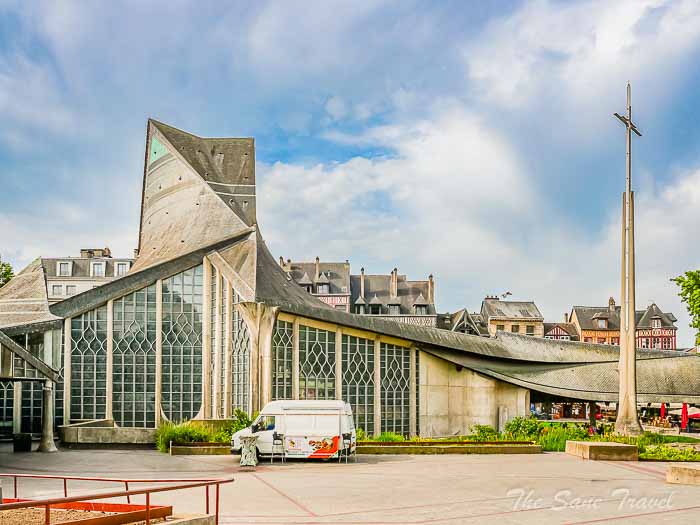
Place du Vieux-Marché
During the Hundred Years’ War, Joan of Arc was burned at the stake in the Place du Vieux-Marché on 30 May 1431. At the time, the square looked very different from the way it appears today. It was smaller and contained the Church of Saint-Sauveur, the Church of Saint-Michel, and a large market hall. This area was also used for public executions. Today, a large cross marks the spot where the stake once stood. The remains of the former Church of Saint-Sauveur have been unearthed in the square.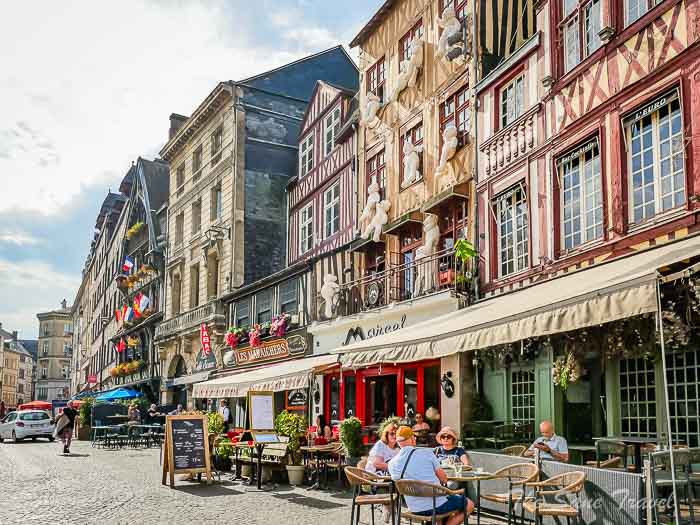
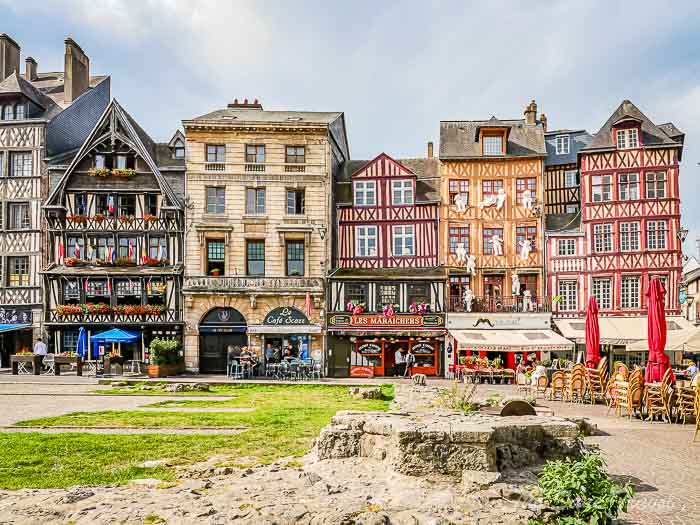
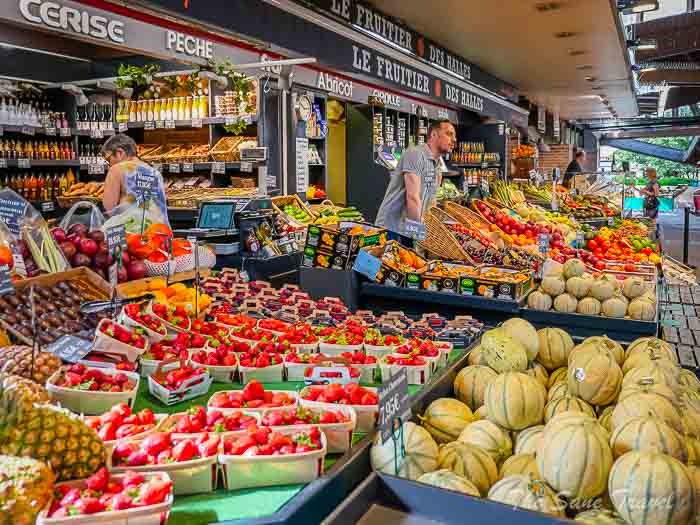
Visitors can explore the historic covered market, where a variety of goods, including fruit, vegetables, flowers, cheese, fish, shellfish, and roasted meat, are sold.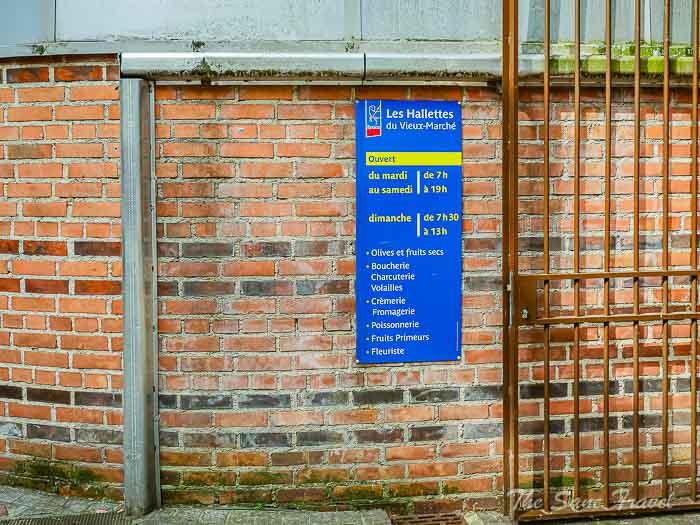

Gros-Horloge
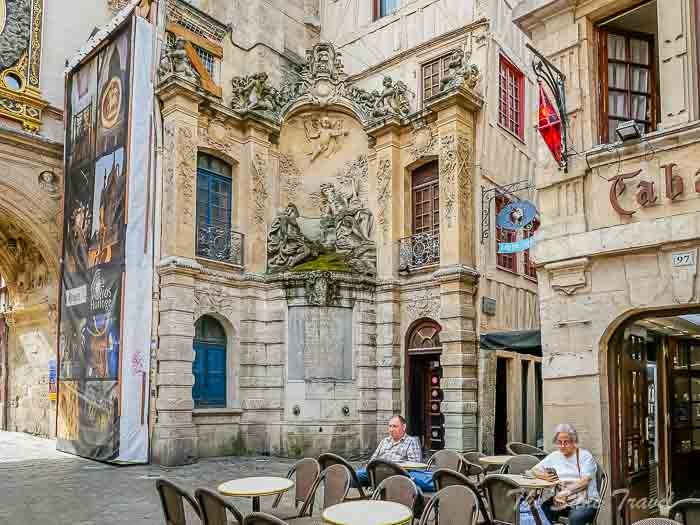
The Gros-Horloge, also known as the Great Clock, is a historic landmark in Rouen, featuring a medieval astronomical clock set within a Renaissance arch spanning the street of the same name. The Gothic belfry, constructed in the late 14th century, once housed the town’s bells. The clock mechanism dates back to 1389, making it one of Europe’s oldest functioning clocks. The Renaissance dial features a single hand for indicating the time, alongside a globe displaying the phases of the moon. Mythological figures adorn the weekday indicator, such as Saturn for Saturday and Apollo for Sunday. The current arch supporting the clock was built between 1527 and 1529, replacing an earlier fortified gate. Visitors can explore the interior, including the dials, ancient mechanism, and governor’s apartments, and enjoy a panoramic view of Rouen.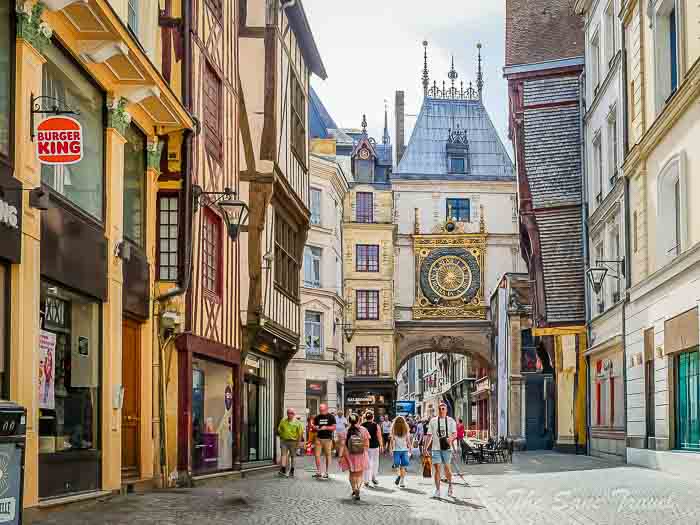
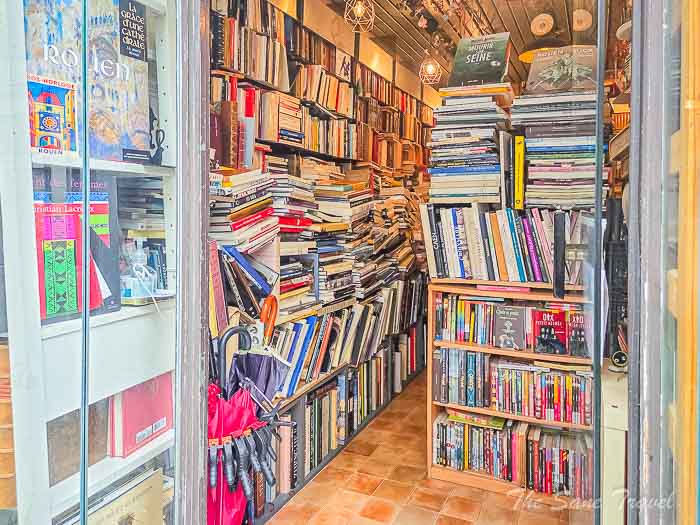
Bookshop A Juste Titre in Rouen
If, like me, you enjoy visiting unique bookshops and historic libraries, consider stopping by A Juste Titre in Rouen. Situated in the heart of the city at 5 rue Thouret, this second-hand bookshop has become a must-visit for those interested in old and rare books. This iconic establishment exudes nostalgia and quiet sophistication, with shelves lined with valuable works of world literature.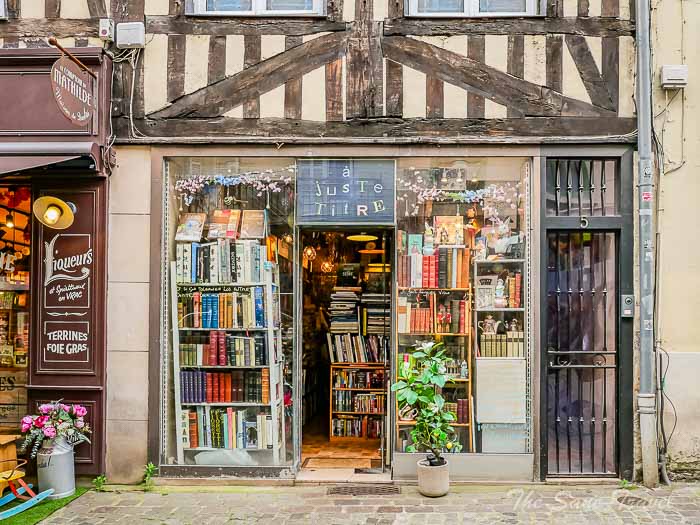
Rouen Cathedral
Rouen Cathedral is one of France's most remarkable Gothic cathedrals, famous for the series of paintings by Claude Monet dedicated to it. Located in the heart of the historic city, it showcases the evolution of Gothic art, with construction beginning in the 12th century on the site of a 4th-century basilica and an 11th-century Romanesque complex. 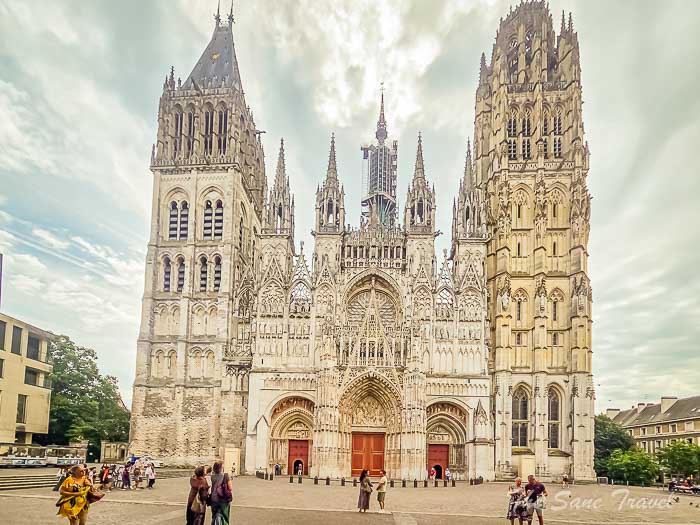
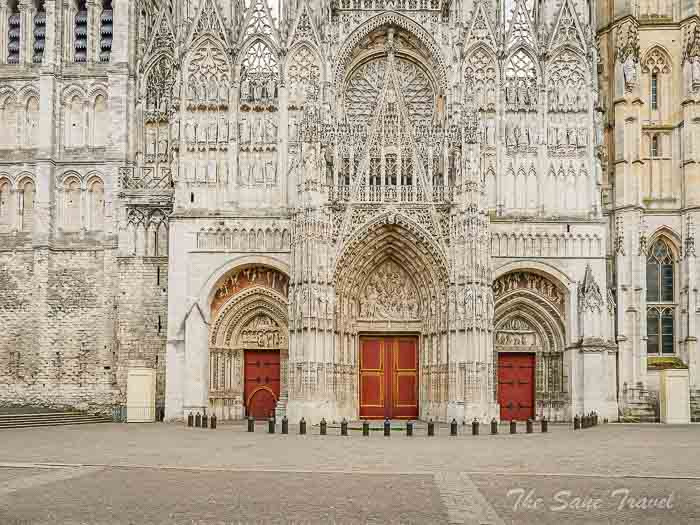
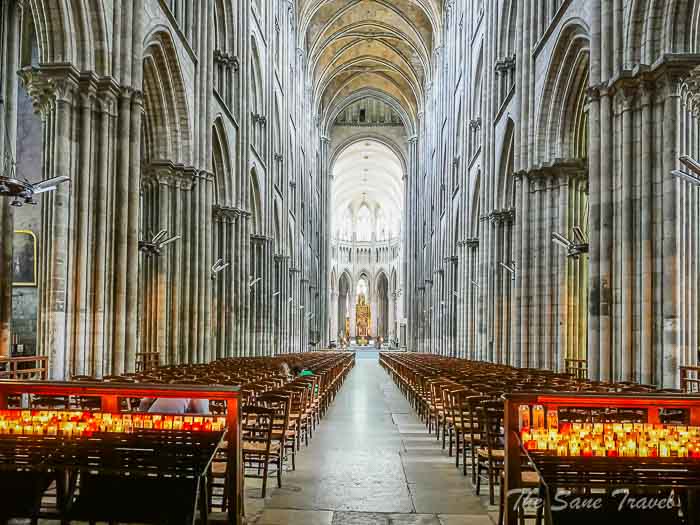
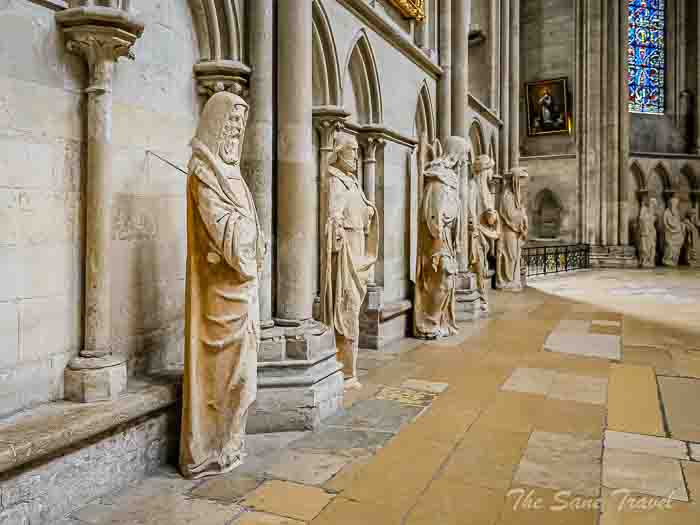 Standing at 151 metres, it is the tallest church in France and the final resting place of notable figures such as Henry the Young King, as well as the embalmed heart of Richard the Lionheart.
 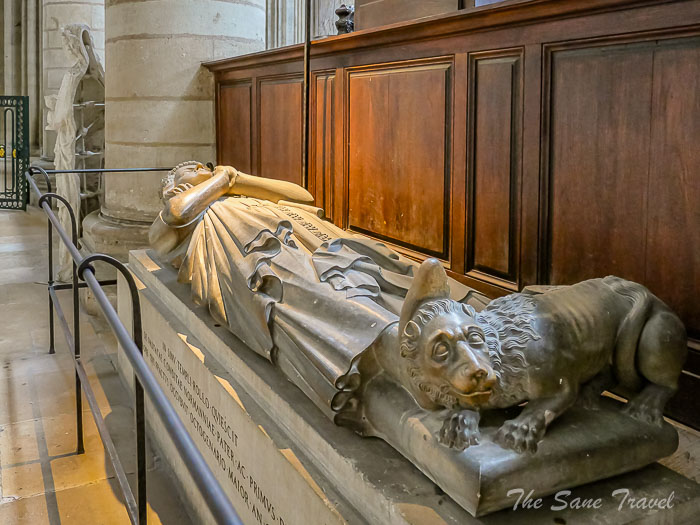 The cathedral features a late Gothic staircase built in 1480 by Guillaume Pontis, providing access to the cathedral library.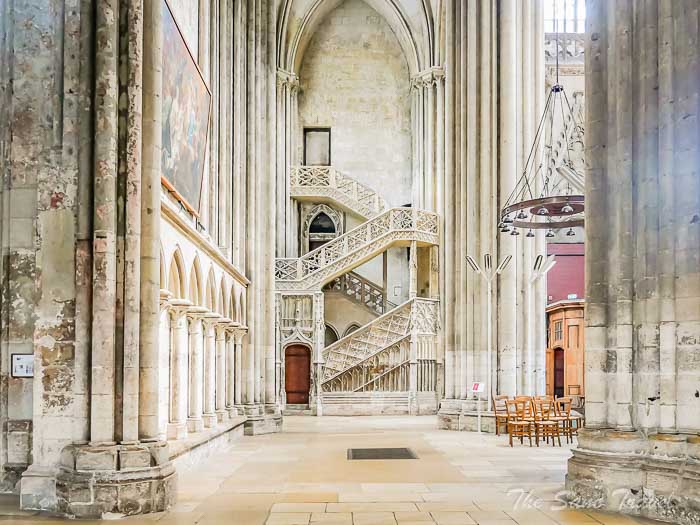
Every summer, the cathedral hosts a stunning sound-and-light show. Unfortunately, it was not taking place during my visit. Make sure you check if it is available on the dates of your visit.
St Maclou Church and Barthélémy Square
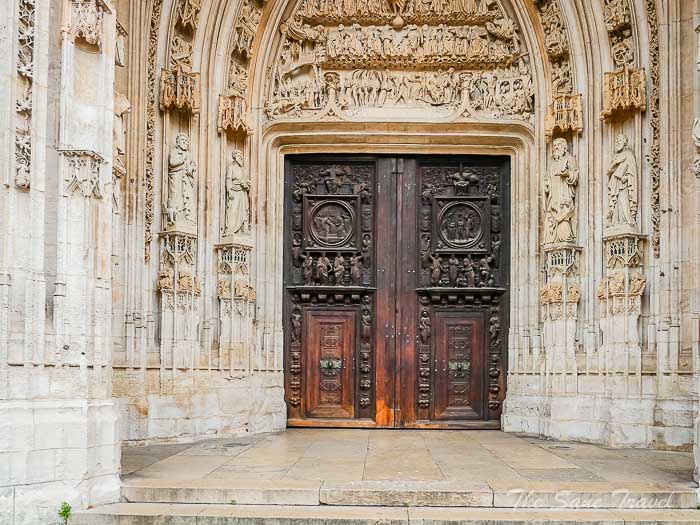
St Maclou Church, named after the Welsh monk St Malo, who founded the commune of Saint-Malo in the 6th century, is a masterpiece of the Flamboyant Gothic style. Built between 1437 and 1517, the church features five porch entrances with stunning Renaissance doors.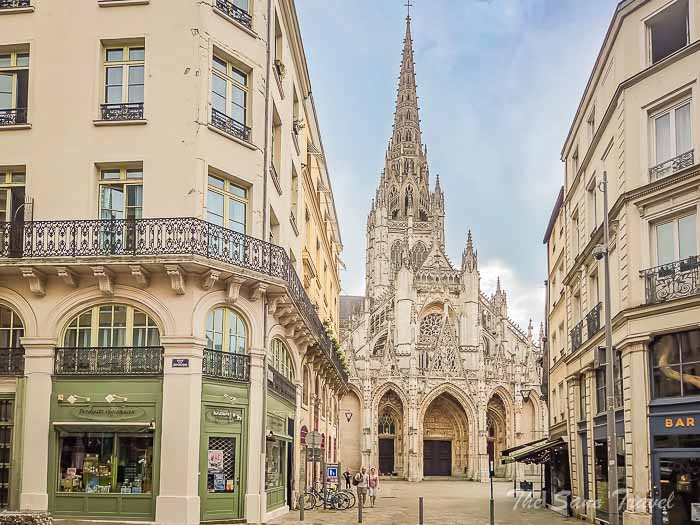
The surrounding square, Place Barthélémy, is named after the architect who built the church spire in the 19th century.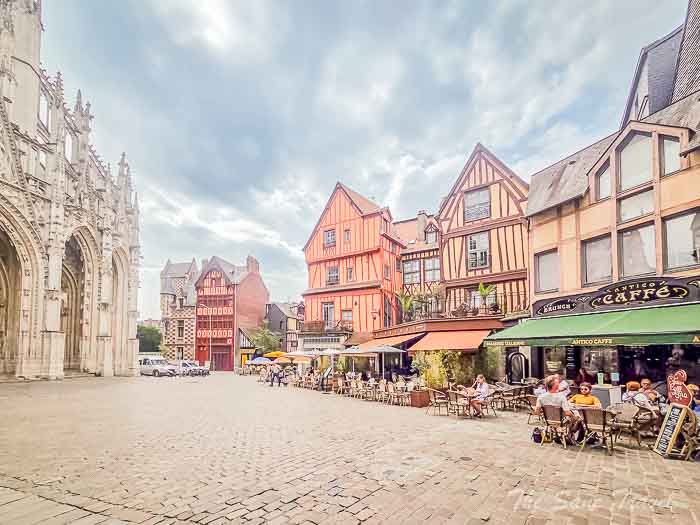
Several houses were demolished to make room for the spire, allowing inner courtyards to open onto the square. One notable nearby building is the timber-framed house at 4 Place Barthélémy, dating back to the 17th century and once home to a prominent cobbler. Its unique sloping façade, visible from Rue Martainville, was revealed by the demolition of neighbouring houses and is now a symbol of Rouen’s antique district.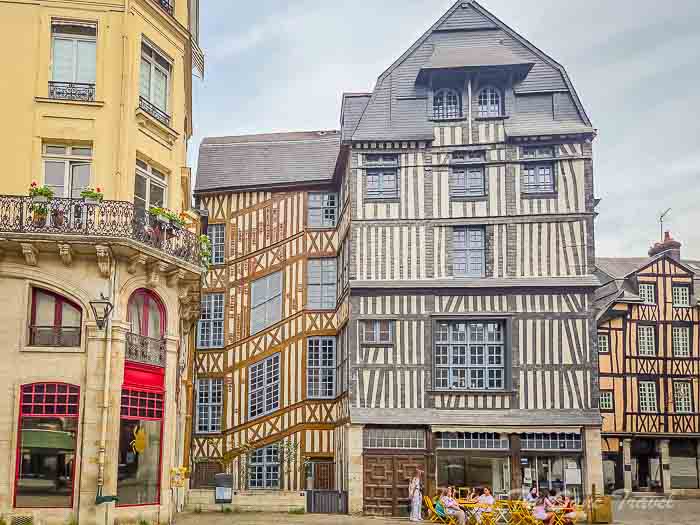
Aître Saint-Maclou
The Aître Saint-Maclou is a unique place that is well worth exploring.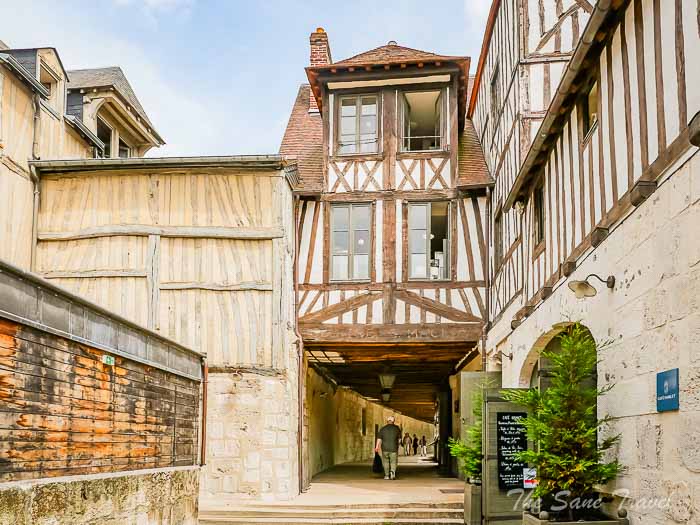
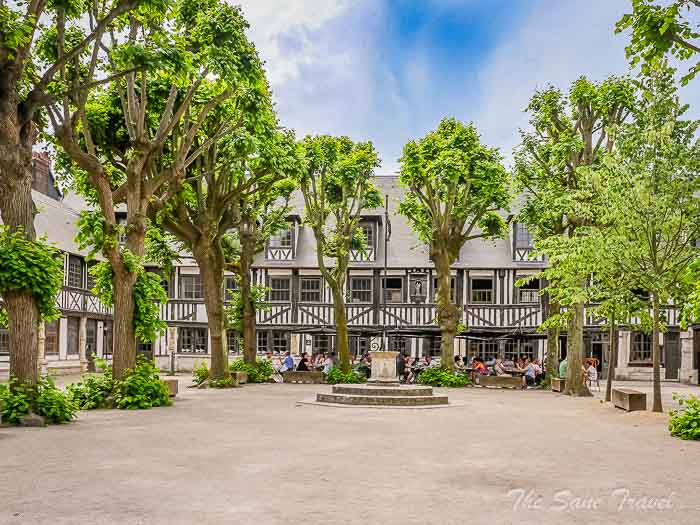
Situated within earshot of the bells of Saint-Maclou Church, this former 15th-century ossuary is known for its mysterious atmosphere, cultural events, and vibrant public spaces. The term “aître” comes from the Latin word atrium, which originally referred to the courtyard of a medieval church and later came to denote a cemetery. Despite its historical roots, the Aître Saint-Maclou is a lively place where history, craftsmanship, and joy come together harmoniously. The restaurant, tours, workshops, and performances held at the site all help to breathe new life into this remarkable place.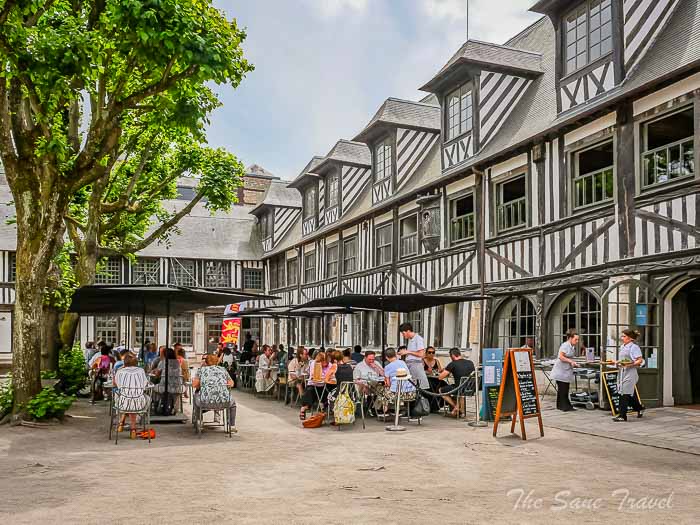
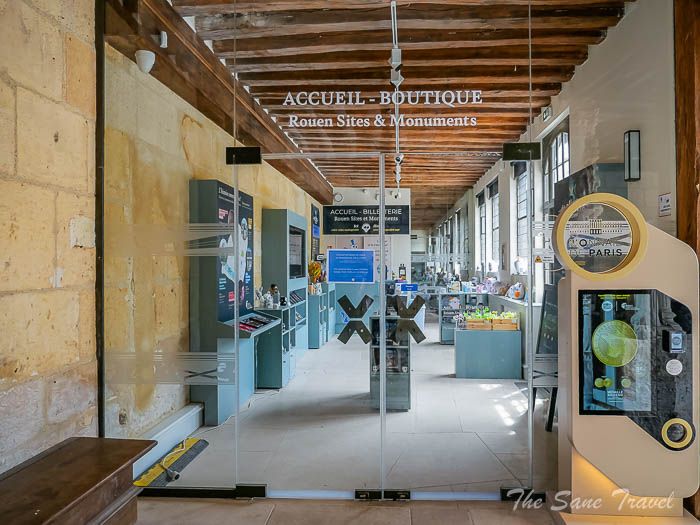
Damiette Street
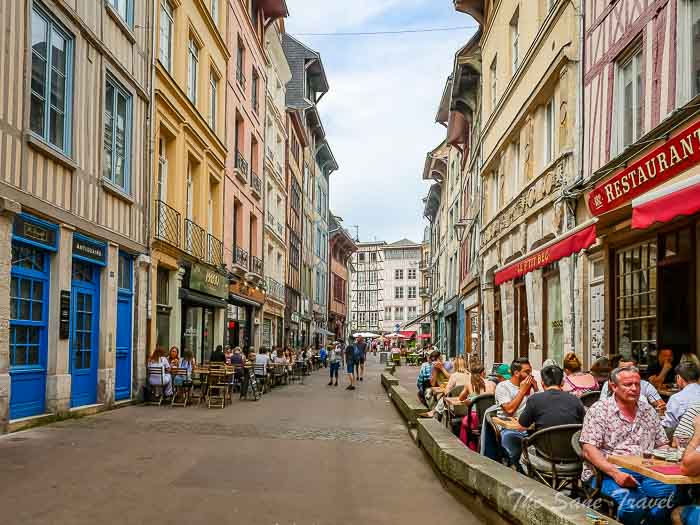
Damiette Street is well known for its cobbled paving, antique shops, and traditional half-timbered houses.
Ensure that you also take a stroll on nearby Eau de Robec Street.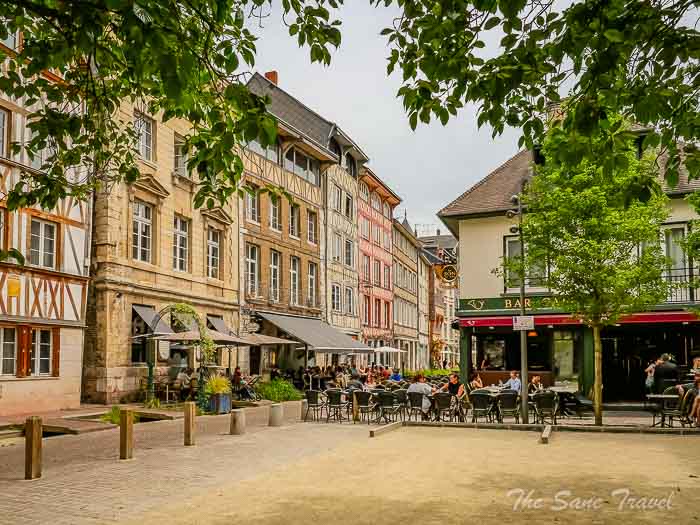
Abbey Church of Saint-Ouen
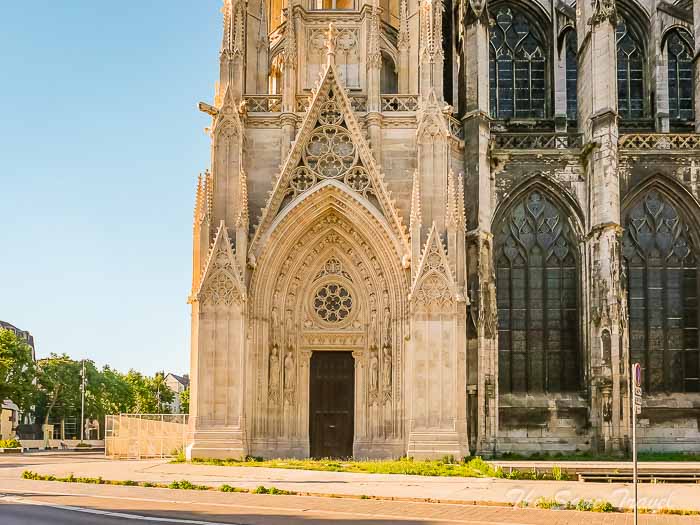
Although not as prominent as Rouen Cathedral, the Abbey Church of Saint-Ouen is still admired for its beauty and its outstanding Rayonnant Gothic architecture. The church features elaborate Gothic decoration, towering spires, vibrant stained-glass windows, and a grand organ, making it one of the most remarkable churches in Rouen. Originally built as a Benedictine abbey in the 1300s, the church is known for its historical significance, including the 1431 condemnation of Joan of Arc. Visitors can admire the church’s exterior, which extends for 137 metres and is adorned with pointed spires and intricate Gothic carvings. The central tower, shaped like an octagon and topped with four turrets, stands 115 metres tall and is often referred to as the “ducal crown of Normandy”. The entrance to the church is guarded by sculptures of religious figures, adding to its architectural charm.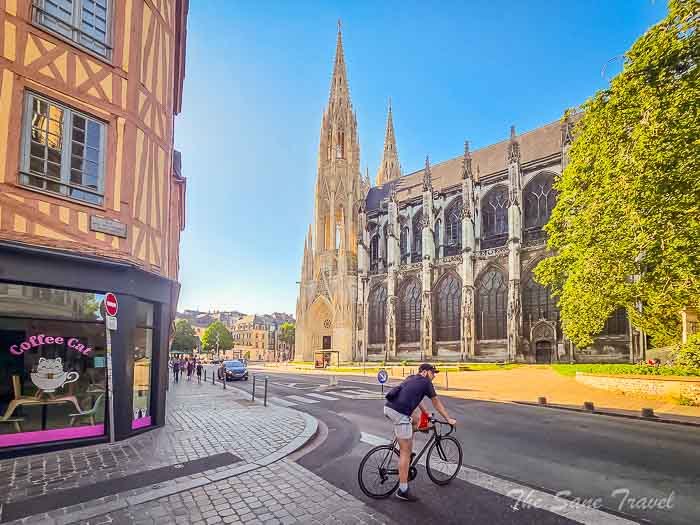
.JPG)
Rouen City Hall
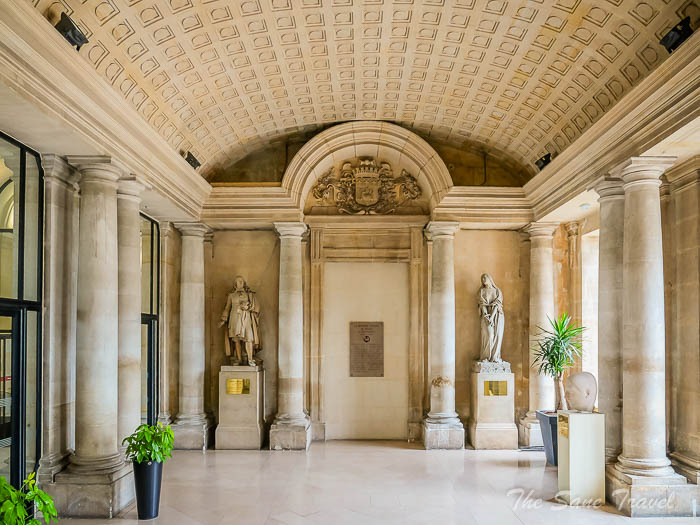
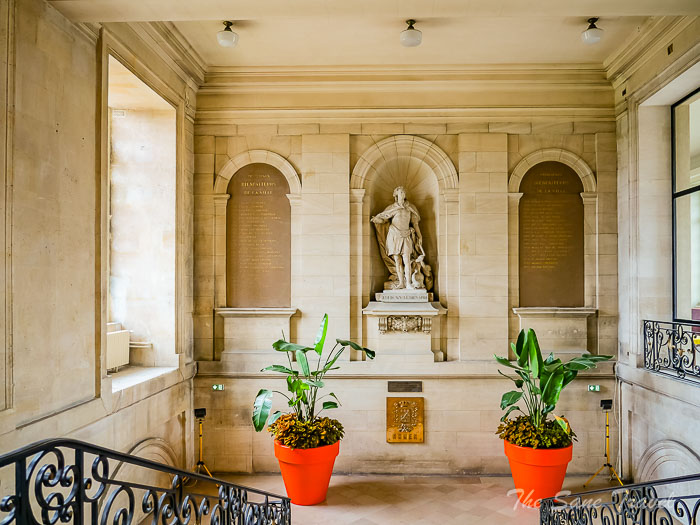
Rouen City Hall, also known as the Hôtel de Ville de Rouen, is a historic building located in the city centre. Originally constructed as the large dormitory wing of Saint-Ouen Abbey, it became the city administration building in 1800 after the abbey was abandoned and secularised during the French Revolution. Over the years, the building has undergone several renovations and alterations. Visitors are greeted by a spacious marble vestibule and hallway adorned with classical columns and impressive stone sculptures. The city hall hosts a variety of community events that highlight the cultural heritage and traditions of the area.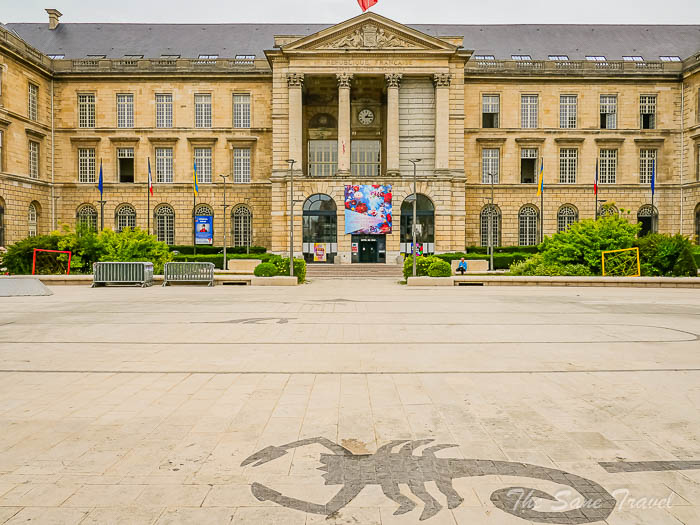
Statue of Napoleon
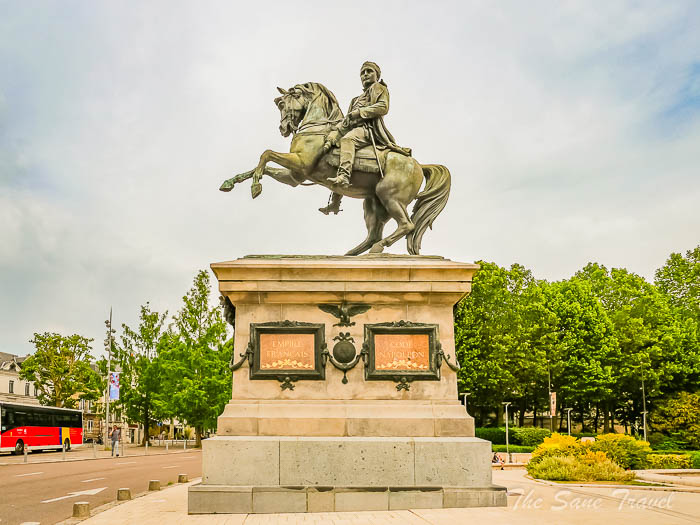
The bronze equestrian statue of Napoleon in Rouen is located at the Place du Général-de-Gaulle, facing the city hall. Created by Vital-Gabriel Dubray and unveiled in 1865, it stands 4.40 metres tall. The statue depicts Napoleon in military attire on horseback. Made from bronze obtained from cannons seized at the Battle of Austerlitz, the sculpture has remained intact over the years, even surviving the metal shortages of the Second World War. In 2020, the statue underwent significant restoration after a crack was discovered in the horse’s right hoof, helping to preserve it for future generations.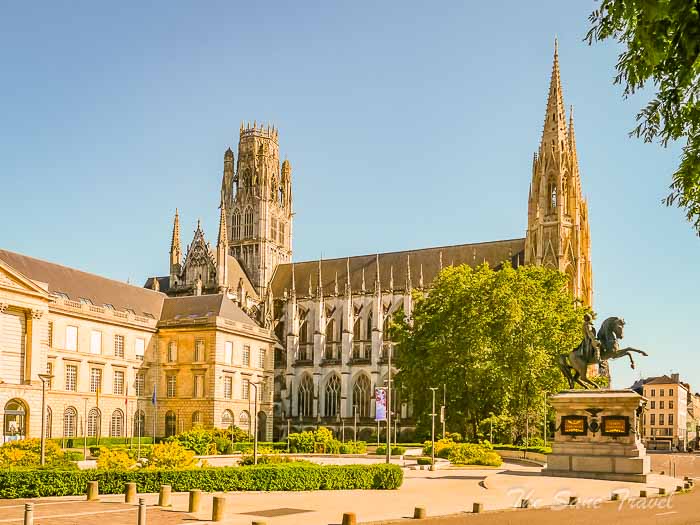
I have included a map for this walking tour. Due to the limitations of Google Maps, it only displays the main stops of the route and should be used as a general reference.
The walking tour has concluded and you have the option to return to the train station or, if you have additional time, explore the Côte Sainte-Catherine lookout.
Côte Sainte-Catherine
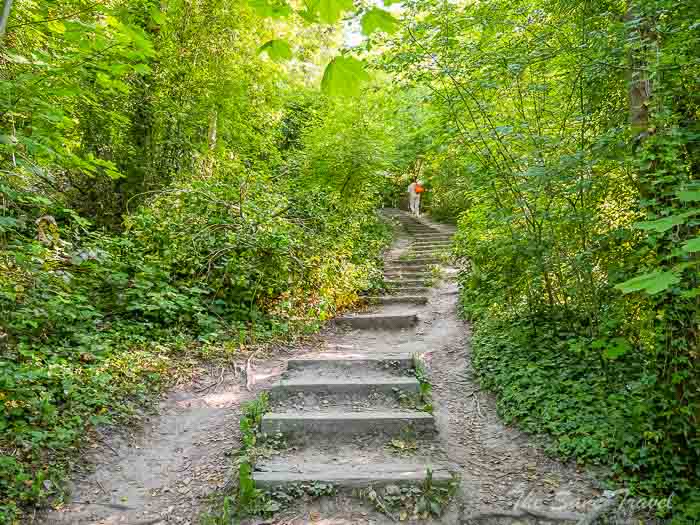
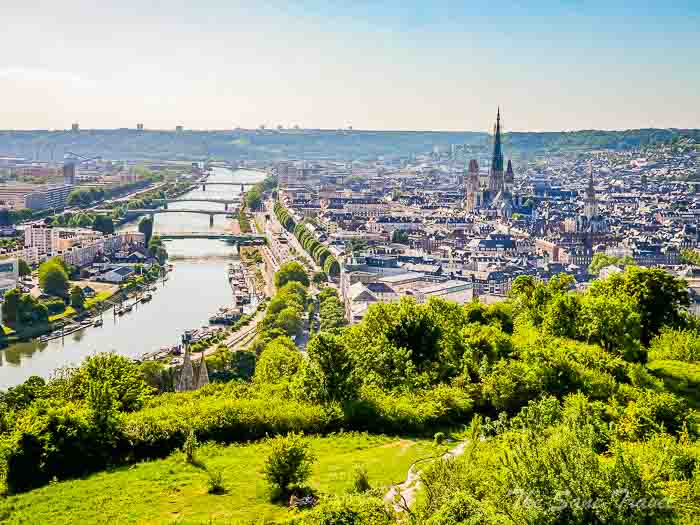
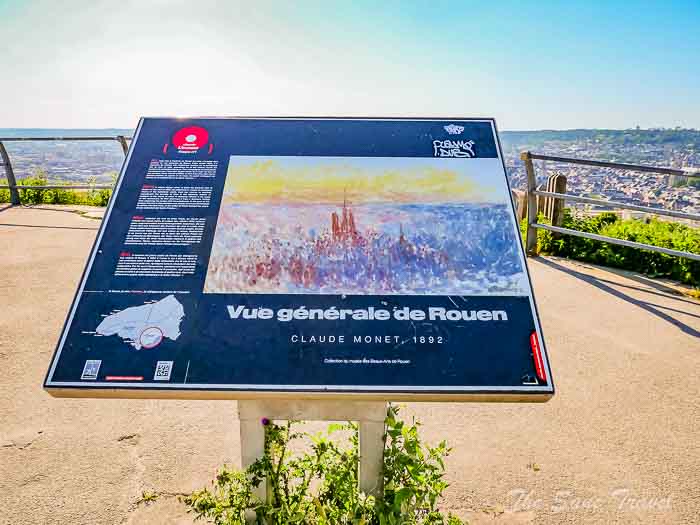
The Côte Sainte-Catherine is a hill that rises 140 metres above Rouen, offering a well-known panoramic view of the city, the River Seine, and its bridges. It is situated approximately 2 kilometres from the historic city centre and offers views of Rouen Cathedral, Saint-Ouen Abbey, and the meandering bends of the Seine. Claude Monet painted his Vue générale de Rouen from this vantage point in 1892. Accessible by a short drive from the city centre, the viewpoint has a small car park at the summit. Alternatively, visitors can reach it on foot by climbing a steep path of over 500 steps from the foot of the hill.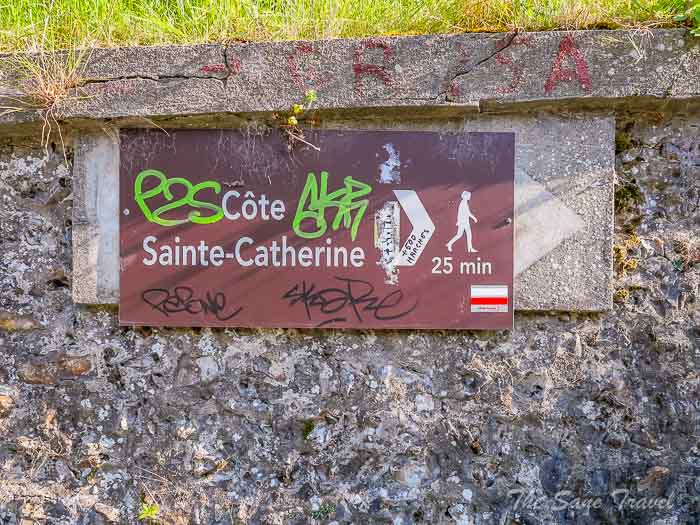
Practical tip
A cost-effective and conveniently located luggage storage service is available near the train station. Visitors should allow extra time for collection and be aware of possible closures during short breaks.
Address: 22 Boulevard de la Marne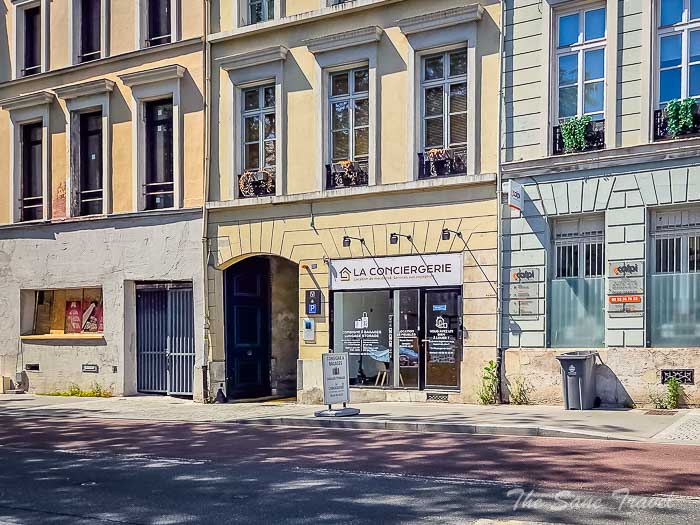
Like it? Pin it!
What did you think? Have you visited Rouen? I would love to hear from you, so please add your comment below.
Author: Anita Sane

About the author
Anita is a part-time traveller, passionate photographer and a retired career woman from Latvia, travelling mostly solo for more than 15 years. She is a skilled travel planner who plans and executes her travels by herself. Anita wants to show you how to travel the world and open your mind to new experiences. Follow her on Facebook, Instagram, Pinterest, Twitter and Bloglovin.
Report
My comments