
Nestled on the southwest coast of Slovenia, Piran is a charming town with a rich history. Over the centuries, it has been shaped by various rulers, including the Illyrians, Romans, Venetians, Austrians, and Italians. The Venetian Republic, in particular, left a lasting mark on Piran’s architecture and culture. Salt production was once a key industry, bringing prosperity and establishing the town as an important trading hub with Venice. After changing hands several times, Piran eventually became part of the Socialist Republic of Slovenia in 1954. Today, Piran is a vibrant town with a mix of Italian and Slovenian influences, offering stunning sea views and well-preserved architecture. The town experiences warm summers, mild winters, and moderate rainfall. With its serene atmosphere and striking buildings, Piran is a must-visit destination and deserves to be included in your Slovenia travel itinerary.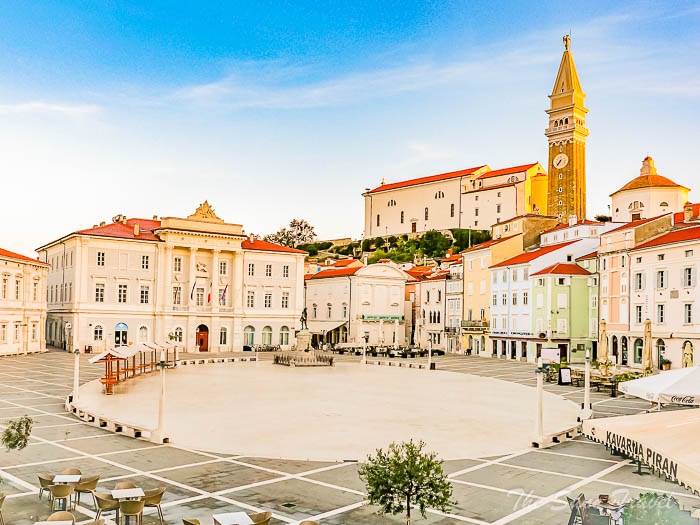
Tartini Square: the heart of Piran
Your exploration of Piran should begin in Tartini Square, the town’s vibrant heart. Here, you will find a 19th-century bronze statue of violinist and composer Giuseppe Tartini, a native of Piran born in 1692. The house where he was born still stands proudly in the square and is aptly named Tartini House.
Giuseppe Tartini: Piran’s musical Maestro
Giuseppe Tartini was born into a wealthy family and enjoyed a happy childhood. He developed a love for music and the violin at an early age, despite his father’s initial disapproval. Tartini spent his most productive years in Padua, Italy, where he was the head of the cathedral’s music chapel. In 1728, he founded the famous violin school La Scuola delle Nazioni (School of the Nations), which attracted students from all over Europe and earned him the title Il Maestro delle Nazioni (Master of the Nations). He passed away in Padua in 1770, leaving behind a substantial body of work, including approximately 130 concertos and over 170 sonatas, primarily for the violin. Nowadays, the annual Tartini Festival in Piran offers exceptional concerts in a picturesque setting, ensuring a truly memorable experience for audiences.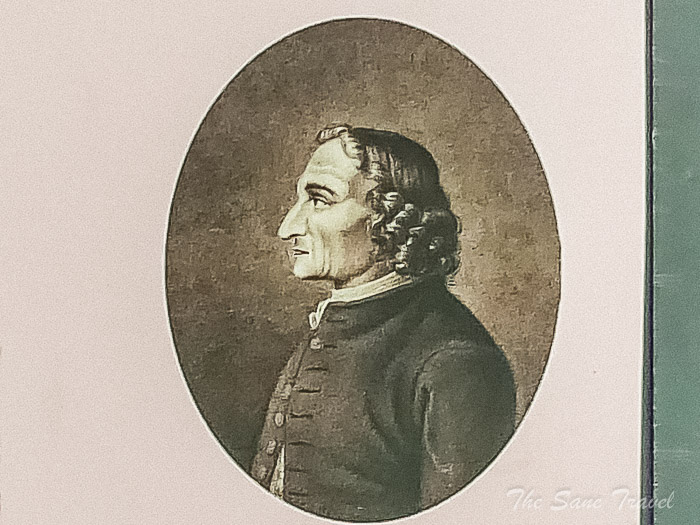
Let’s now embark on a journey through Tartini Square, admiring some of its most iconic buildings.
Tartini House
One of Piran’s oldest dwellings, Tartini House offers a fascinating glimpse into the life of the renowned violinist and composer Giuseppe Tartini. Its architecture and interior reflect changes spanning from the late 17th to the late 19th centuries. Stepping inside is like travelling back in time, with Tartini’s personal belongings, paintings from his era, and the violin he once owned surrounding you. Today, the house also serves as the headquarters of the Italian community, hosting cultural projects, a gallery, and a museum.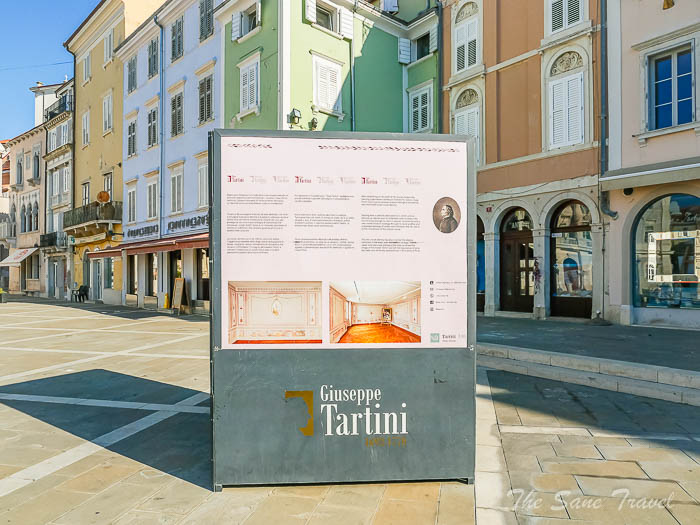
Venetian House
The Venetian House, also known as Benečanka, is undoubtedly one of Piran’s most recognisable landmarks, standing proudly on the corner of Tartini Square. Constructed in the 15th century, it is considered the square’s oldest preserved building and showcases the characteristic Venetian-Gothic style. Do not miss the distinctive corner balcony and the stone plaque featuring a lion with the inscription Lassa pur dir (Let them talk). These days, the house is home to a boutique hotel, with two intimate suites, a sparkling-wine gallery, and spaces for gatherings.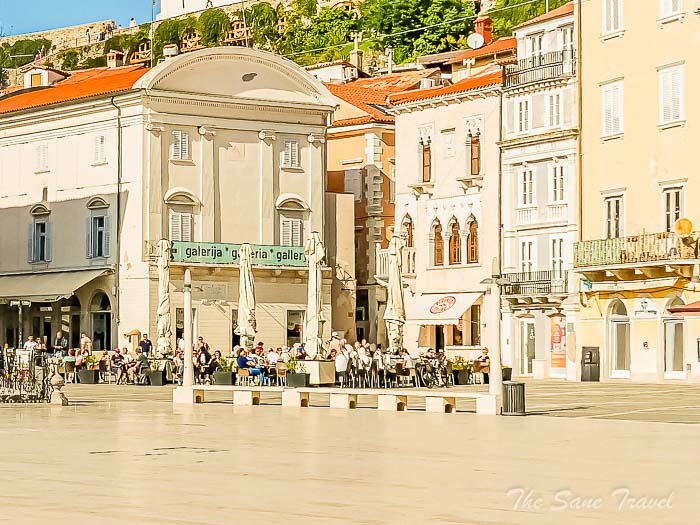
Piran Town Hall
Dominating the northern side of Tartini Square is the grand Town Hall, the seat of local government and administration. The original town hall, built in the 13th century in a Romanesque-Gothic style, stood outside the former city walls. Although the original structure was demolished in 1877, it was rebuilt just two years later. A key architectural feature of the new building is the Venetian lion with an open book, embedded in the upper façade, symbolising peace and recalling the era of the Venetian Republic. Inside the atrium, you can see the original coats of arms from the old town hall, as well as a polygonal stone displaying historical measurement standards once used to ensure fair trade.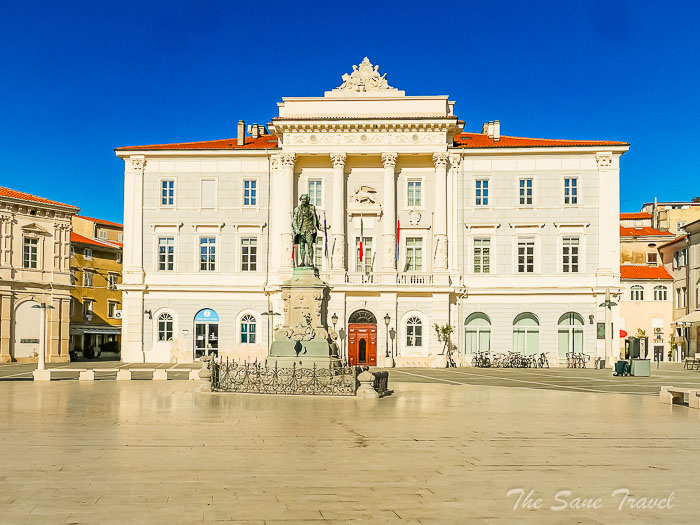
Piran Courthouse
Adjacent to the Town Hall stands the Courthouse, built at the end of the 19th century on the site of the former loggia, which once served as a vital public meeting space. Designed in the Neo-Renaissance style typical of the Habsburg period, the building’s symmetrical stone façade, with its classical elements and arched windows at ground level, conveys a strong sense of state authority. Still functioning as a courthouse today, it maintains a link between historical legal traditions and modern civic life.
Next Stop: The Church of Our Lady of the Snow
After soaking up the atmosphere of Tartini Square, head to the Church of Our Lady of the Snow.
Church of Our Lady of the Snow
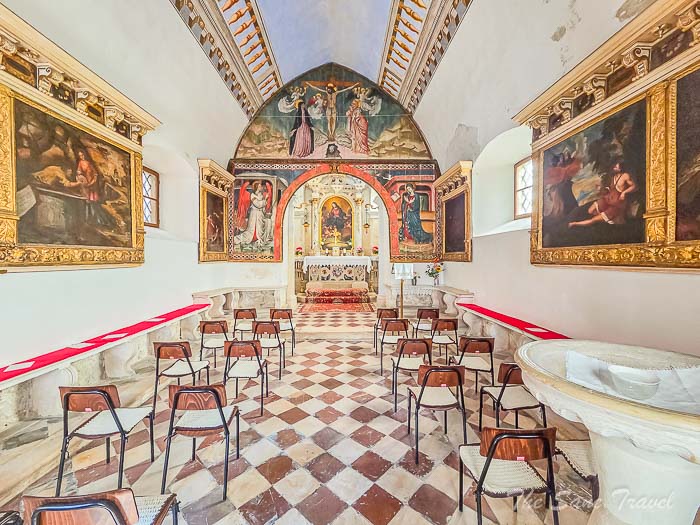
Let’s explore the Church of Our Lady of the Snow, also known as the Church of della Madonna della Neve. This gem, dating back to 1404, is the only Gothic building in the area. Remarkably, its original layout remains intact, displaying a fascinating blend of Gothic and Baroque styles. Inside, you will find a collection of paintings, including a striking altar from 1669 and an altarpiece by Ambrogio Bon. The walls are adorned with oil paintings from 1666 by Battista Marangon da Montona, alongside other works depicting biblical scenes. Some paintings were sadly stolen in the 1990s and have been temporarily substituted. During restoration work in 1969, valuable Gothic tempera paintings were uncovered, including a Crucifixion and an Annunciation – unique examples in Slovenian Istria.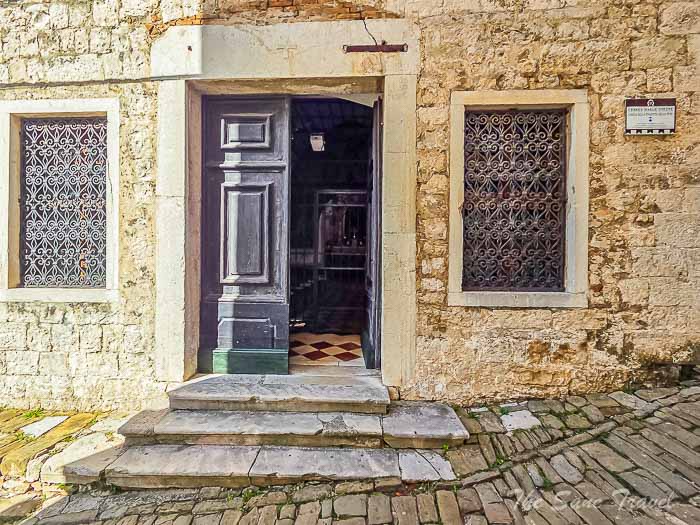
Next up: the Minorite Convent.
Minorite Convent
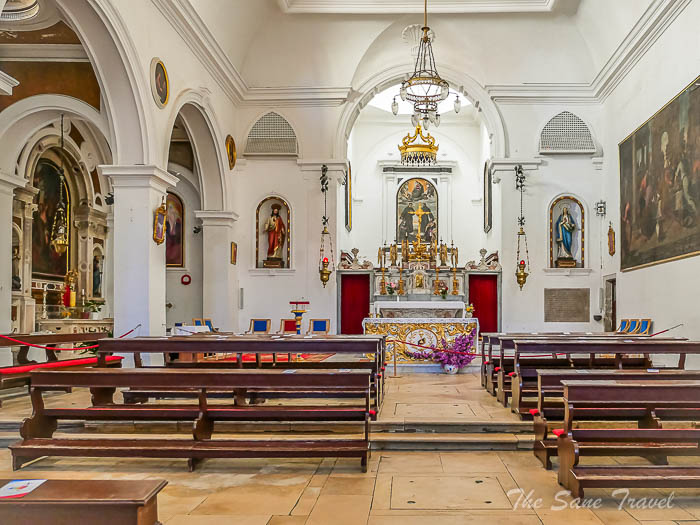
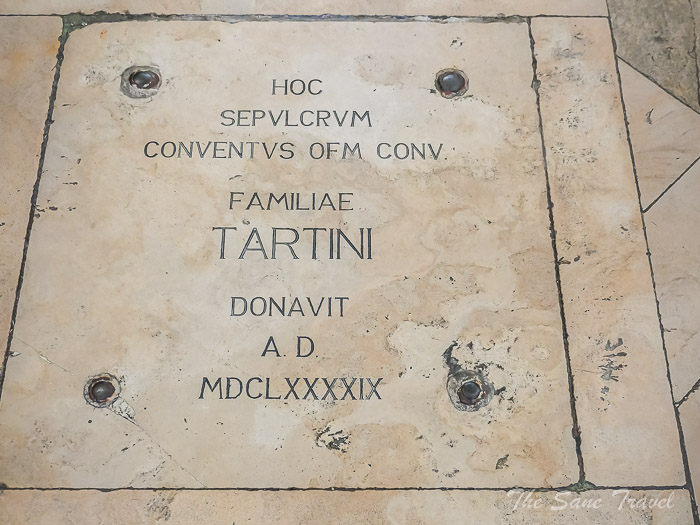
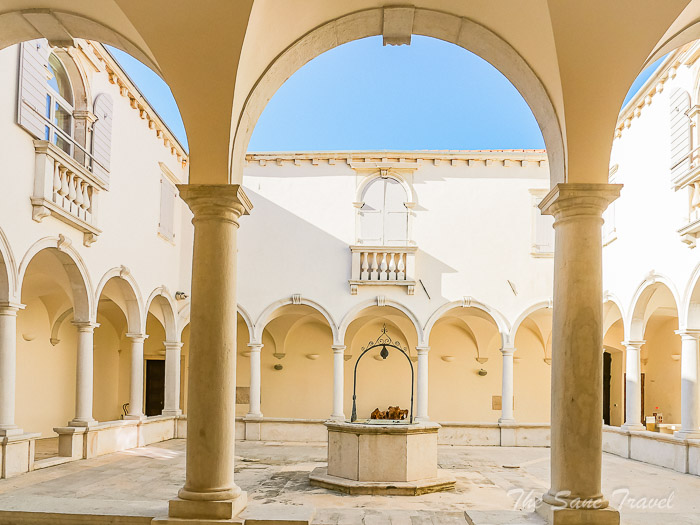
Delve into Piran’s history at the Minorite Convent, home to the 14th-century Church of St Francis of Assisi. Take your time to enjoy the tranquillity of the courtyard, and if you visit in summer, you might be fortunate enough to hear the monks chanting. Founded by the Minorite friars in the 14th century, the monastery is a significant historical and cultural landmark. Admire the harmonious blend of Gothic and Renaissance architectural styles, explore the beautiful cloister and a library of rare manuscripts, and marvel at the ornately decorated church. Over the centuries, it has played a vital role in Piran’s religious and social life. Nowadays, the monastery’s cloister hosts numerous cultural events, including the Tartini Festival and the Piran Music Evenings.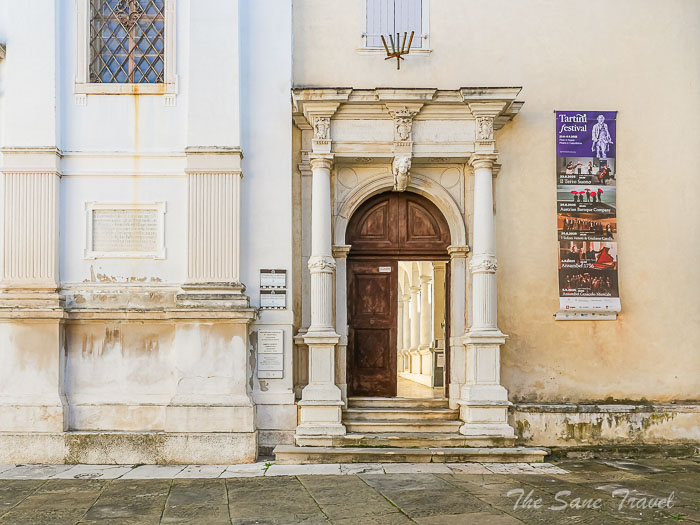
Old Town
Continue your journey with a stroll to the quaint town centre. Only residents are permitted to drive here, and the minimal traffic creates a serene atmosphere among rows of white houses with red-tiled roofs. Marvel at the preserved architecture and narrow medieval streets of this historic village, where Venetian-style façades evoke the feeling of an Italian coastal town. You will notice that many of the homes in Piran are painted in a variety of pastel colours.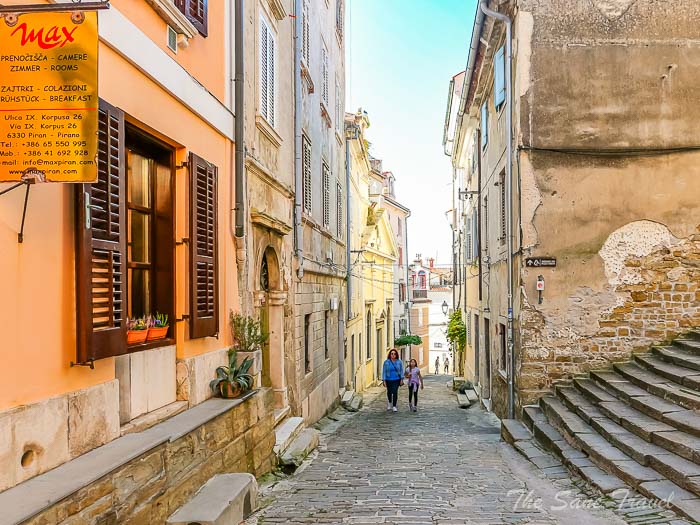
Your next destination: the Church of St George.
Church of St George
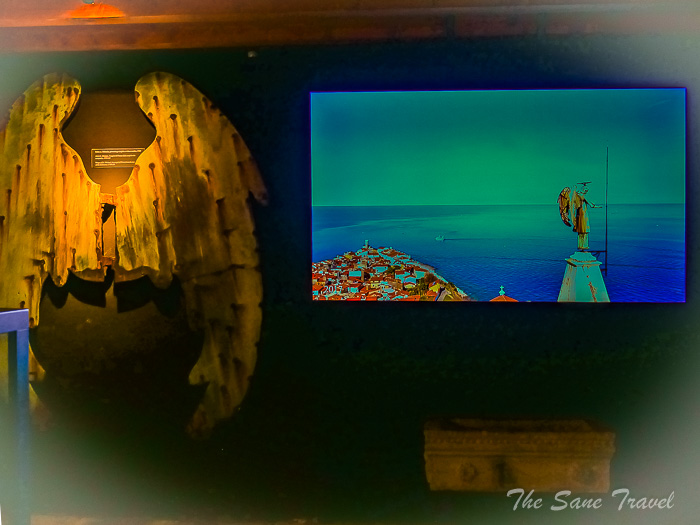
Historical records suggest that Piran once boasted a monastery, over 23 churches, and countless chapels. While time has altered these structures, leaving only ten churches preserved today, this remains a remarkable number given the town’s small size and dense population. Dominating the skyline from its hilltop perch within the town walls is the magnificent Baroque Church of St George. This church is Piran’s largest and most famous, featuring a bell tower and a baptistery. Named after the town’s patron saint, St George, it commemorates his legendary rescue of Piran from a ferocious storm. Visitors enter through the church museum, which showcases sacral artefacts, archaeological remains, and an exhibition detailing the restoration of the church tower.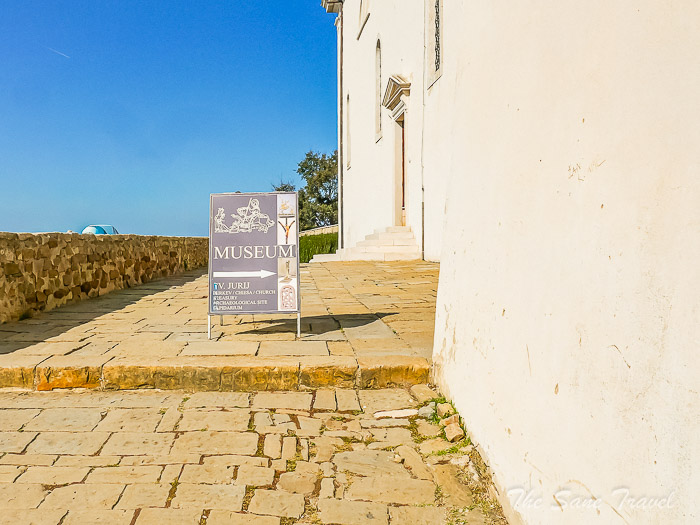
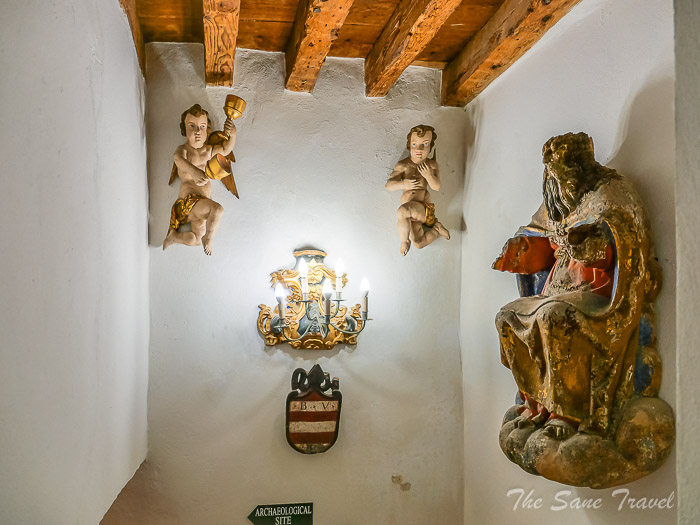
Step inside to marvel at the organ, two statues of St George, a richly decorated wooden coffered ceiling, and exquisite wall paintings of the Venetian school. Do not miss Slovenia’s largest oil painting on canvas, The Martyrdom of St George by Giovanni Pagliarini (1841), or the country’s oldest wooden model of a church from the late 16th century. The church also preserves the oldest permanent collection of baptismal records in Slovenia, dating back to the early 16th century.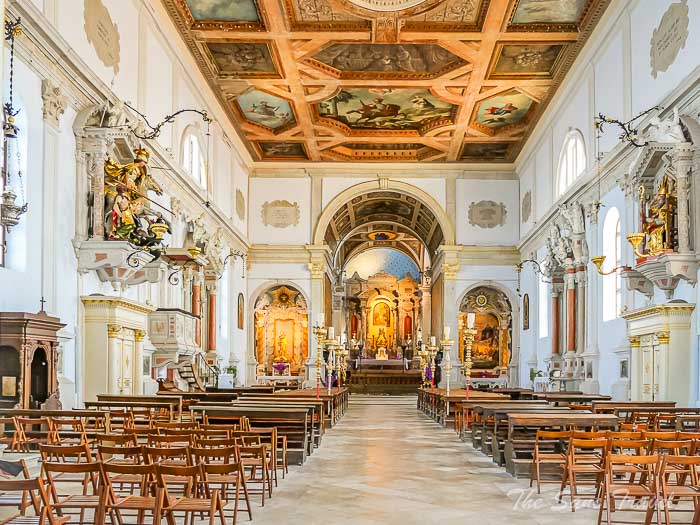
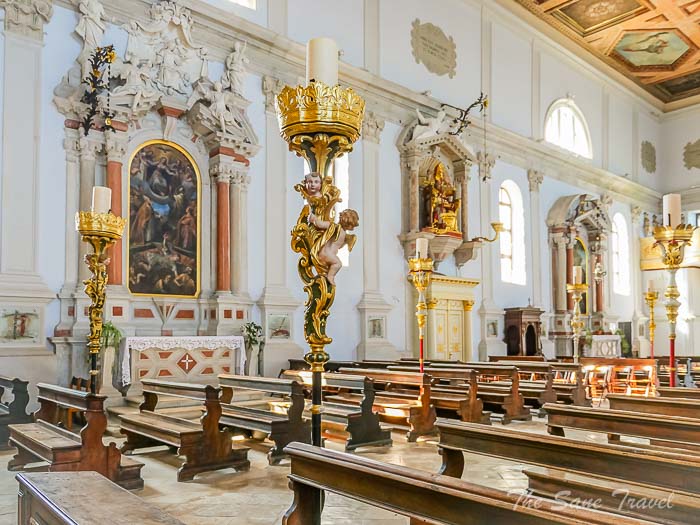
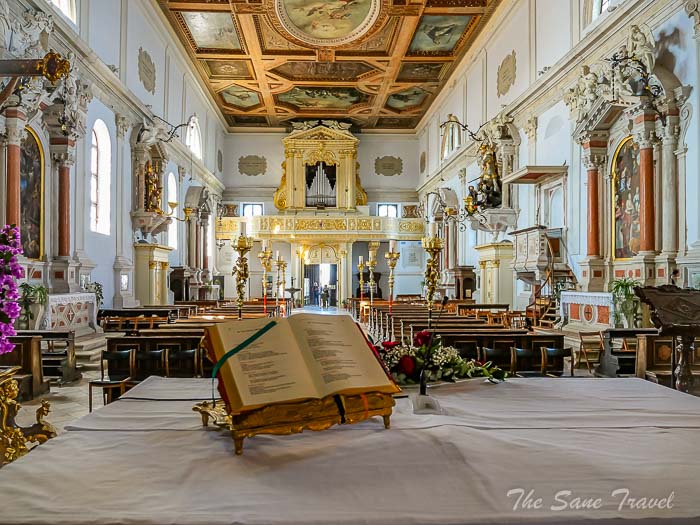
Outside the church entrance, a large lawn – once a cemetery – now serves as a popular spot for tourists to soak in panoramic views.
Church Tower
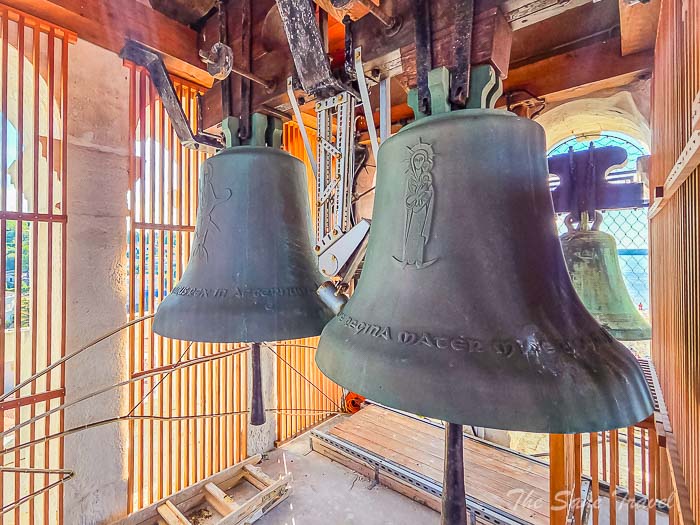
Ascend the St George’s Church tower for breathtaking views spanning Croatia, Italy, and Slovenia. The tower dates back to 1595, when the original Gothic church underwent extensive renovations. The old bell tower was demolished and replaced with a new, free-standing structure inspired by the Renaissance bell tower of St Mark’s in Venice. Although only about half the size of its Venetian counterpart, the Piran bell tower’s elevated hilltop position gives it an equally lofty presence. Interestingly, Piran’s bell tower predates the current one in St Mark’s Square, as the original Venetian tower collapsed in 1902 due to structural issues. Dedicated to Archangel Michael, the tower houses a statue, impressive bells, and a later addition – a wall clock. Climb to the top via a renovated wooden staircase, accompanied by the charming story of 15 angels, and soak in stunning views of Piran.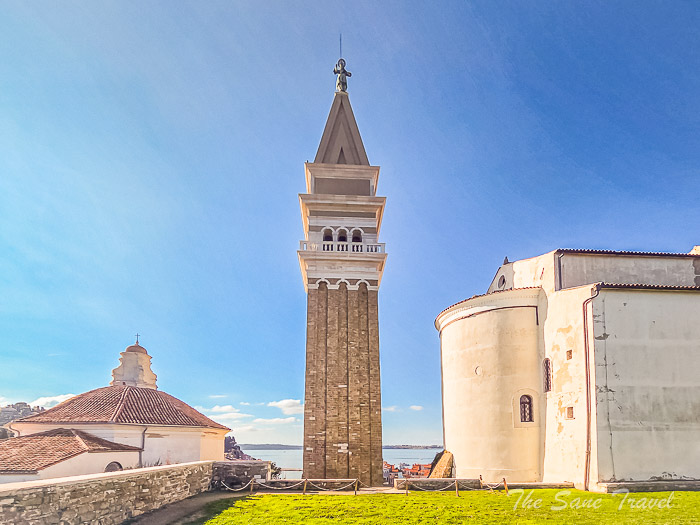
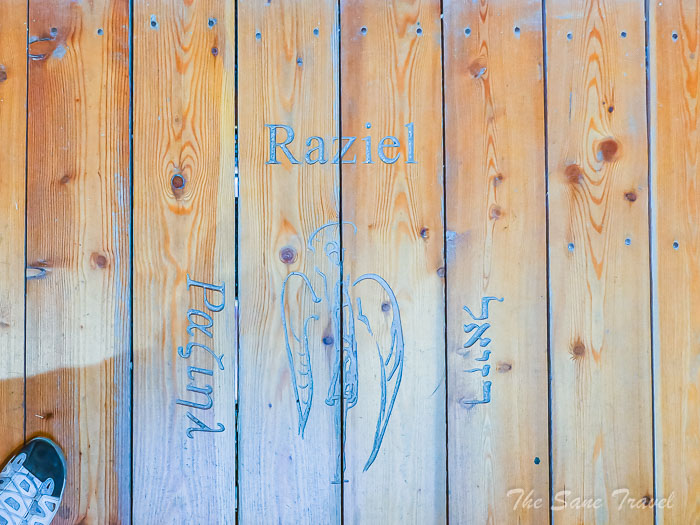
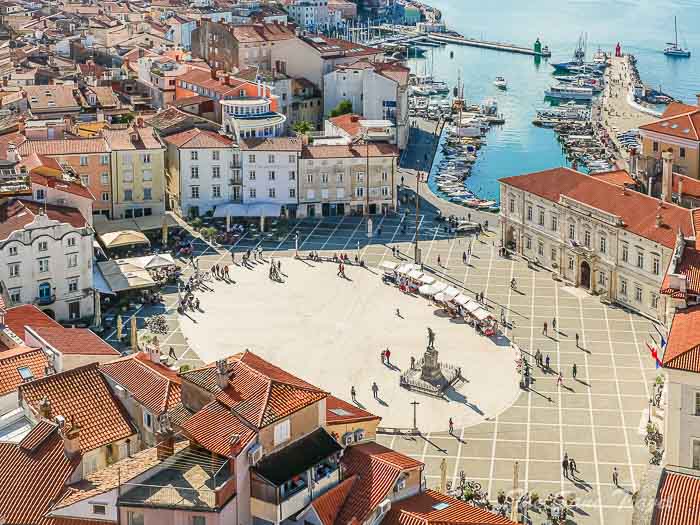
Afterwards, proceed along Piran’s promenade to the tip of the peninsula.
Lighthouse at Punta
The Lighthouse at Punta is associated with the legend behind Piran’s name, which is rooted in the town’s rich history. According to legend, the name Piran derives from the Greek word pyros, meaning fire or light. It is said that, in ancient times, a lighthouse stood there to guide sailors and merchants safely at sea. The Lighthouse at Punta, therefore, remains a timeless symbol of safety and guidance, closely associated with Piran’s maritime tradition.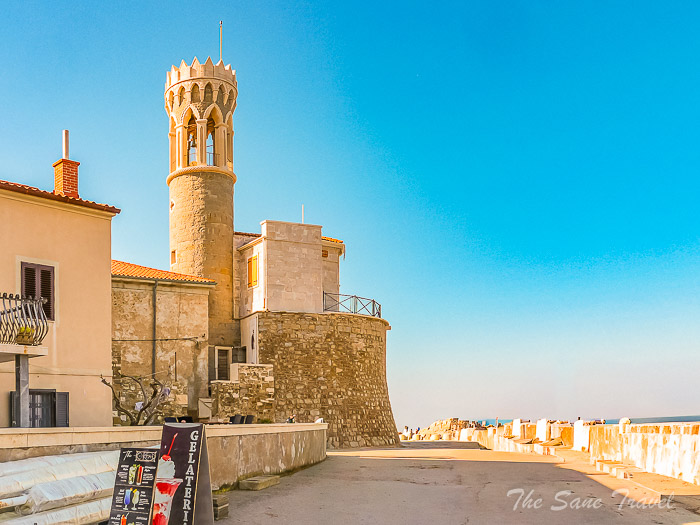
Mermaid of Piran
At the very tip of Piran’s peninsula stands a small limestone statue of a mermaid. This striking piece of public art pays homage to the local legends and fishing culture that define this region. Crafted in a contemporary style, it has become a popular photo spot for visitors. The Mermaid of Piran was created to celebrate the town’s deep connection to the sea and the maritime stories woven into its local identity. While the statue is not ancient, its strategic placement near the promenade invites reflection on Piran’s rich maritime past.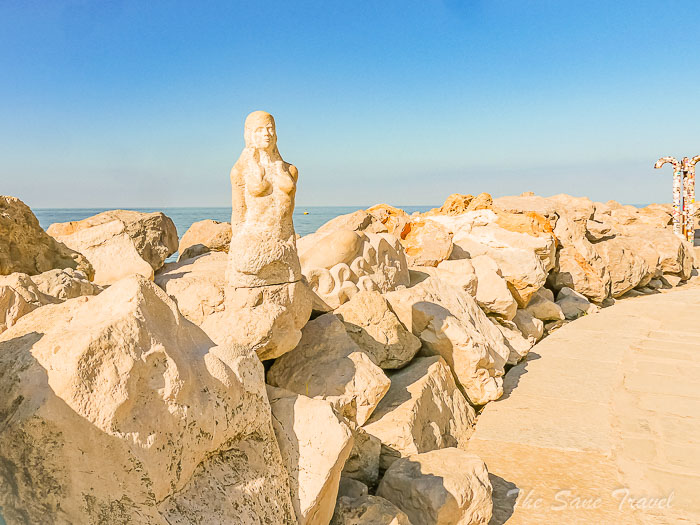
Next stop: City Walls
City Walls
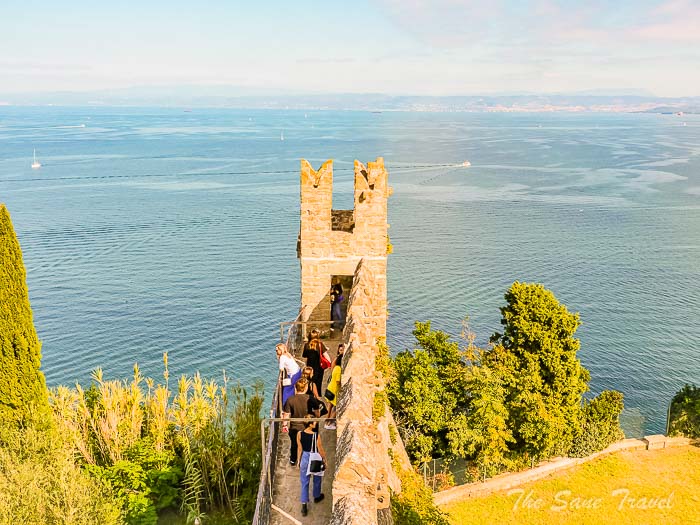
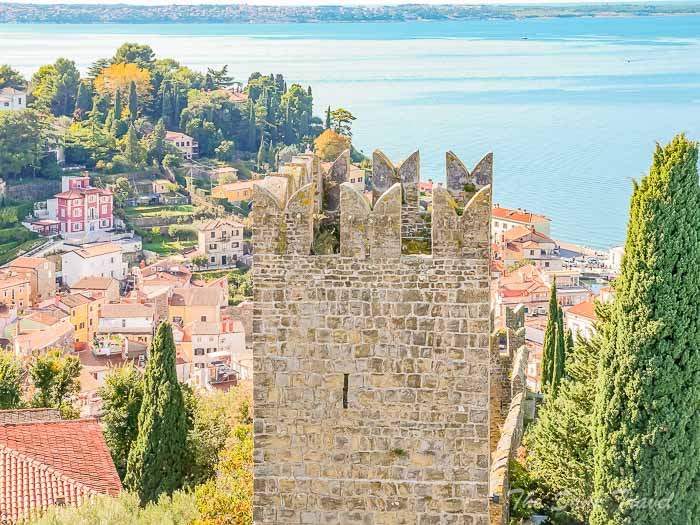
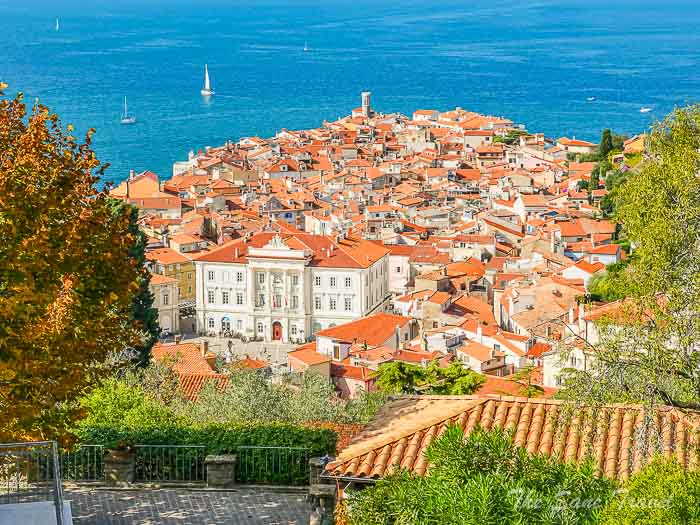
The Piran city walls date back to the 7th century, when they first encircled the old town centre at Punta. As Piran expanded towards the Mandrac (the town harbour), additional quarters outside the original walls were incorporated. To protect against enemy invasions, two further sections of the wall were built and reinforced with defensive towers. Be sure to buy a ticket to visit the seven well-preserved Piran gates, which once served as entry points into the town. From here, you can soak in panoramic views of the town and its stunning surroundings.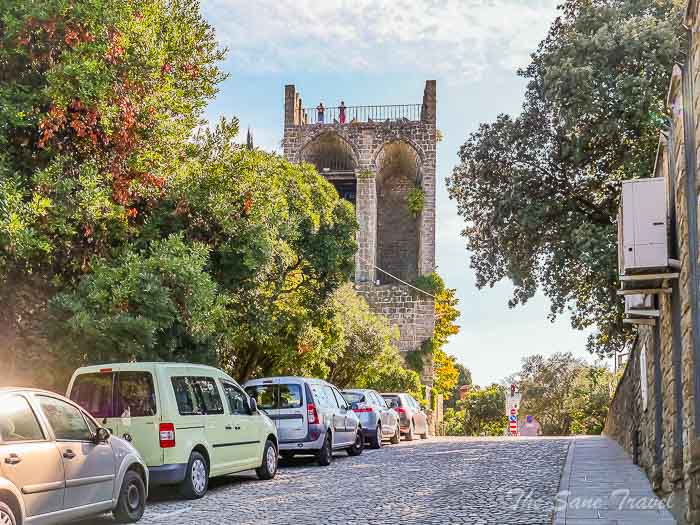
Then, head back to Tartini Square and Piran Harbour.
Piran Harbour
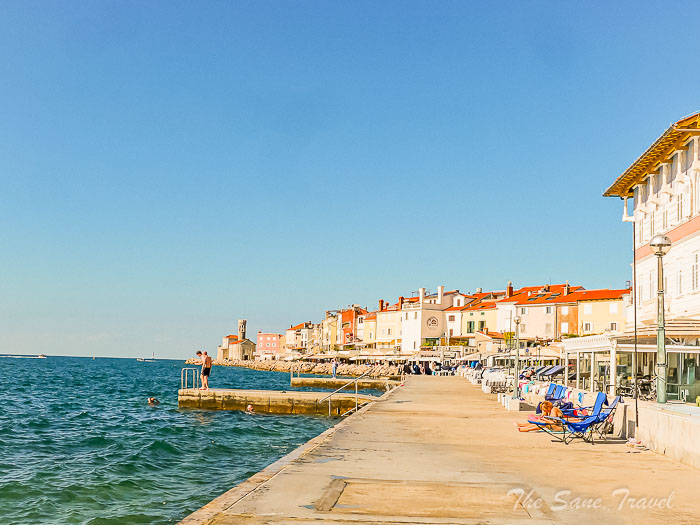
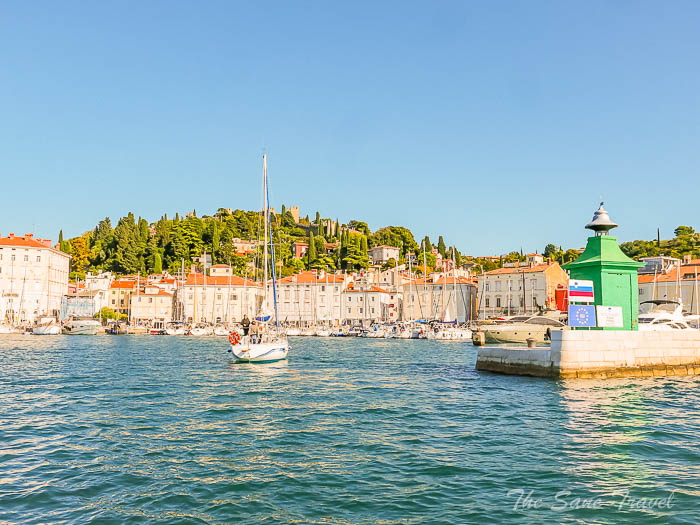
From Piran Harbour, you can enjoy breathtaking views of the Gulf of Piran, the Gulf of Trieste, and the vast Adriatic Sea. Take a leisurely stroll along the waterfront and snap photos of the colourful houses lining the foreshore and the bobbing yachts in the marina.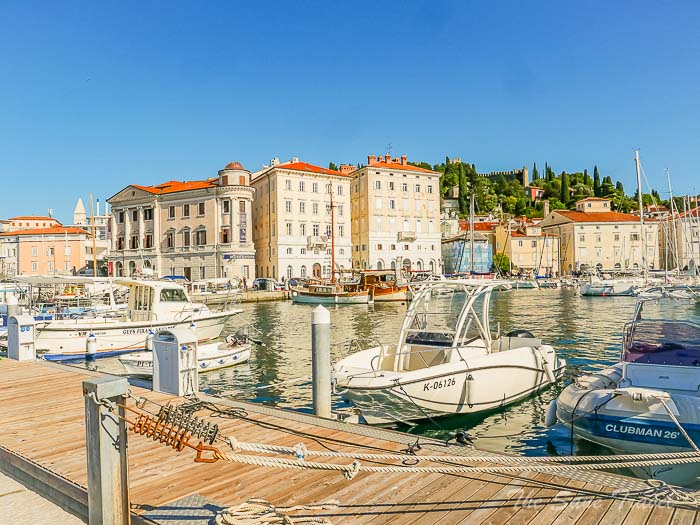
Tartini Theatre
Located close to the waterfront, the Tartini Theatre is a fine example of fin-de-siècle design, blending historicism and Art Nouveau styles typical of the early 20th century. It was designed by Trieste-based architect Giacomo Zammattio, with the interior design entrusted to painter Napoleon Cozzi, who had previously worked on Trieste’s Politeama Rossetti Theatre. The theatre offers 260 seats and is suitable for a variety of events, including concerts, theatrical performances, recitals, multimedia shows, symposiums, and conferences. By removing the seating, it can also accommodate dance events, receptions, and gala dinners.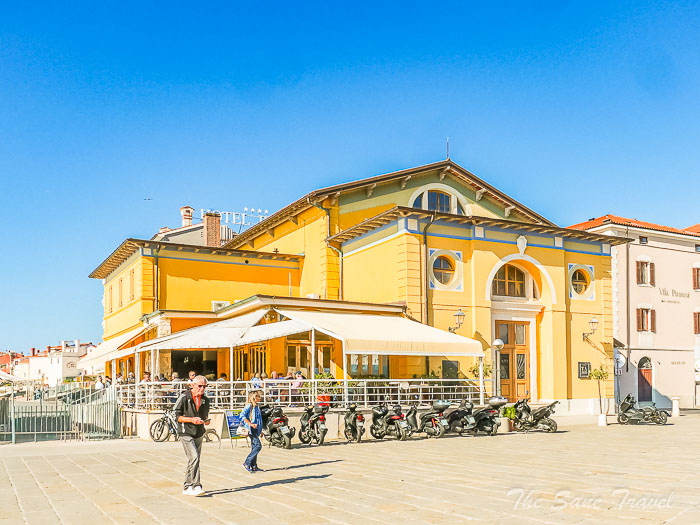
Where to eat
Kavarna Piran
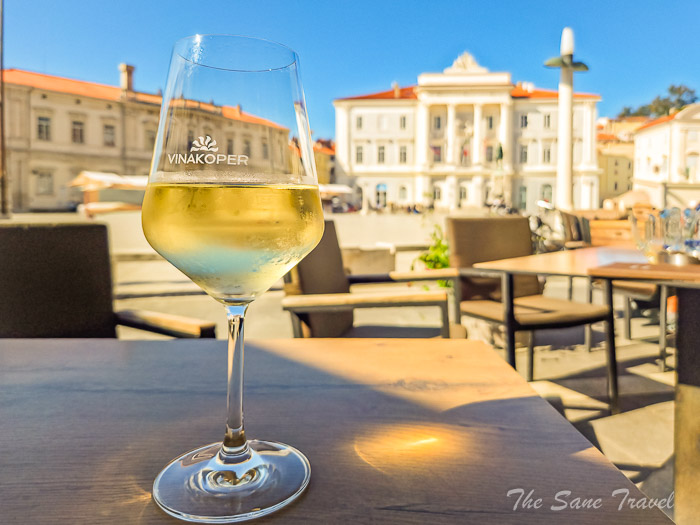
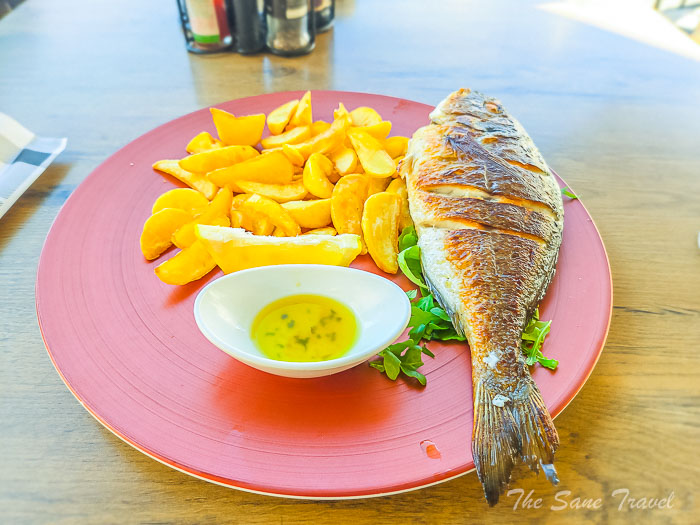
Since 1963, one particular restaurant has embodied the very essence of Piran: growth, tradition, integration, and family. Its irresistible charm and prime location continually draw visitors back, inviting them to enjoy the vibrant atmosphere of this historic seaside town. Run by the Imeri family from the outset, the café exudes simplicity, authenticity, quality, and genuine hospitality. I savoured a glass of local wine and a delicious lunch there, happily watching life unfold in the bustling Tartini Square.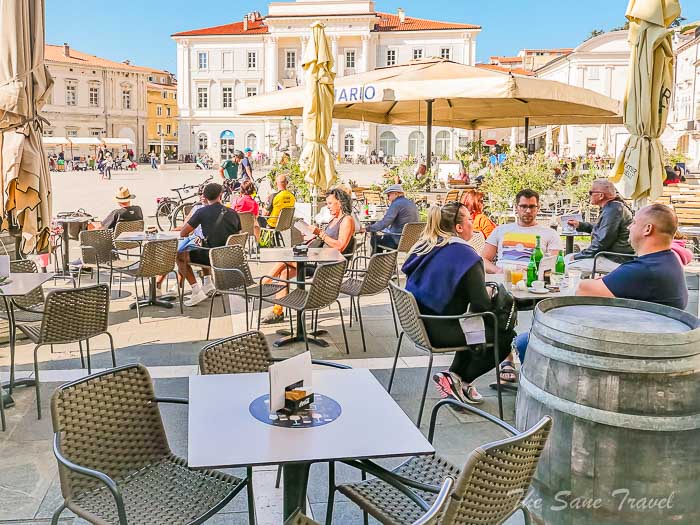
Where to stay
Art Hotel Tartini
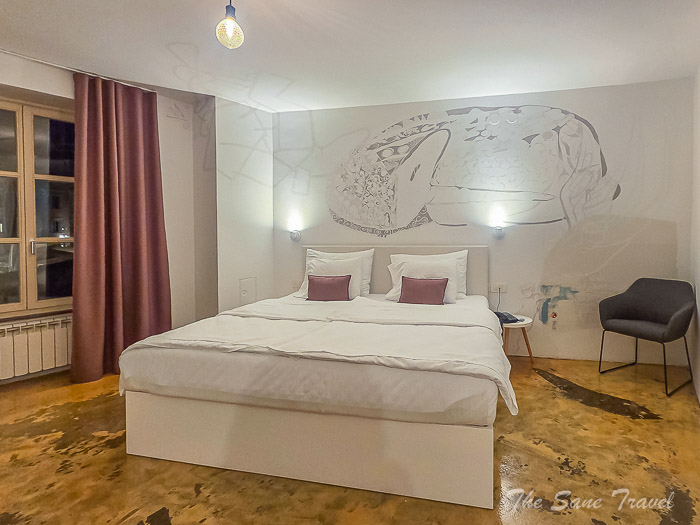
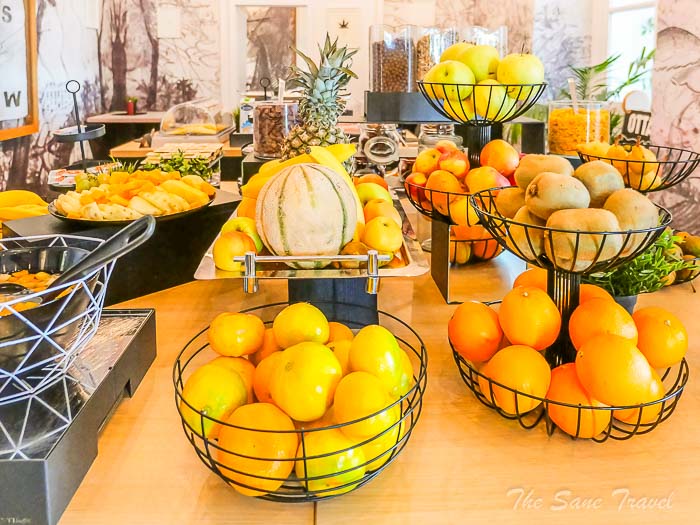
For an unforgettable stay, I recommend the Art Hotel Tartini. This boutique hotel is a haven for art lovers, boasting 48 uniquely designed rooms that provide the perfect escape on the Slovenian coast. Each room features original artworks by prominent Slovenian artists, with the artistic narrative seamlessly woven throughout the hallways and communal areas. The interiors offer a fresh perspective on integrating art into living spaces. Expect all the modern amenities, including a flat-screen TV, complimentary high-speed Wi-Fi, and a mini-fridge, along with luxurious toiletries and striking walk-in installations. My room overlooked the lively Tartini Square – spacious and comfortable, though perhaps a little understated. Breakfast was a particular highlight, with a fantastic selection on offer. Unfortunately, the terraces were closed during my visit.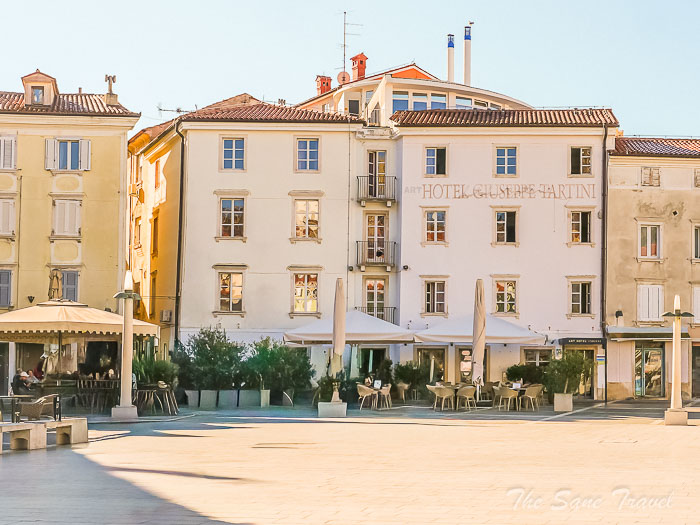
Getting to Piran
The easiest option is to fly into Trieste – Friuli Venezia Giulia Airport in Italy. From there, drive south for around 80 kilometres. If you are travelling from Ljubljana by public transport, be aware that direct buses to Piran are limited. If the schedule does not suit you, you might need to travel to Koper first and then catch a connecting bus to Piran. However, many direct buses from Ljubljana to Piran do pass through Koper, so a transfer might not be necessary. Journey times are roughly 2 hours from Ljubljana to Piran, 1 hour 30 minutes from Ljubljana to Koper, and under 40 minutes from Koper to Piran.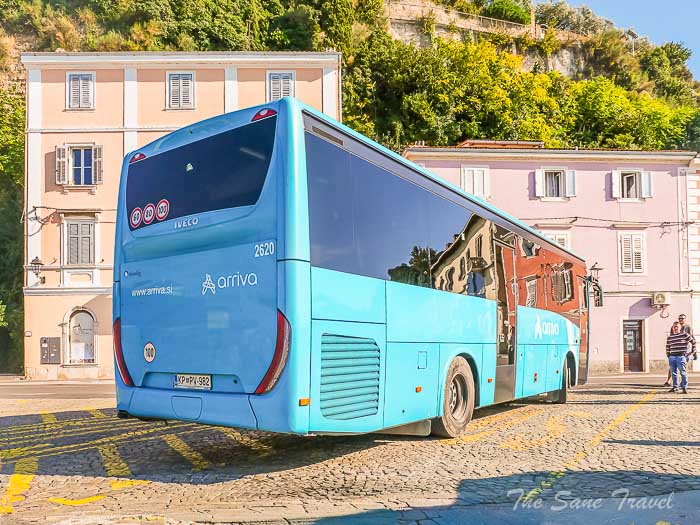
Like it? Pin it!
What did you think? Have you been to Piran? I would love to hear from you, so please add your comment below.
Author: Anita Sane

About the author
Anita is a part-time traveller, passionate photographer and a retired career woman from Latvia, travelling mostly solo for more than 15 years. She is a skilled travel planner who plans and executes her travels by herself. Anita wants to show you how to travel the world and open your mind to new experiences. Follow her on Facebook, Instagram, Pinterest, Twitter and Bloglovin.
Report
My comments