
South Australia is often overlooked in favour of its more popular neighbours, New South Wales and Victoria, yet it offers a rich blend of culture, history, and unforgettable experiences. Unlike other Australian states that were established as penal colonies, South Australia was founded as a free province for voluntary settlers, with religious and political freedom at its core from the outset. This spirit of innovation continues today, with surprises waiting to be discovered across the state. From wandering Adelaide’s historic streets and encountering wildlife on Kangaroo Island to exploring the Flinders Ranges and sampling wines in the Clare Valley, South Australia provides endless opportunities for discovery. To experience the very best of the state, consider following this 11-day road trip itinerary that starts and ends in Adelaide.
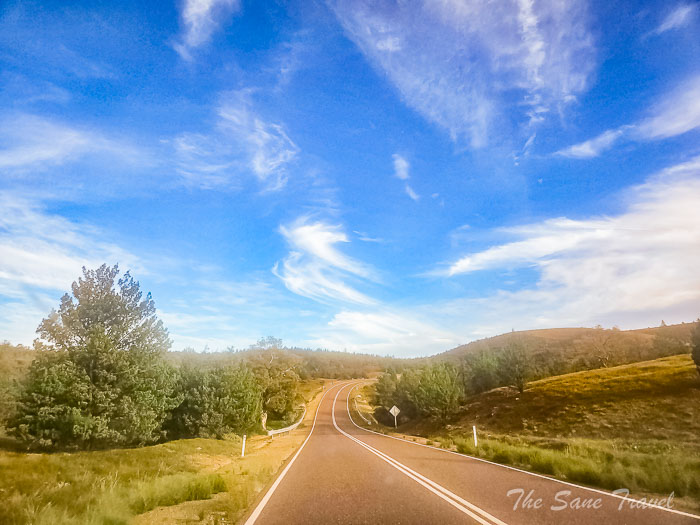
Day 1: Arrival in Adelaide
For international travellers, the best way to reach Adelaide is by flying into Adelaide Airport (ADL). The airport offers direct domestic flights from all major Australian cities, as well as selected international routes. Stay overnight in Adelaide.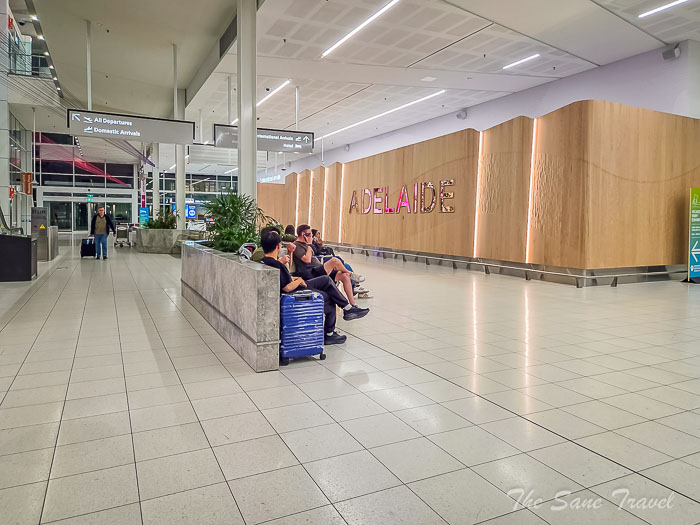
Day 2: Kangaroo Island
Kangaroo Island, affectionately known as KI by locals, is a popular South Australian destination renowned for its pristine wilderness, thriving food and wine industry, and stunning coastline. The island’s key industries include agriculture, tourism, and fishing. More than a third of KI is covered by nature reserves, providing a habitat for a diverse range of native wildlife, including kangaroos, wallabies, echidnas, goannas, platypuses, and koalas. Make sure to purchase your ferry tickets well in advance and, if possible, try to avoid visiting on a weekend. Follow my two-day road trip itinerary to discover Kangaroo Island.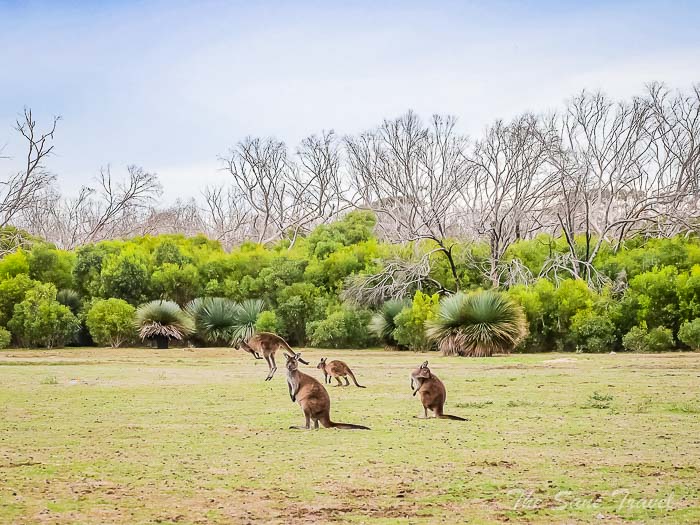
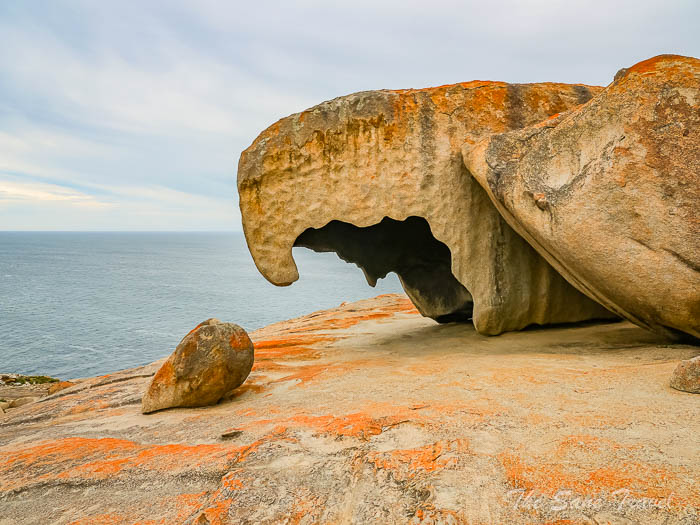
Overnight on Kangaroo Island.
Day 3: Kangaroo Island
Continue the road trip itinerary and discover more of Kangaroo Island. Return to the mainland in the evening and stay overnight at a motel near the SeaLink Ferry terminal at Cape Jervis.
Day 4: From Gorge Wildlife Park to Clare Valley
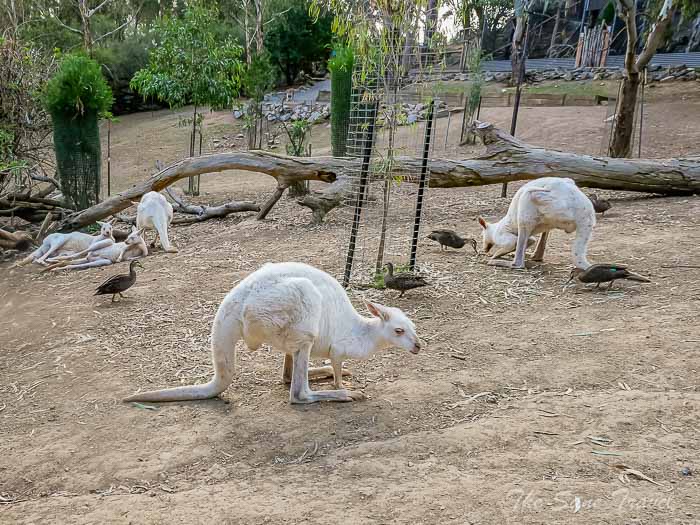
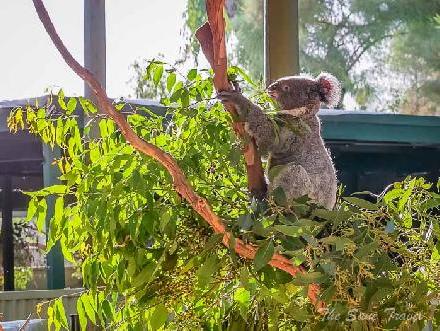
Make your way to Gorge Wildlife Park for the chance to hold a koala and admire white kangaroos. Book your koala-holding experience in advance. You can find more information about this and other places to see koalas here.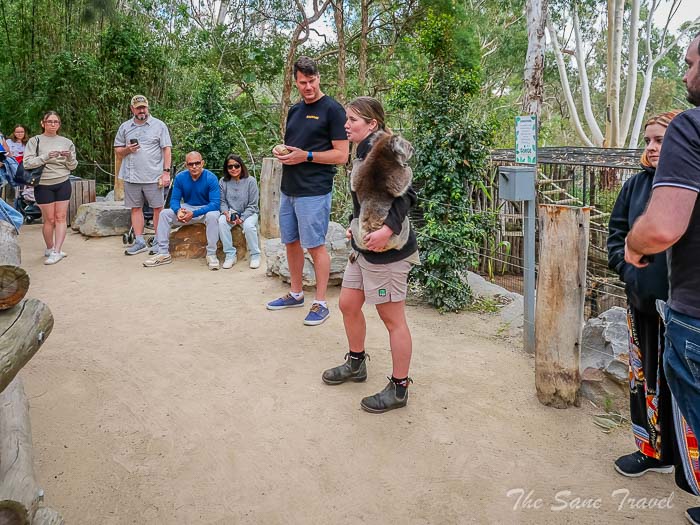
 Your next stop is Eudunda.
Eudunda
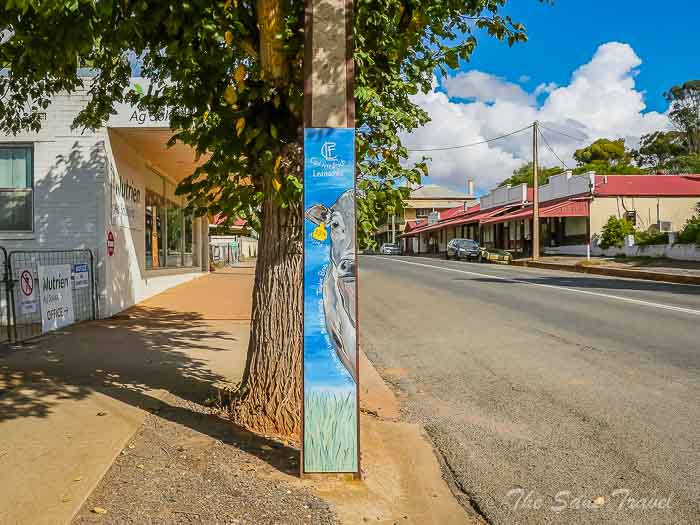
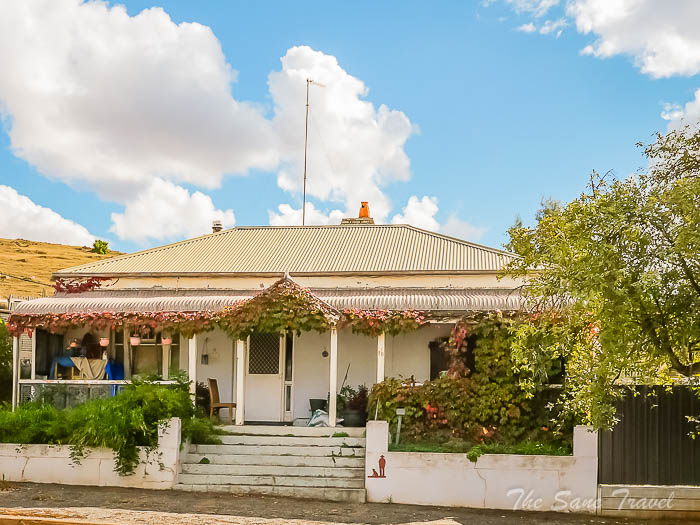
Explore the charming township of Eudunda, a place brimming with history, creativity, and art. The town is known as the birthplace of Colin Thiele, one of Australia’s most beloved and versatile authors. At the heart of Eudunda’s identity is Uncle Gustav, a character from Thiele’s Uncle Gustav’s Ghosts. Adopted as the town’s logo, Uncle Gustav and his faithful dog symbolise the pioneering spirit that shaped the region. Do not miss the stunning Eudunda Silo Art, a captivating 30-metre-tall masterpiece created by artist Sam Brooks. The Storytime Silos artwork brings Colin Thiele’s The Sun on the Stubble to vivid life, capturing the joy, wonder, and cultural richness of the area.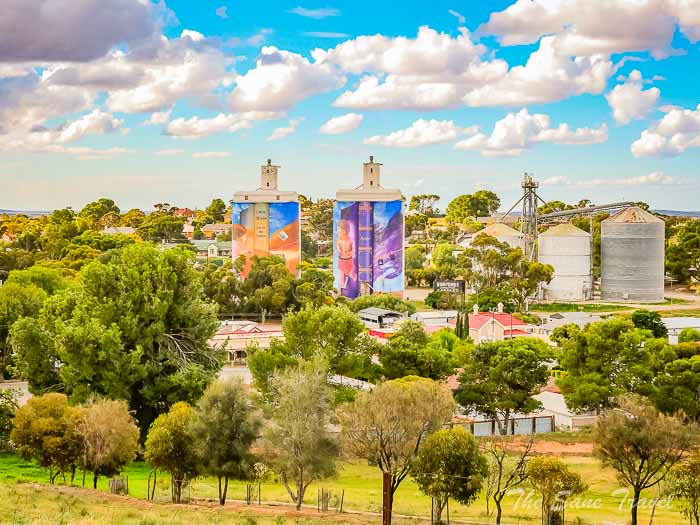
Clare Valley
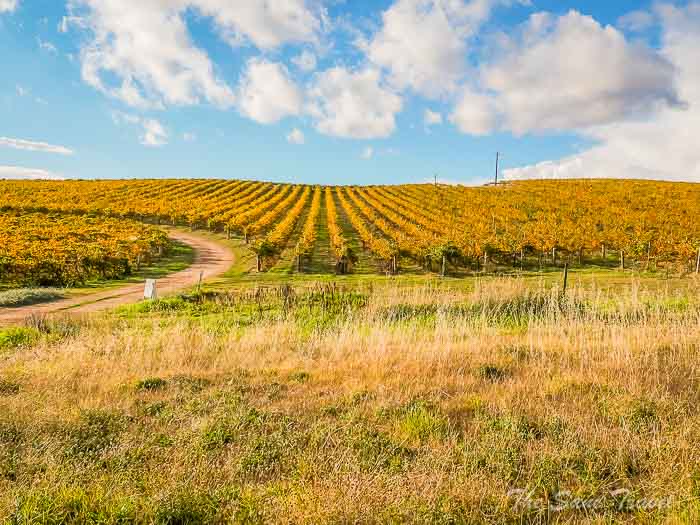
The Clare Valley is best known for its world-class Riesling wine, historic wineries, and the scenic Riesling Trail. Located about 100 kilometres north of Adelaide, it is one of the country’s oldest wine regions. This itinerary focuses on other aspects of the area.
Quarry Hill Lookout
Quarry Hill Lookout in the Clare Valley is located just 5 kilometres east of Clare. It offers panoramic views over the Polish Hill River Valley, nearby vineyards, and the surrounding farmland. Accessible via Quarry Road, this scenic vantage point features a picnic table, an interpretive sign, and a distinctive geological display. The lookout is highly regarded as a prime elevated spot for viewing the patchwork-quilt effect of the region’s canola fields in spring.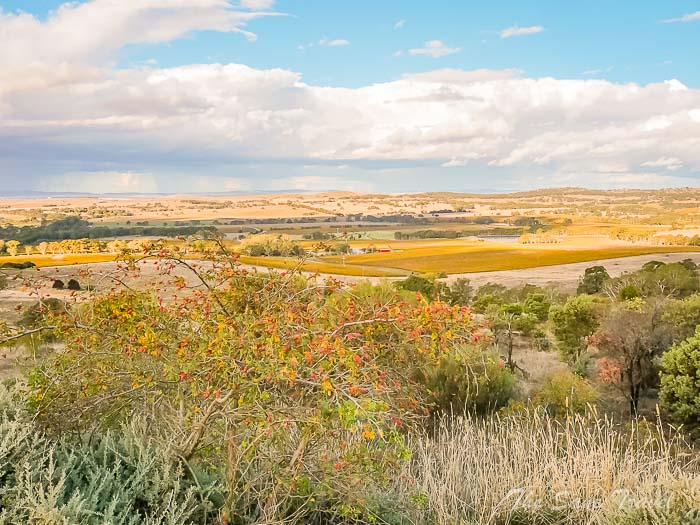
Spring Gully Conservation Park and Blue Gum Lookout
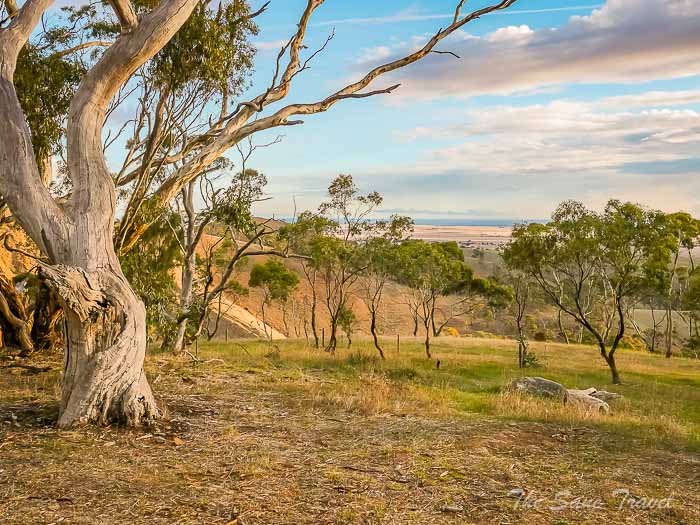
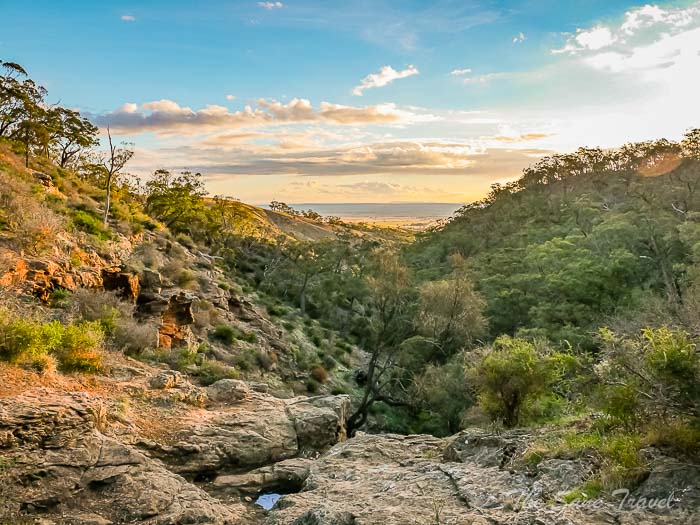
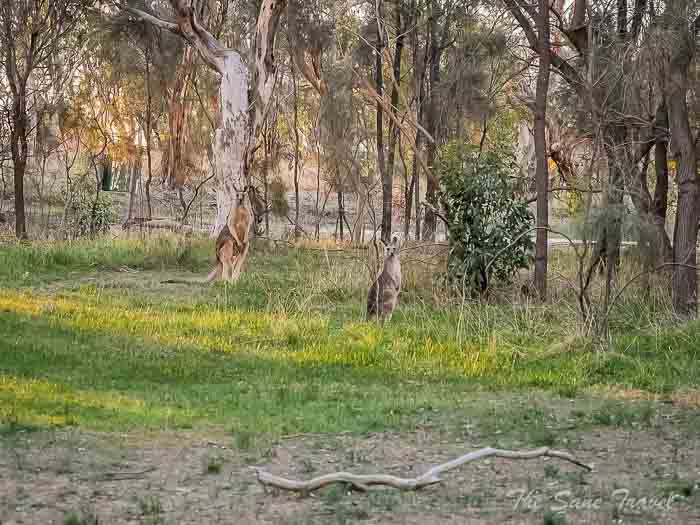
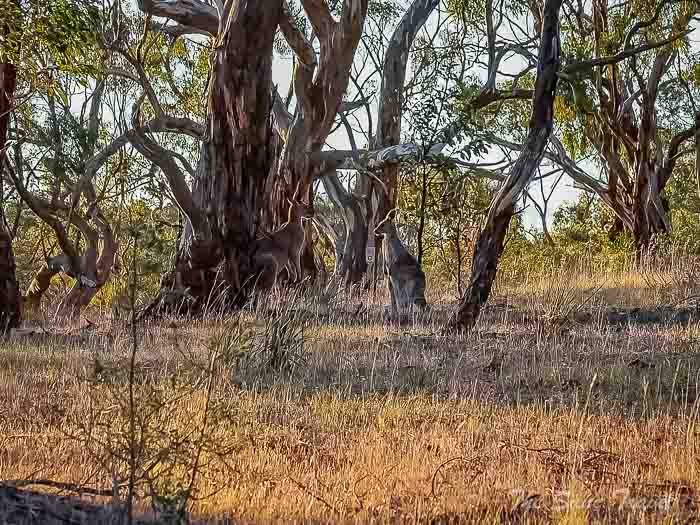
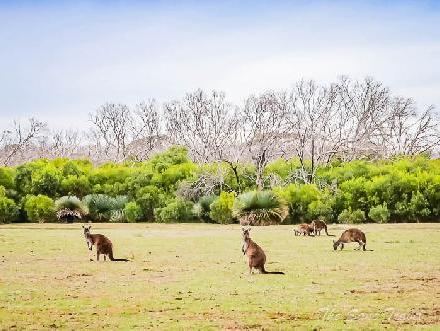
Before European settlement, the grassy woodlands and open grasslands provided an abundance of food for the Ngadjuri people. Spring Gully Conservation Park features steep, undulating terrain that leads into the Spring Gully creek bed. From Blue Gum Lookout, take a walk through grassy woodlands to a seasonal waterfall that plunges from a height of 18 metres after rain. My visit was in dry weather, so there was no water in the waterfall, but I saw western grey kangaroos in the wild.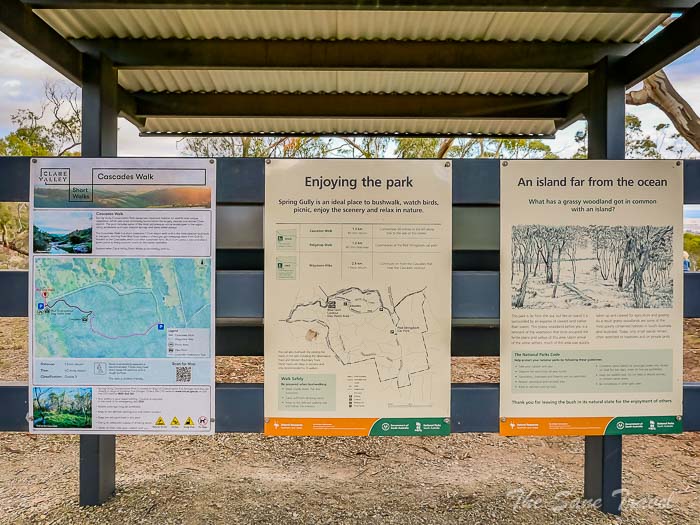
Overnight: Clare Valley Motel.
Day 5: From Mintaro to Wilpena Pound
Start your day with a 20-minute drive to Mintaro and Martindale Hall.
Mintaro
Mintaro, located in the Clare Valley, is a town of significant historical importance. It was designated a State Heritage Area in 1984 and is considered a well-preserved example of a mid-19th-century village. There are thirty-three specific heritage-listed sites within the town, including the main commercial centre and important 19th-century buildings along Burra Street. Originally established as a stop for bullock teams transporting copper ore, Mintaro reached a population of 400 by 1876 and served as a rural service centre during the prosperous agricultural period of the 1870s and early 1880s. Despite a decline in rural populations after 1930, the town remains famous for its high-quality slate, produced from Australia’s oldest continuously operating quarry. The best way to explore Mintaro is on foot, taking a self-guided walking tour to appreciate its historic buildings and ruins.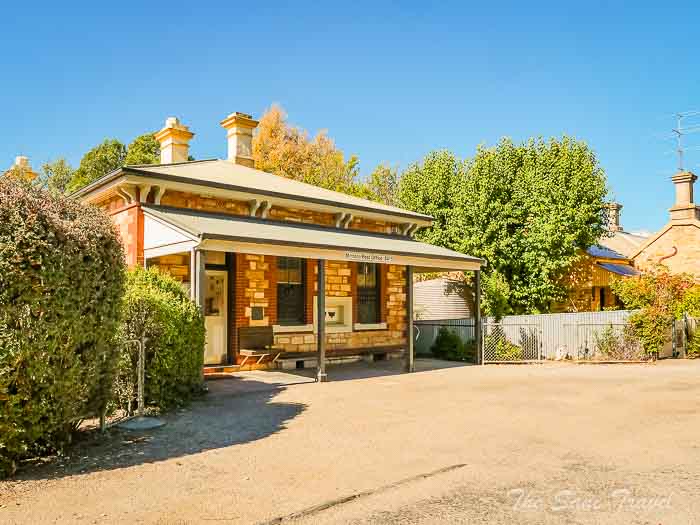
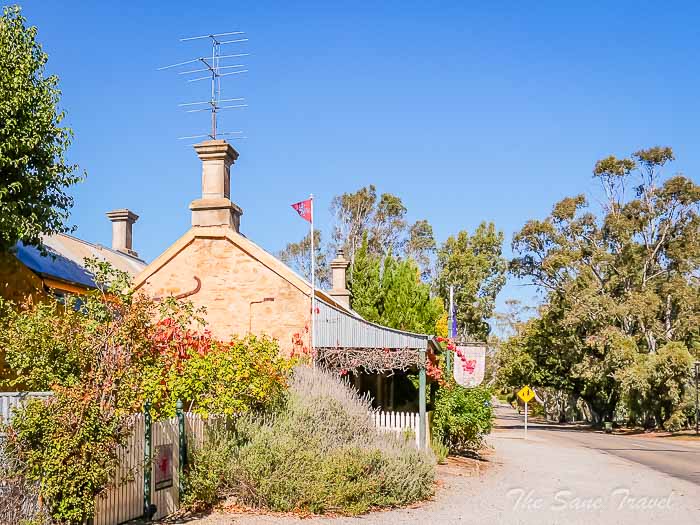
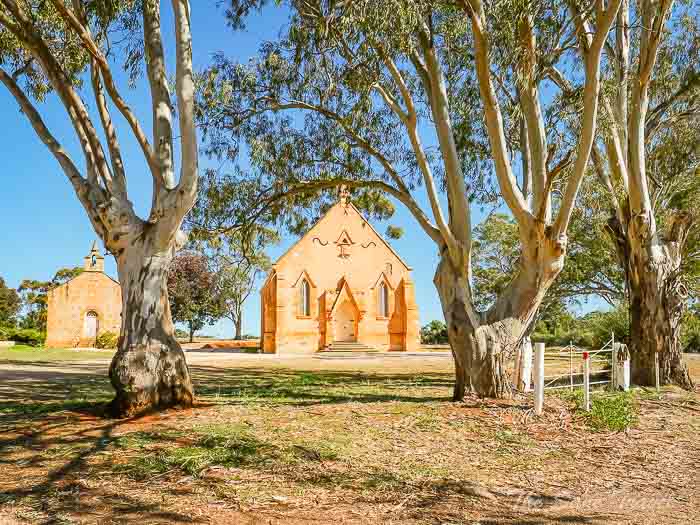
Just a short drive from Mintaro, you can find the giant Mintaro Maze, historic Reilly’s Wines, and Martindale Hall, an 1880s Georgian mansion.
Martindale Hall
Step into a world of heritage, elegance, and timeless beauty. Nestled among the rolling hills of the Clare Valley, Martindale Hall is a grand 19th-century country mansion that offers an immersive journey into a bygone era. With its ornate timberwork, intricate parquetry floors, and stately interiors, the Hall invites you to discover its rich history while enjoying exclusive events and experiences. Wander through beautifully preserved rooms, admire exceptional craftsmanship, and sense the history that surrounds you.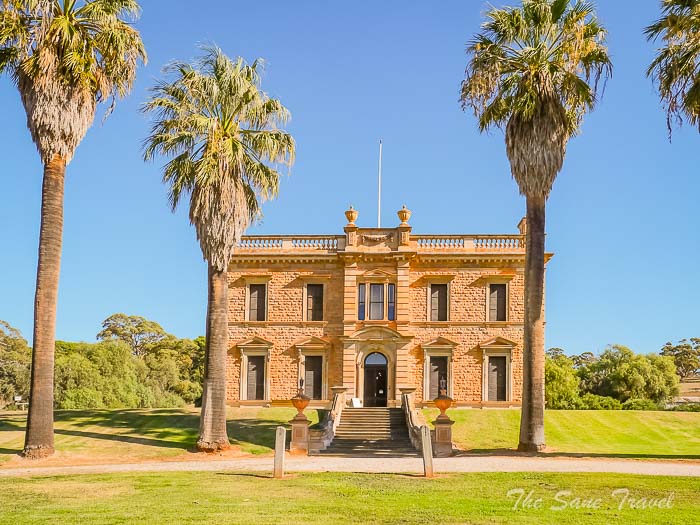
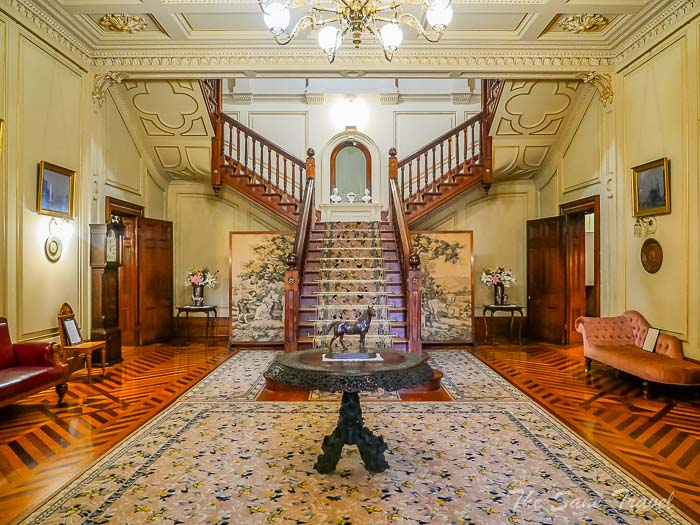
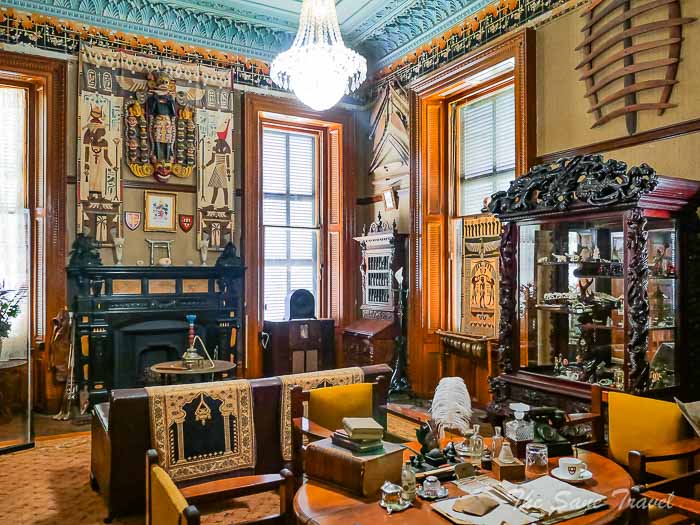
Afterwards, stroll through the estate’s peaceful surroundings, where nature and heritage come together. Your next stop is the Farell Flat Silo Art, just 15 minutes away.
Farell Flat Silo Art
This striking artwork depicts RX 55, a steam locomotive manufactured at the Islington Railway Workshops in Adelaide for the South Australian Railways, which operated from 1913 to 1964. The surrounding wheat fields symbolise the area’s transition to farming after pastoral leases closed in the early 1870s.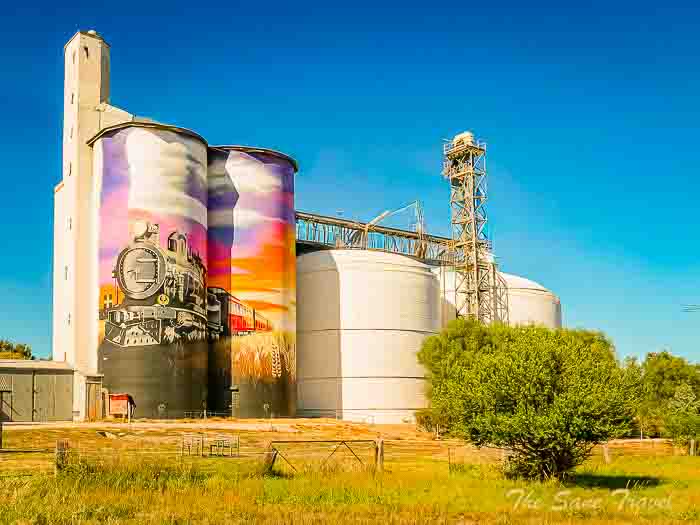
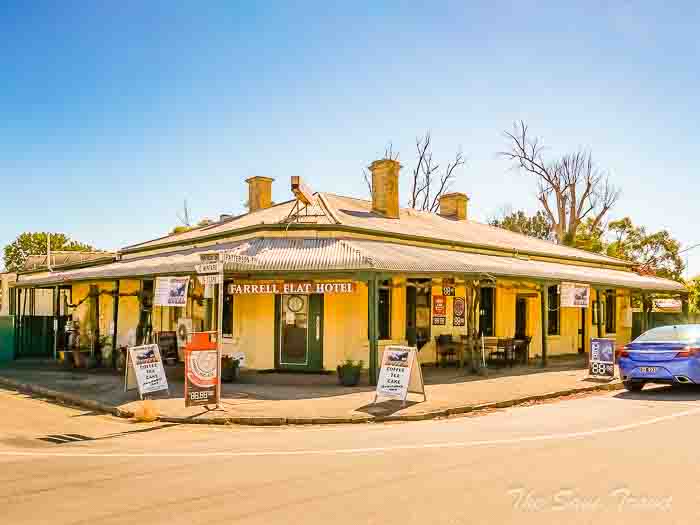
Carry on towards Peterborough.
Peterborough
Peterborough was founded in 1875 to create a new rail connection between Adelaide and the ore-rich town of Silverton in New South Wales. While the narrow-gauge railways are no longer in use, Peterborough has preserved the legacy of Australia’s steam era. It is one of the rare places where you can see all three railway gauges: broad, standard, and narrow. The Social History Museum provides a glimpse into the lives of Peterborough’s past residents, including the Meldonfield Collection, which showcases miniature horses and carriages.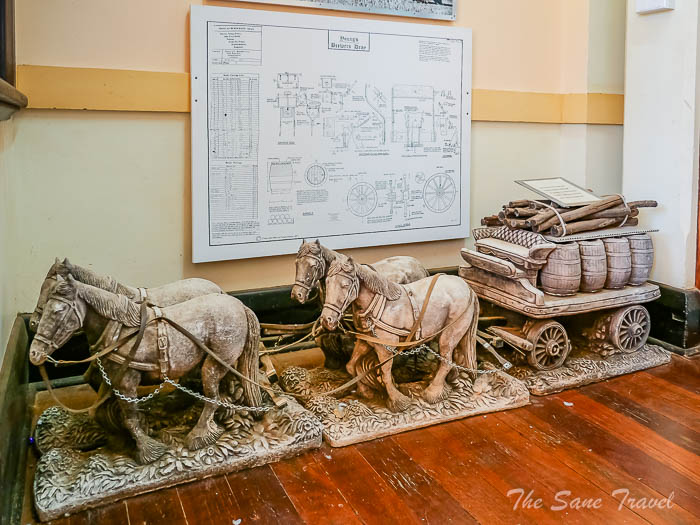
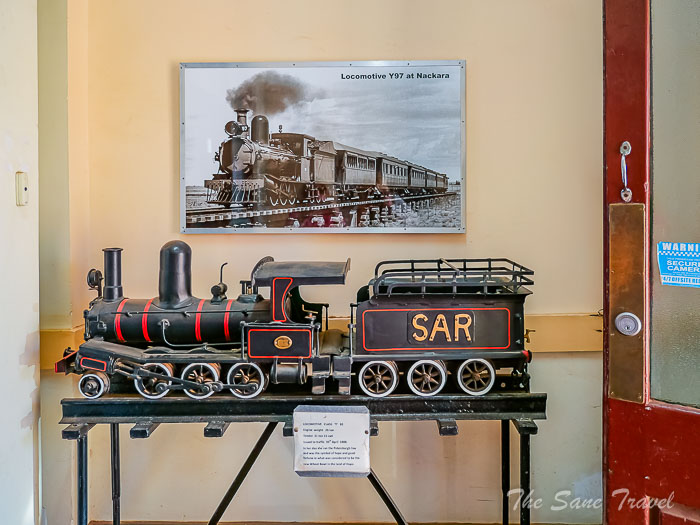
The Town Carriage Museum exhibits a restored first-class carriage from 1917 and offers a virtual steam train journey to Broken Hill.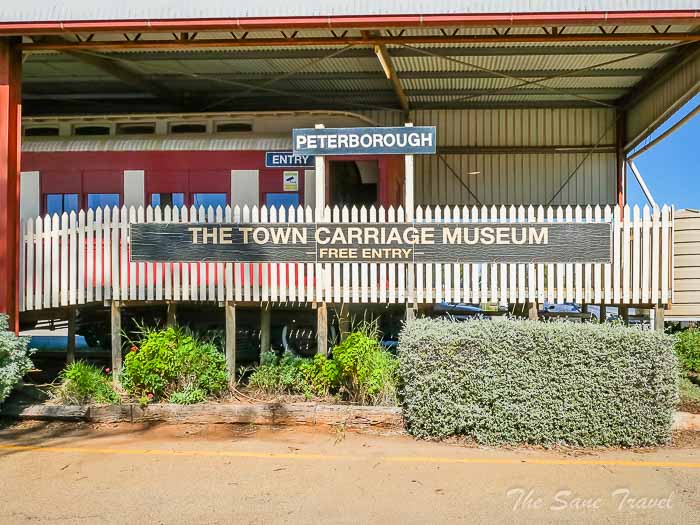
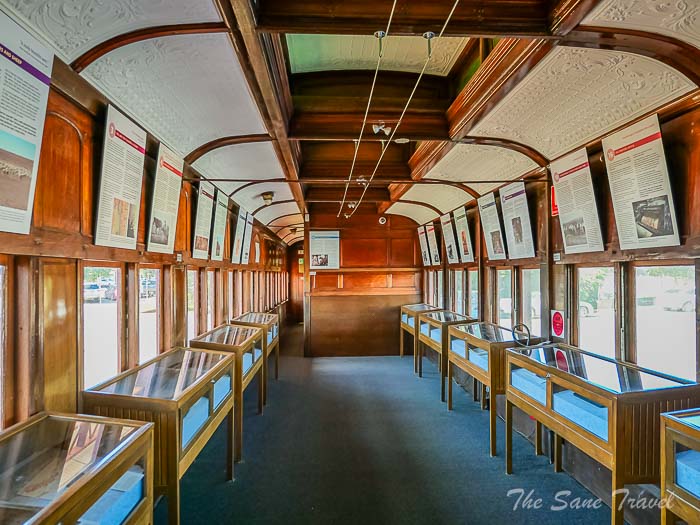
The Town Hall is known for its ornate details, including the Federation Quilt on display in the foyer.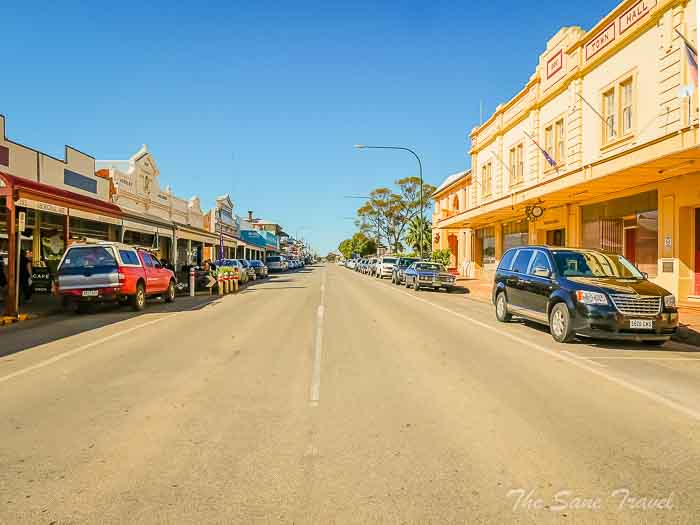
Lady Di’s Craft Corner features the work of the Peterborough Patchworkers Club, with proceeds going to charitable causes.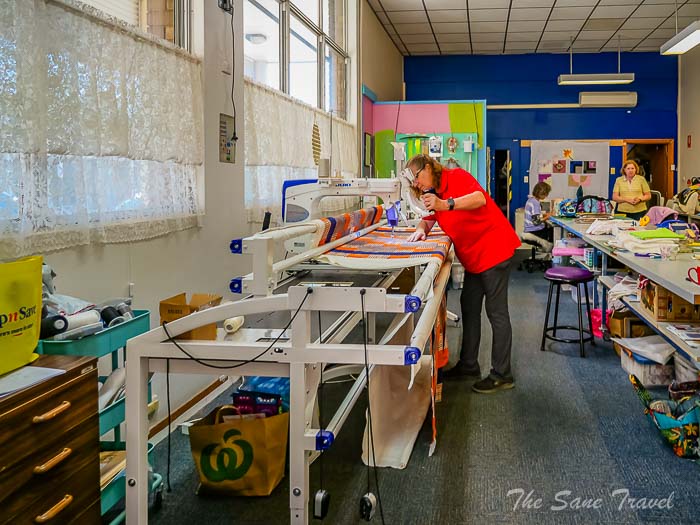
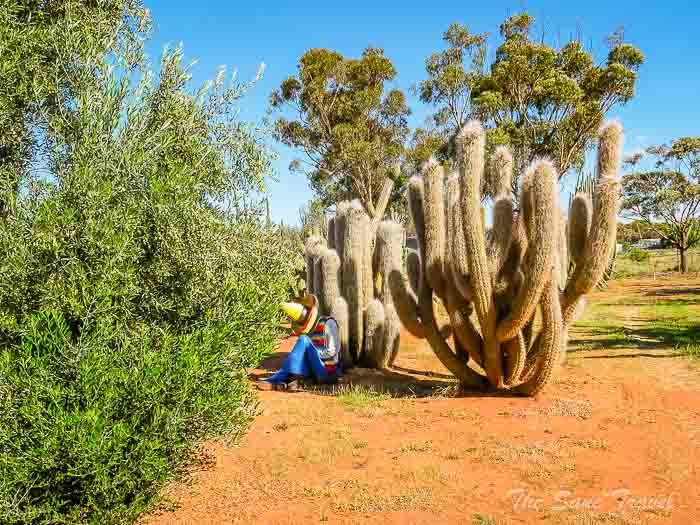
While the views from Peterborough Lookout may not have been impressive, a detour along Government Road took visitors to a delightful cactus garden and a memorable tour led by the hostess.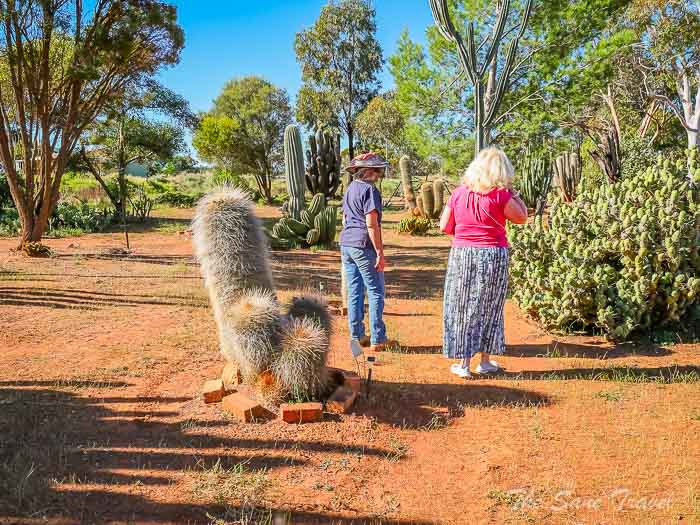
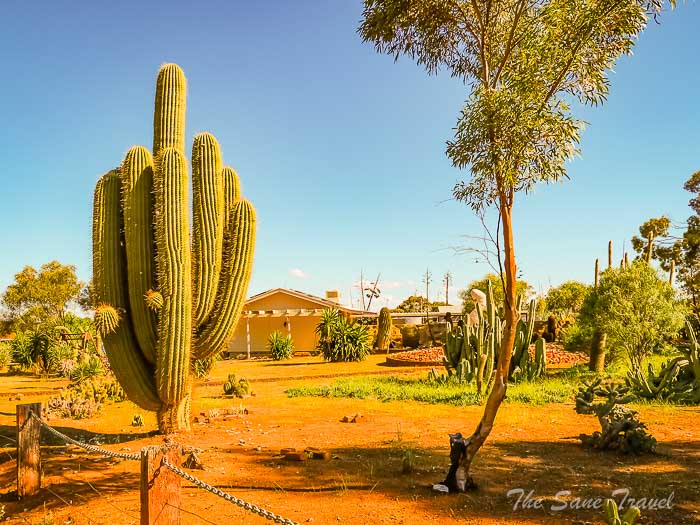
Continue your adventure towards Wilpena Pound, with a brief stop in the town of Hawker.
Hawker: Gateway to the Flinders
With a population of approximately 300, Hawker was once a bustling railway town, sitting proudly along the famous Ghan railway line from the 1880s until 1956. Its fortunes shifted when the line was upgraded and rerouted further west, but the town has since become a popular tourist hub for the Flinders Ranges. As you approach Wilpena Pound, be sure to stop at the Rawnsley viewing area for a spectacular vista of Rawnsley Bluff.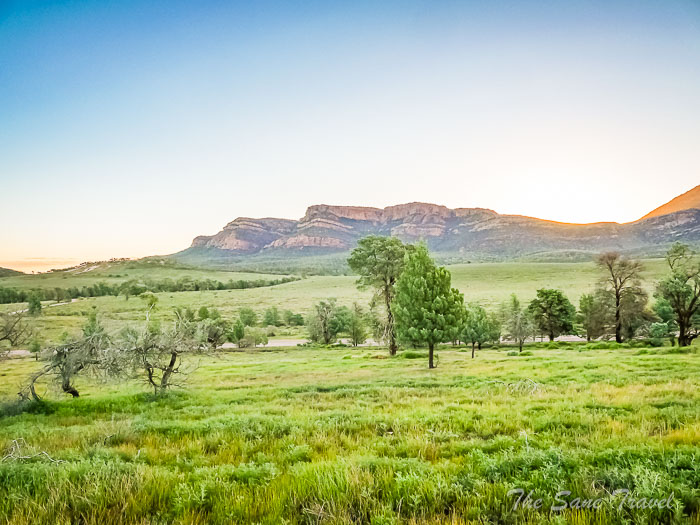
Ikara-Flinders Ranges National Park: An Ancient Landscape Awaits
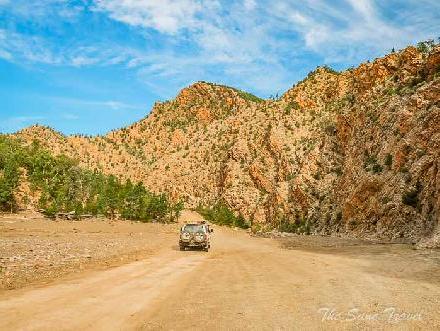
Arrive at Discovery Resorts - Wilpena Pound in the late afternoon or early evening, nestled within the breathtaking Ikara-Flinders Ranges National Park. This extraordinary outback landscape, sculpted over 600 million years, offers a profound connection with nature and holds deep Indigenous cultural significance. Beyond its iconic landmarks such as Wilpena Pound and the dramatic red-earth gorges, the park is a premier destination for outdoor enthusiasts and anyone who appreciates the raw beauty of the Australian wilderness. Your exploration of this incredible area continues with the Ikara-Flinders Ranges National Park Day 1 itinerary.
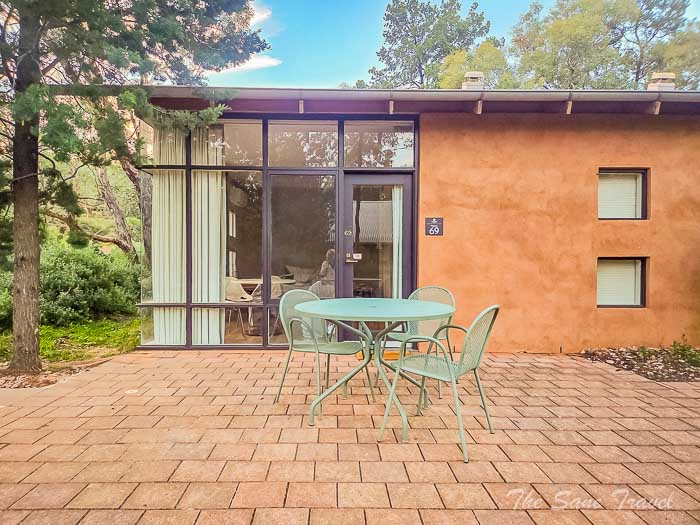
Overnight: Discovery Resorts - Wilpena Pound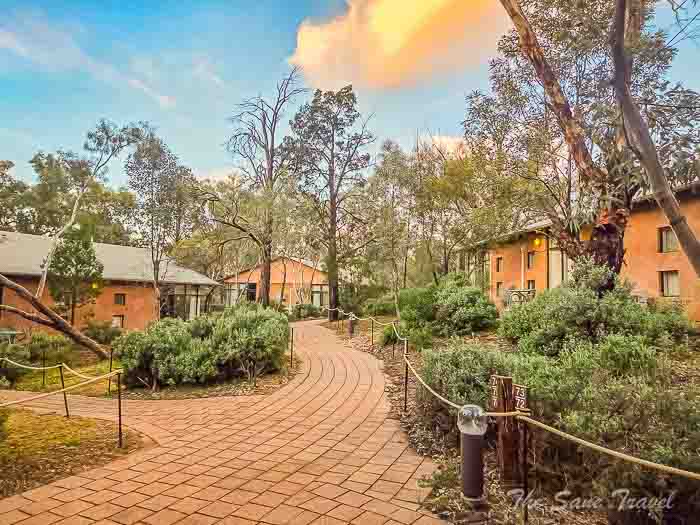
Day 6: Ikara-Flinders Ranges National Park
Follow the Ikara-Flinders Ranges National Park Day 2 itinerary.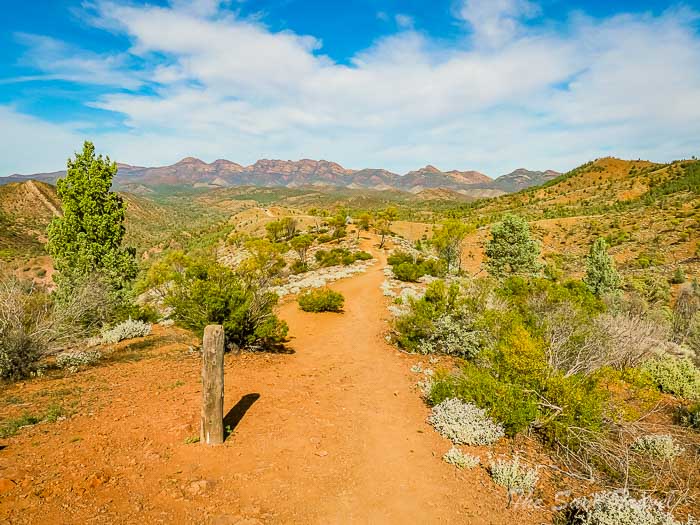
Day 7: from Wilpena pound to Quorn
Morning. Follow the Ikara-Flinders Ranges National Park Day 3 itinerary.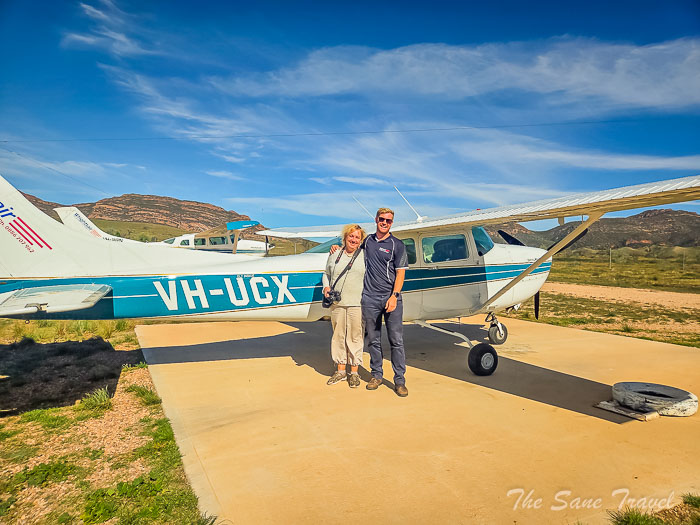
Afternoon. Embark on the Flinders Ranges self-drive loop, as shown on the map, stopping at the scenic Jarvis Hill Lookout along the way.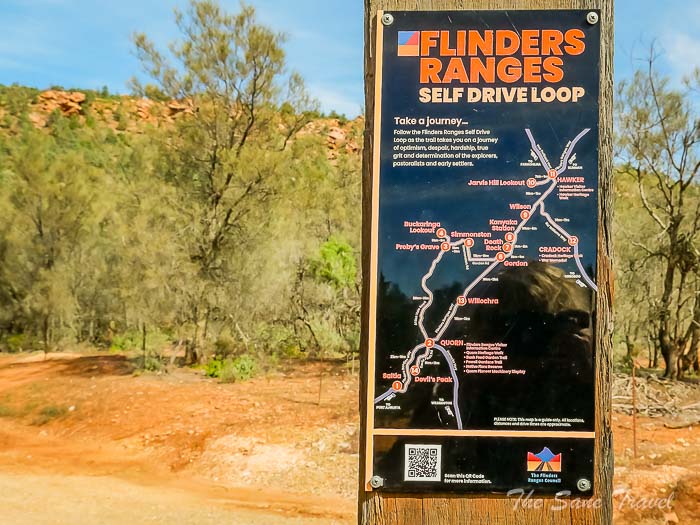
Jarvis Hill Lookout
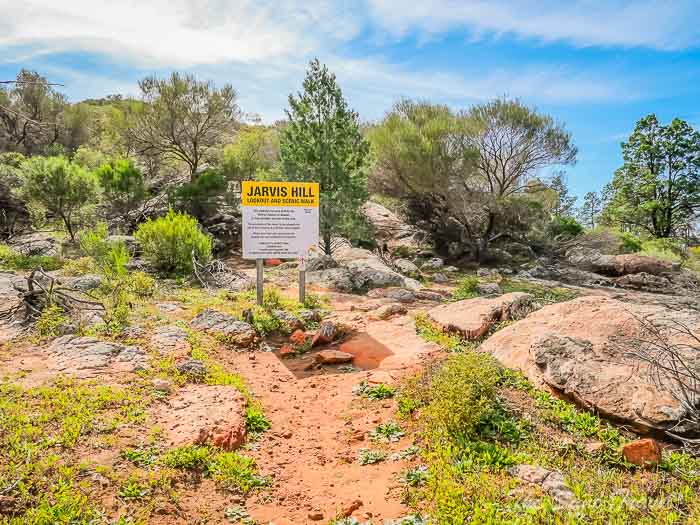
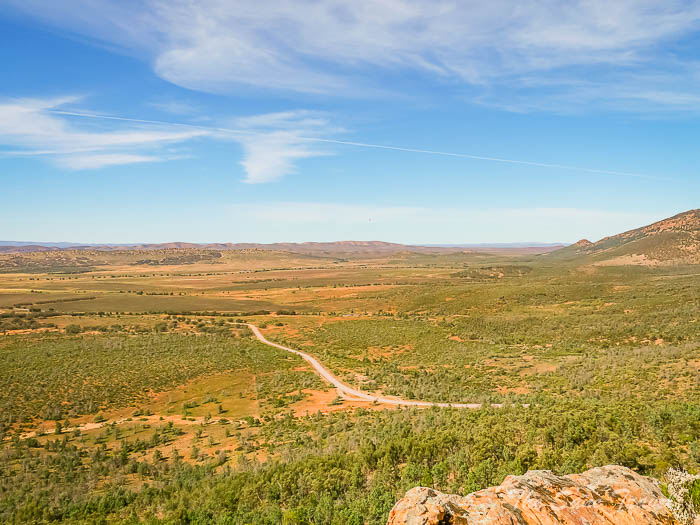
Just 7 kilometres west of Hawker lies Jarvis Hill Lookout, a popular vantage point offering panoramic views over Hawker Township and its surrounding ranges. This hidden gem features a well-marked walking trail that winds through striking red landscapes, allowing visitors to experience the beauty of the great outdoors. The walk to the lookout is only 800 metres from the car park and includes some gently steep sections, adding a touch of challenge without being overly strenuous. From the viewpoint, you can enjoy sweeping views of the Worumba Hills to the east and the impressive Wilpena Pound, Elder Range, and Wonoka Hill to the north.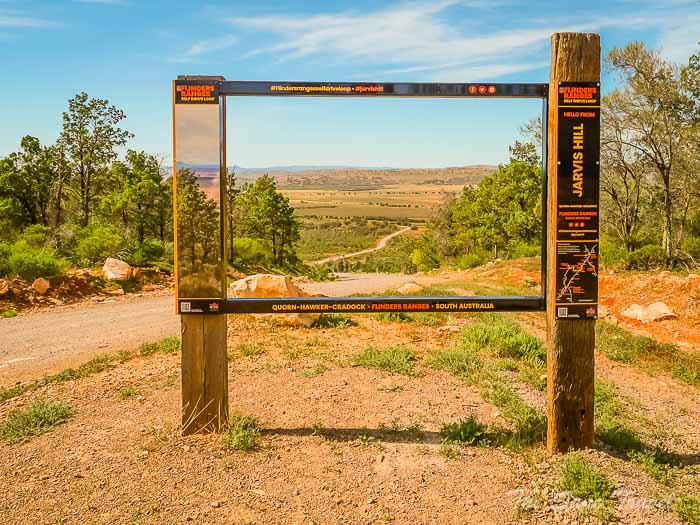
Cradock
Cradock, established in 1879, is a small historic rural locality in South Australia’s Flinders Ranges region, nestled along the RM Williams Way, approximately 40 kilometres southeast of Hawker. This remote outback settlement is perhaps best known for the historic sandstone Cradock Hotel, which has welcomed travellers on the edge of the Flinders Ranges since 1881.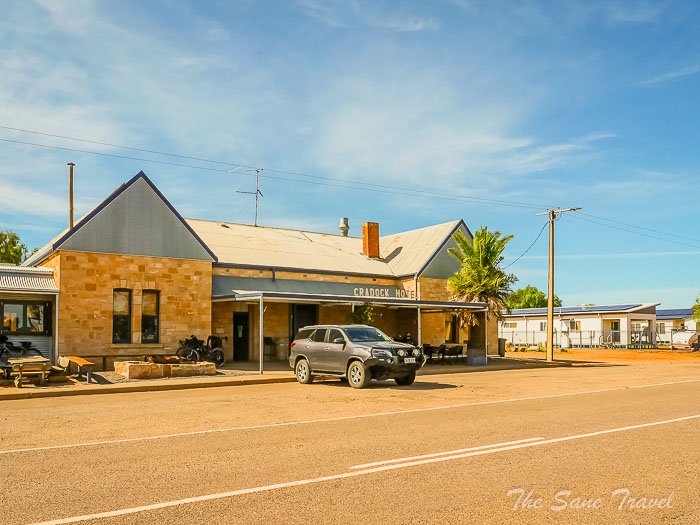
Kanyaka Homestead Ruins
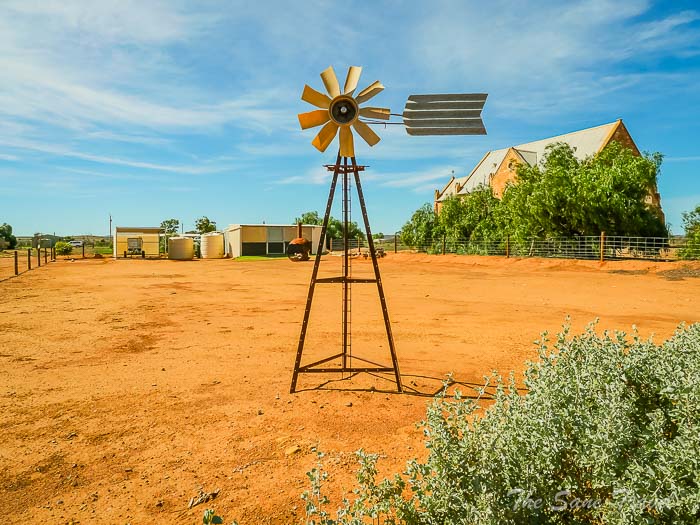
The Kanyaka Ruins offer a fascinating glimpse into the history of a 19th-century pastoral station. Established in 1852, the station covered a vast area and supported many families. However, a devastating drought in the 1860s contributed to the station’s decline, and it was eventually abandoned in 1888. Today, visitors can explore the ruins free of charge, with easy access from the Quorn-Hawker Road. The remains of buildings such as the homestead, workers’ cottages, and shearing shed provide insight into the challenges faced by early pastoralists in the region.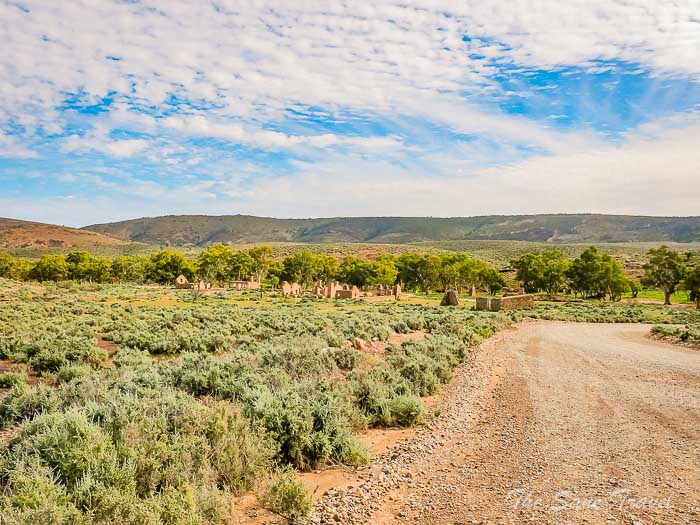
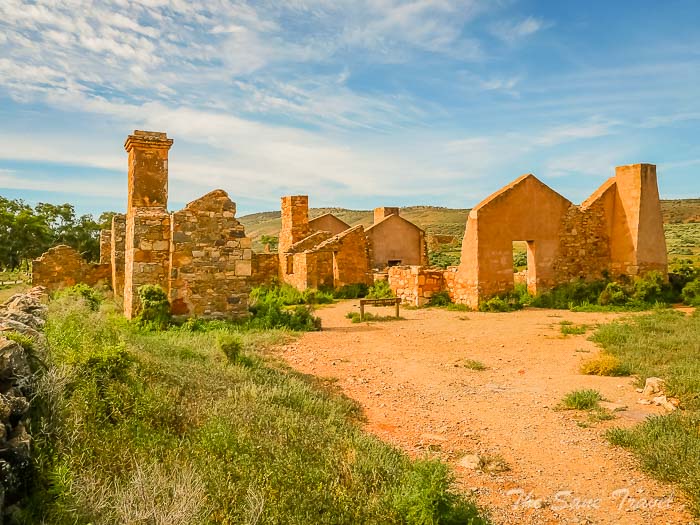
The site also features a picnic area where visitors can relax and take in the outback scenery.
Warren Gorge
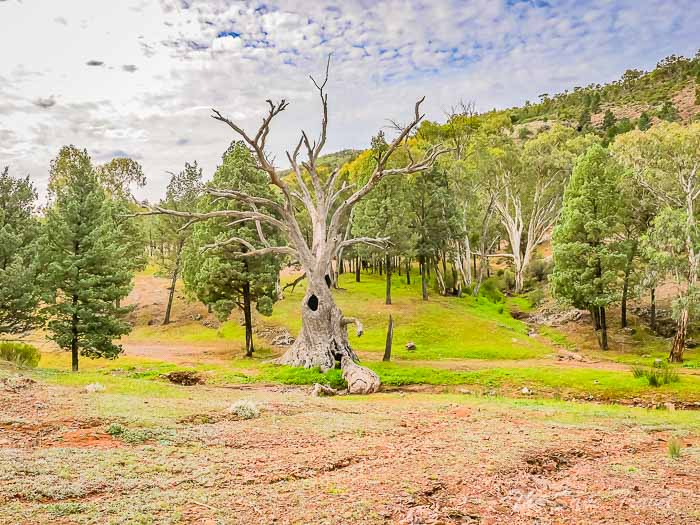
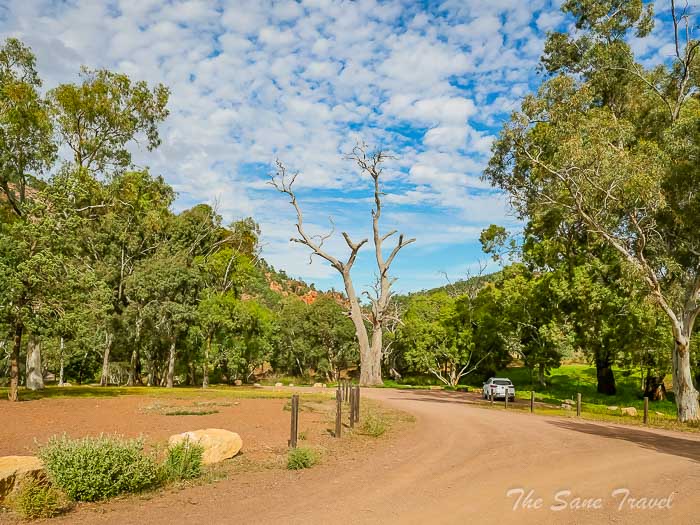
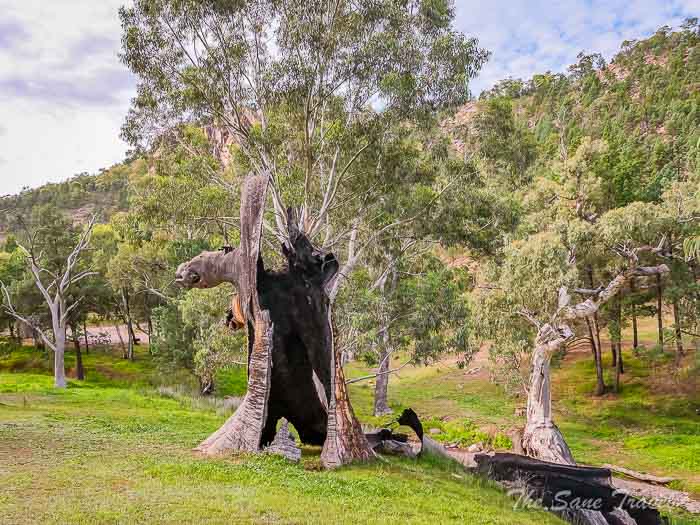
Located in the Flinders Ranges, Warren Gorge is a remarkable natural attraction known for its impressive scenery, towering cliffs, and unique rock formations that highlight the area’s geological history. Visitors can enjoy hiking trails, admire the local flora and fauna, and experience the beauty of the Australian wilderness. The gorge was named by explorer Edward John Eyre in memory of his friend Major Warren, reflecting the strong connections formed by early settlers. With a variety of native wildlife, including kangaroos, wallabies such as the Yellow-footed Rock Wallaby, and bird species like the Apostle Bird, Warren Gorge is a haven for nature lovers and wildlife photographers.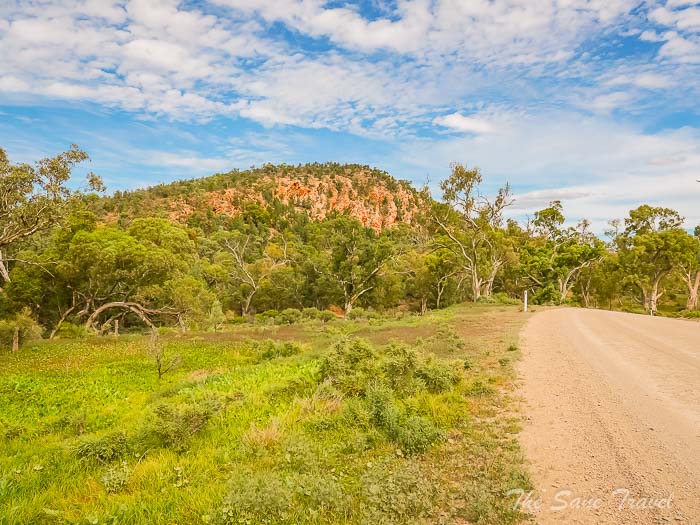
Dutchman’s Stern
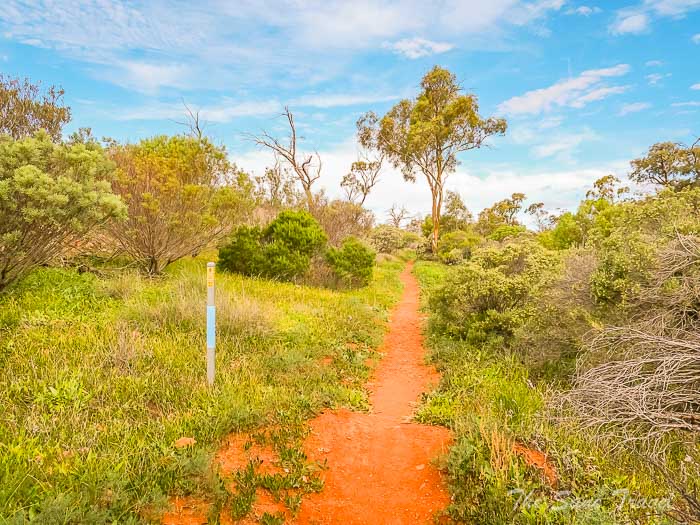
Rising dramatically above the surrounding landscape, Dutchman’s Stern is a prominent bluff 10 km north-east of Quorn and one of the defining landmarks of the Flinders Ranges. Home to a variety of native plants and wildlife, the Dutchman’s Stern Conservation Park features numerous walking trails that wind through its rugged landscape. If time permits, I highly recommend making your way to the summit via the Dutchman’s Stern hiking trail. The summit offers spectacular panoramic views across the Spencer Gulf, the surrounding ranges, and the Willochra Plain. The Dutchman’s Stern hike typically takes around 4–5 hours to complete, rewarding hikers with spectacular views, wildflowers, and wildlife.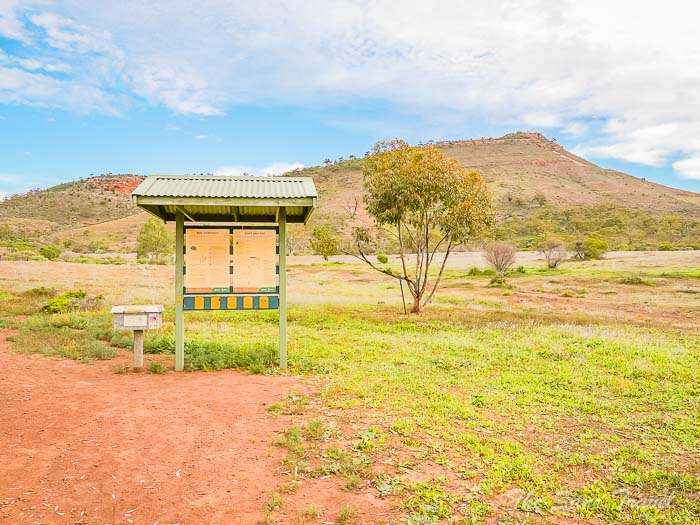
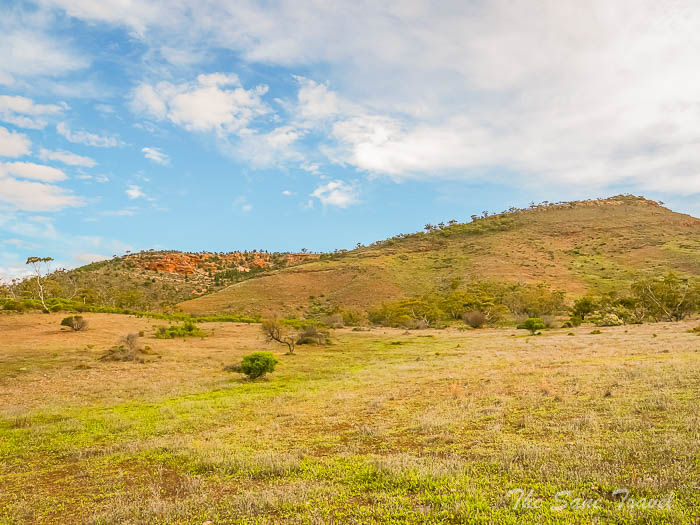
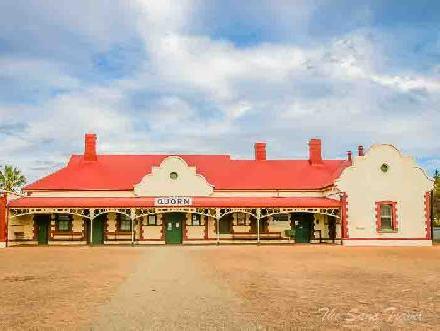
Your next destination is Quorn, with arrival in the late afternoon. You can find detailed information about Quorn in my article.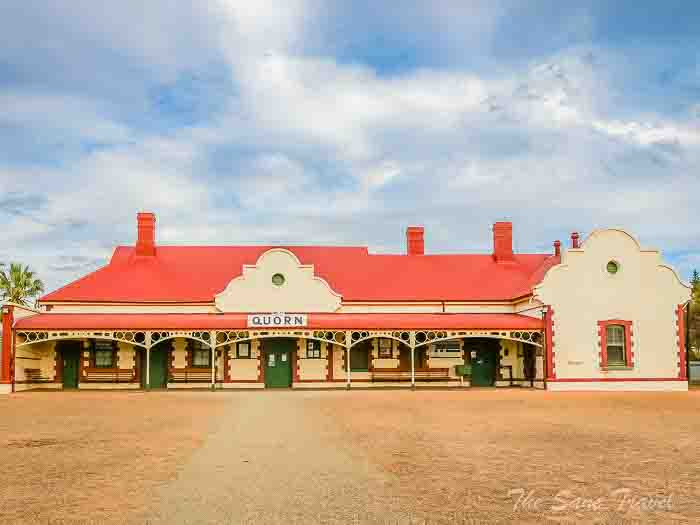
Overnight in Quorn.
Day 8: From Quorn to Yorke Peninsula
On this day, you leave Quorn behind and continue towards the stunning Yorke Peninsula. 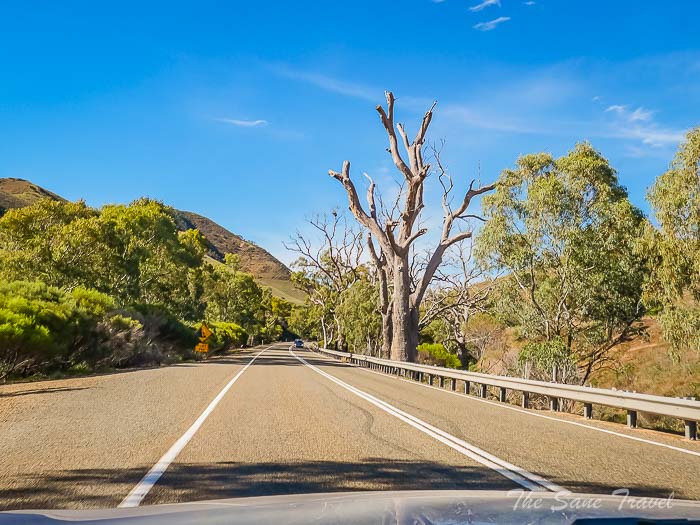 Your first stop is Hancock’s Lookout, a place that promises breathtaking vistas.
Hancock’s Lookout
Perched above the scenic Horrocks Pass, between Wilmington and Port Augusta, Hancock’s Lookout offers incredible panoramic views of the region. After a 7-kilometre drive along a rather rocky dirt road, the lookout rewards visitors with expansive views across the Spencer Gulf, Flinders Channel, the Flinders Ranges, the estuary, and the Eyre Peninsula. It is a truly spectacular sight.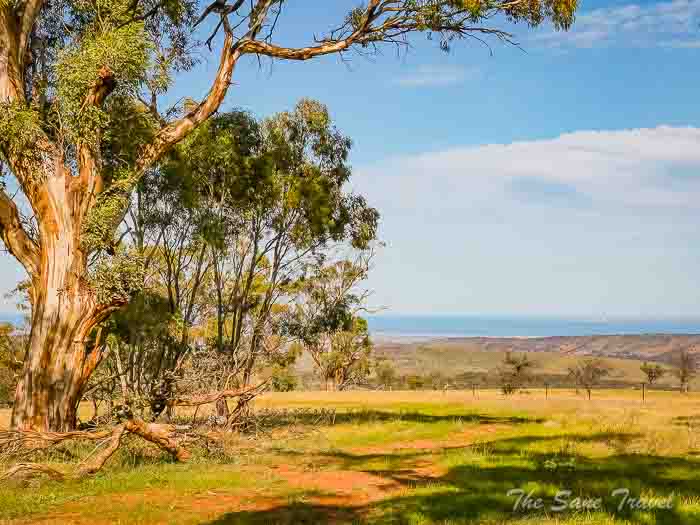
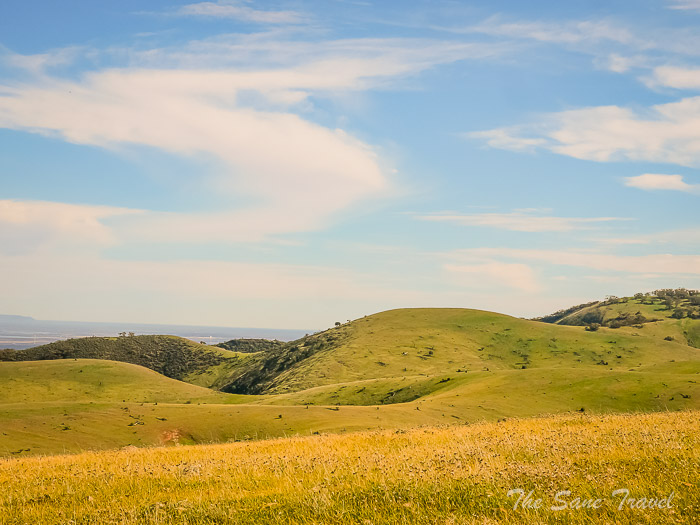
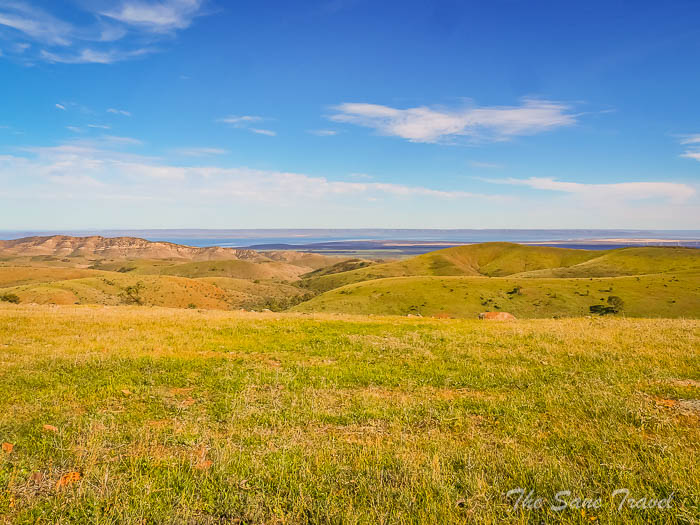
Next, I recommend a short detour to Wirrabara to admire its impressive silo art.
Wirrabara Silo Art
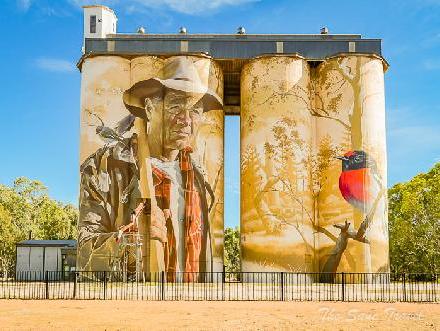
A highlight not to miss is Smug’s artwork, depicting a forestry worker alongside a Red-Capped Robin, a rare bird native to the area. It beautifully blends local industry and wildlife.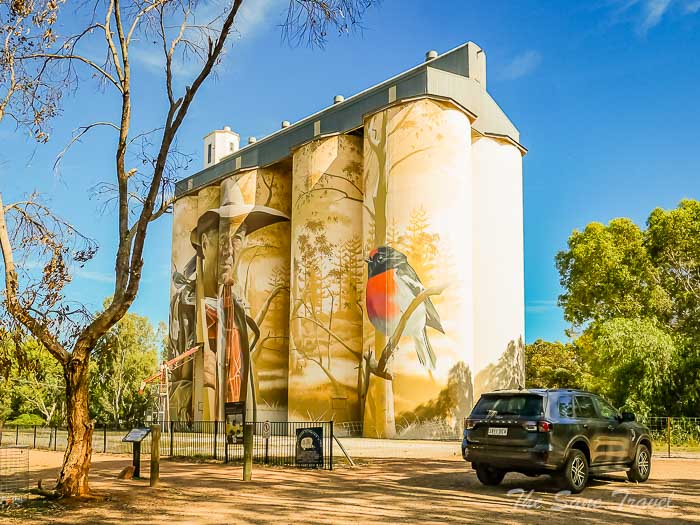
Now, a decision point: Port Pirie. While it has a certain bygone-era charm, I personally found it a little too industrial. The choice is yours.
Port Pirie
Nestled on the Spencer Gulf, Port Pirie, affectionately known as the “City of Friendly People”, was named after John Pirie, who arrived by boat in 1845 to load sheep. With its rich history and impressive architecture, Port Pirie is best explored on foot. Pick up a Heritage Walk brochure to delve into the town’s past, and take note of the recently revitalised city centre, featuring a new streetscape and artwork.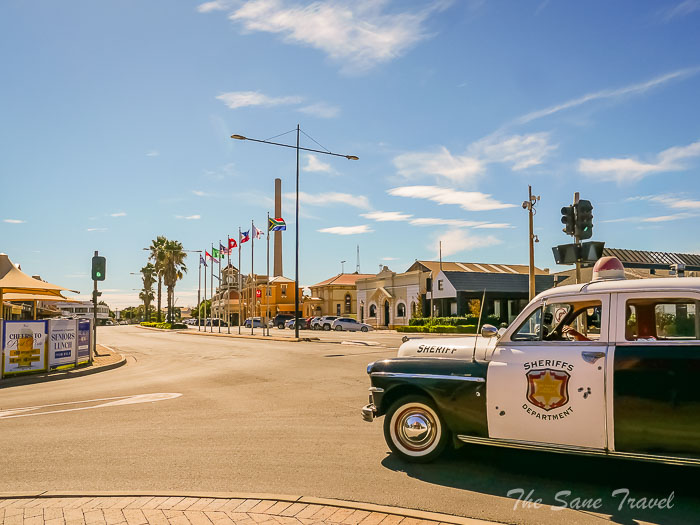
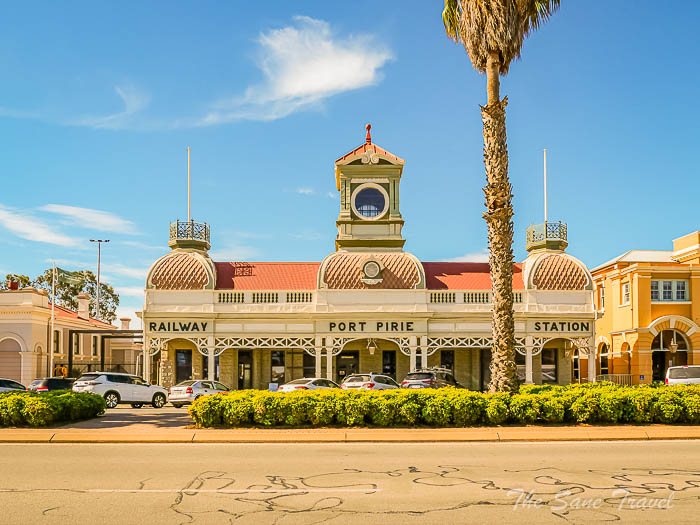
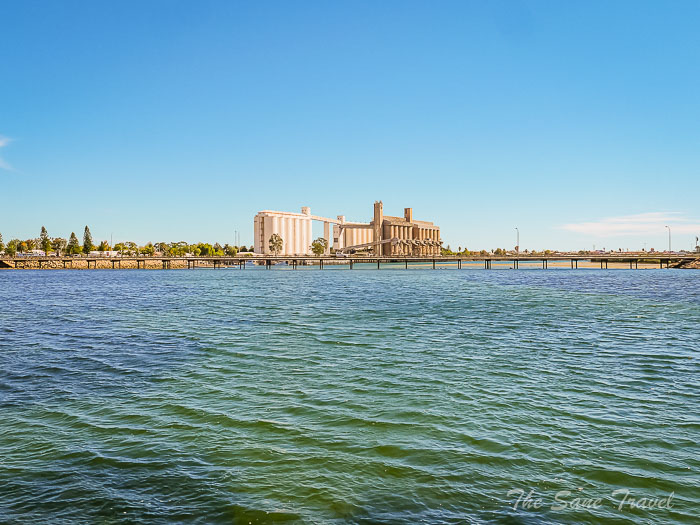
The town is also home to one of the world’s largest lead, zinc, and silver processing operations. Your next destination is the charming town of Moonta.
Moonta
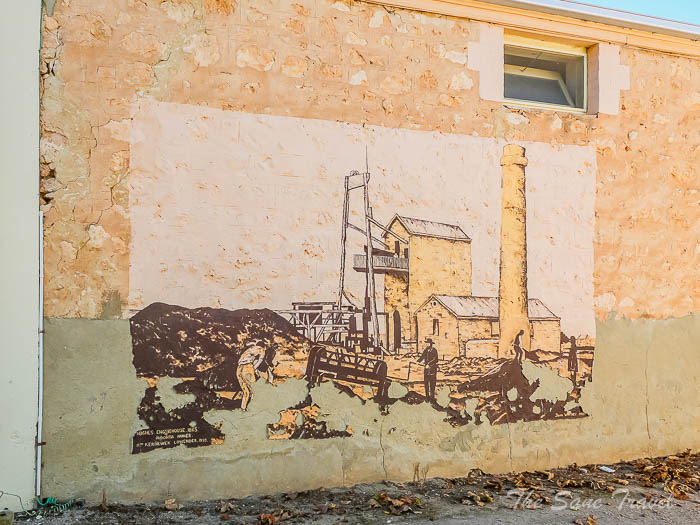
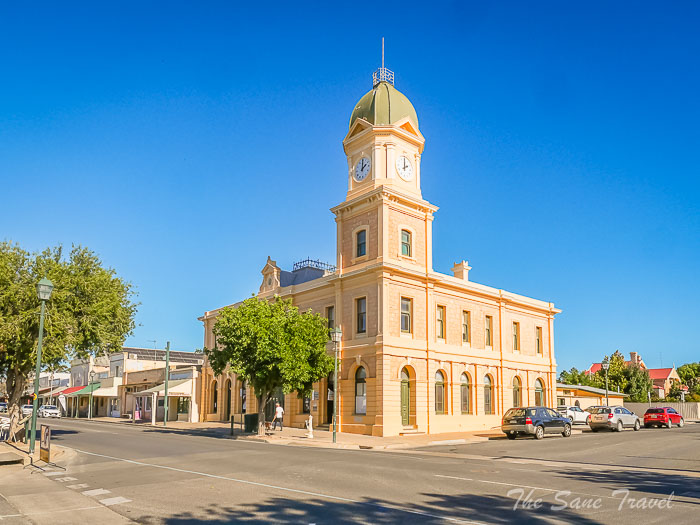
Moonta is a charming town with historic architecture, great fishing spots, and beautiful beaches. There are plenty of activities to enjoy, from dining at local restaurants to exploring gardens and family-friendly attractions. Moonta was recognised as South Australia’s top tourism town in 2021 and lies in the Copper Coast region of the Yorke Peninsula. Whether you are interested in the town’s history or want to relax by the water, Moonta has something for everyone. Originally known as Tiparra, the town grew rapidly after copper was discovered there in 1861. Today, Moonta is home to more than 5,000 residents.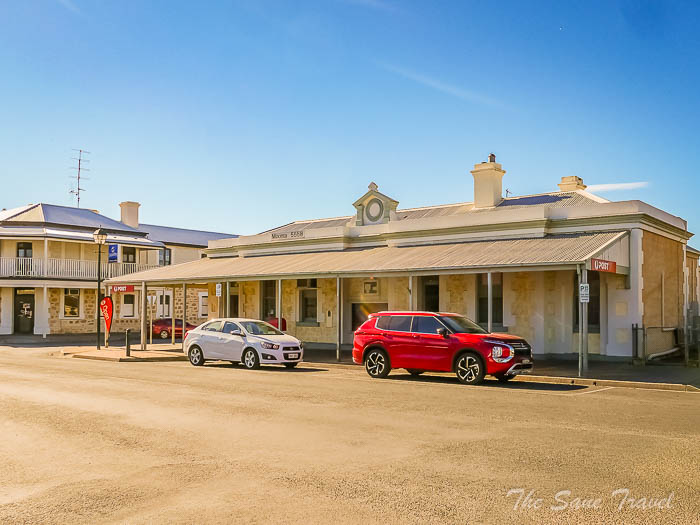
Overnight at Stansbury Holiday Motel.
Day 9: Yorke Peninsula
Unveiling the Yorke Peninsula’s Pink Wonders & Edithburgh’s Charms. As you head towards the captivating pink lakes, keep an eye out for water tower art across the Yorke Peninsula.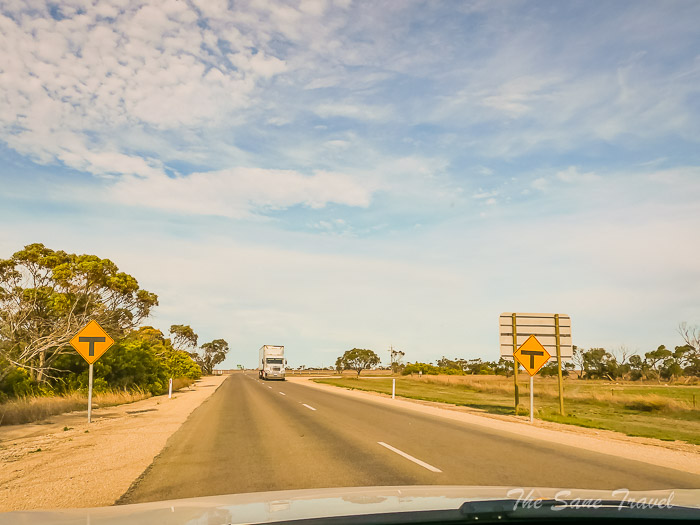
Pink Lakes
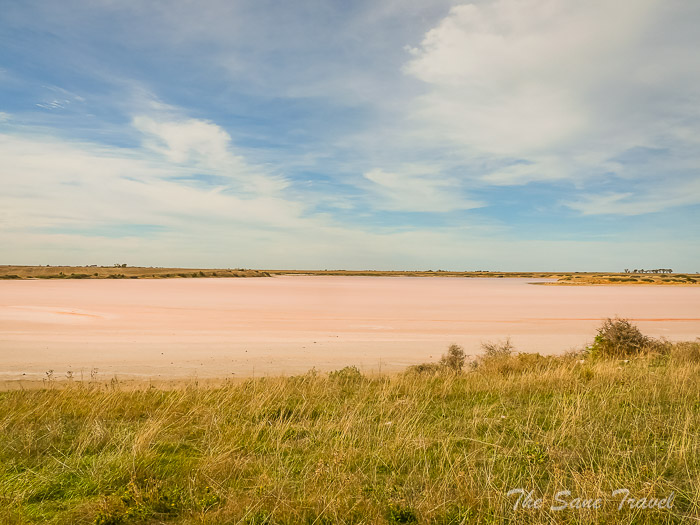
The Yorke Peninsula is a region of remarkable natural beauty, renowned for its striking pink salt lakes. The vibrant hues of these lakes are a natural phenomenon, caused by high salinity levels combined with salt-loving algae (Dunaliella salina) and pigment-producing bacteria, rather than an optical illusion. Just outside Yorketown, you can find a fascinating collection of vividly coloured lakes on the self-drive Yorke Peninsula Salt Lake Trail. The trail takes you past stunning salt lakes in shades of pink, orange, blue, and white, each displaying its own unique and often breathtaking hues. The intensity of the colours can change with the seasons, rainfall, and water levels. For the most vivid displays, visit during the warmer, drier months, when evaporation increases salt concentrations and enhances the lakes’ remarkable colour.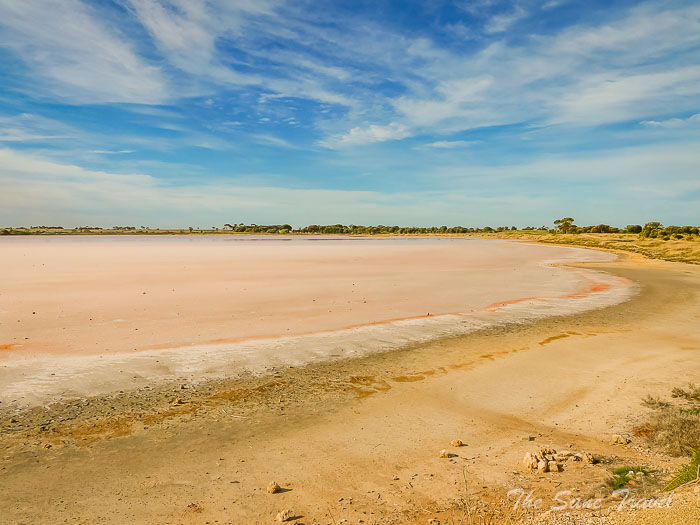
Edithburgh: A Coastal Gem with a Rich History
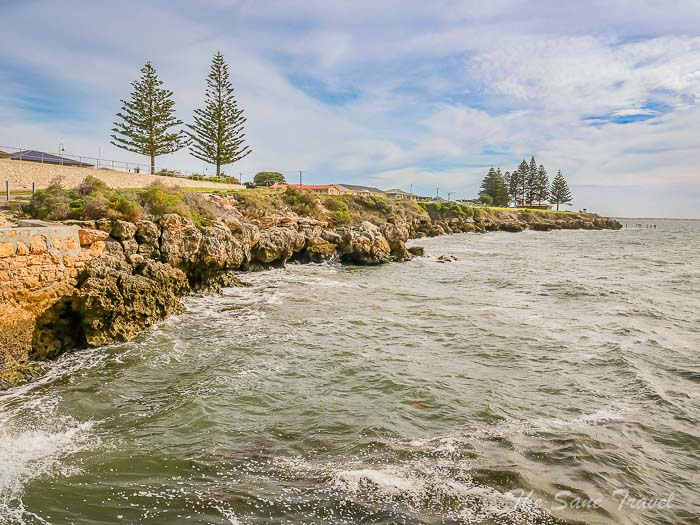
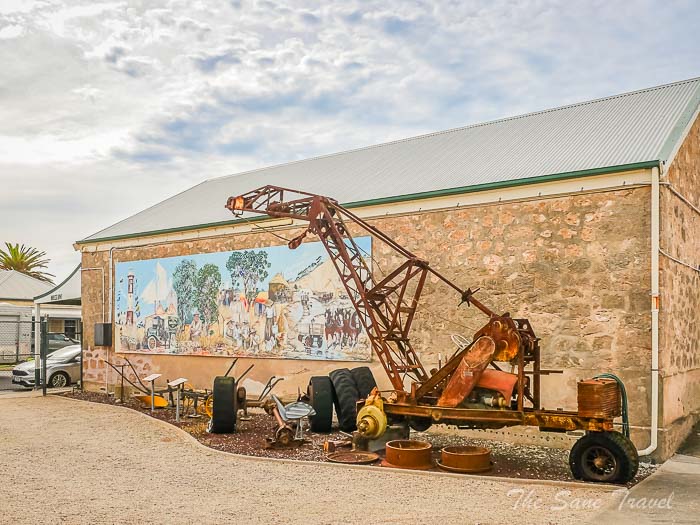
Afterwards, spend some time immersing yourself in Edithburgh, a picturesque seaside town on the south-eastern edge of the Yorke Peninsula. Established in 1869 and named after Lady Edith by Governor Sir James Fergusson, the town is situated approximately 226 kilometres west of Adelaide by road. Once a bustling port, Edithburgh is now a popular holiday destination and fishing spot. The Edithburgh Jetty is a notable attraction, known for its excellent shore-diving and fishing opportunities. Originally used for exporting agricultural products, lime, and salt, the jetty is now a popular hub for recreational activities. Visitors can also learn about the town’s maritime history by viewing the Clan Ranald Anchor on the Edith Street Median Strip and exploring the Edithburgh Museum. 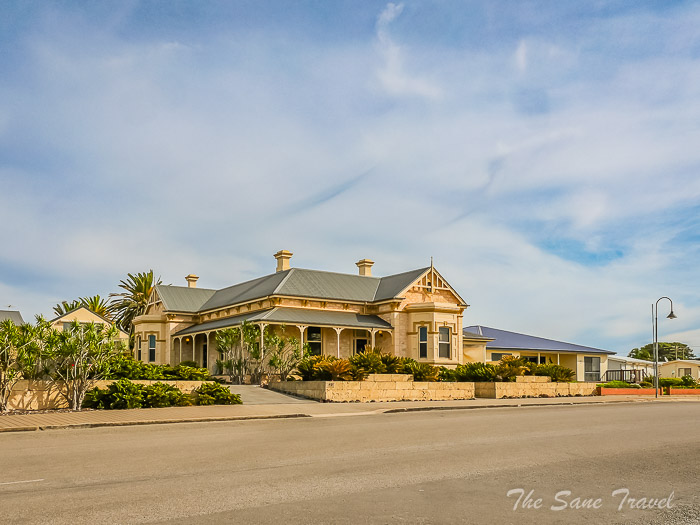
 In addition, Edith, the recently unveiled Clydesdale sculpture, pays tribute to the hardworking horses that played a significant role in the town’s history.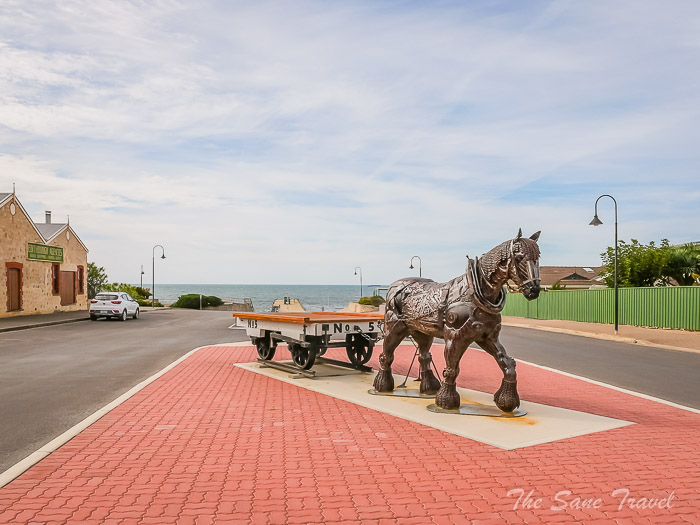
Onward to Adelaide
After soaking in the sights of Edithburgh, make your way to Adelaide.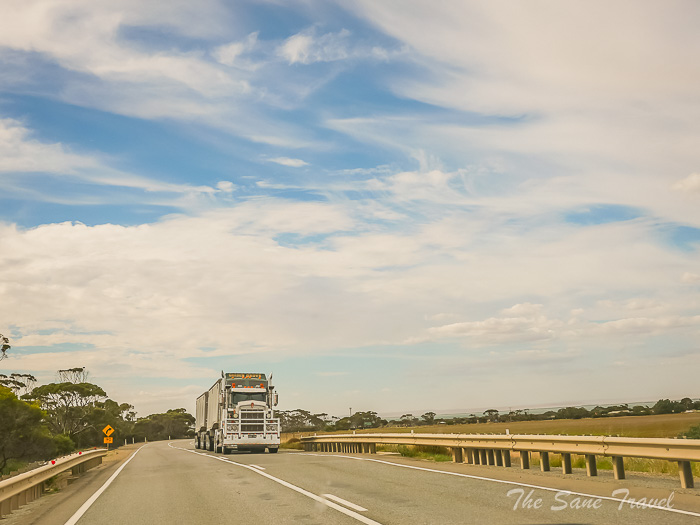
Overnight: Adina Apartment Hotel Adelaide Treasury.
Day 10: Exploring Adelaide
Start with day one of my two-day Adelaide itinerary.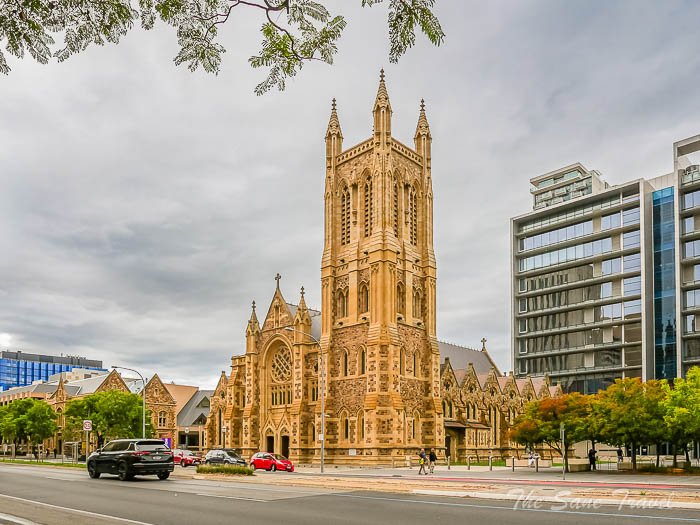
Overnight: Adelaide.
Day 11: More of Adelaide’s Charms
Continue experiencing Adelaide on the second day of my Adelaide itinerary.
Overnight: Adelaide, or depart for your next destination.
Practical tips
Vehicle choice: For the majority of your trip, a regular car will be suitable. However, if you intend to travel through Ikara Flinders Range National Park, it is advisable to consider using a small SUV with higher clearance or possibly a 4WD vehicle.
When to visit South Australia
For the best experience, plan your visit between April and October. This allows you to avoid the scorching temperatures and unforgiving conditions of the hotter months.
Like it? Pin it!
What did you think? Have you visited South Australia? I would love to hear from you, so please add your comment below.
Author: Anita Sane

About the author
Anita is a part-time traveller, passionate photographer and a retired career woman from Latvia, travelling mostly solo for more than 15 years. She is a skilled travel planner who plans and executes her travels by herself. Anita wants to show you how to travel the world and open your mind to new experiences. Follow her on Facebook, Instagram, Pinterest, Twitter and Bloglovin.
Report
My comments