
Welcome to Palermo, Sicily’s buzzing capital! This city is a captivating blend of history, diverse architecture, and mouth-watering cuisine. You will quickly notice Palermo’s unique architectural tapestry – a stunning mix of Arab-Norman, Baroque, and modern styles that reflects the city’s rich cultural heritage. Every building, street, and flavour tells the story of centuries of different rulers and influences. With a population of around 668,000, Palermo is a vibrant city that has held onto its timeless charm. Having largely shaken off its troubled past with mafia violence, Palermo now offers an authentic experience deeply rooted in its history. While the city has faced its share of challenges, a strong and resilient spirit lies just beneath the surface. In 2015, several of Palermo’s most iconic structures – including Palermo Cathedral, the Royal (or Norman) Palace with its Palatine Chapel, the Church of San Giovanni degli Eremiti, the Church of San Cataldo and Martorana, Zisa Castle, the Admiral’s Bridge, and the cathedrals of Cefalù and Monreale – were recognised as a UNESCO World Heritage Site. For tips on what to see, check out my list of must-visit places in Palermo.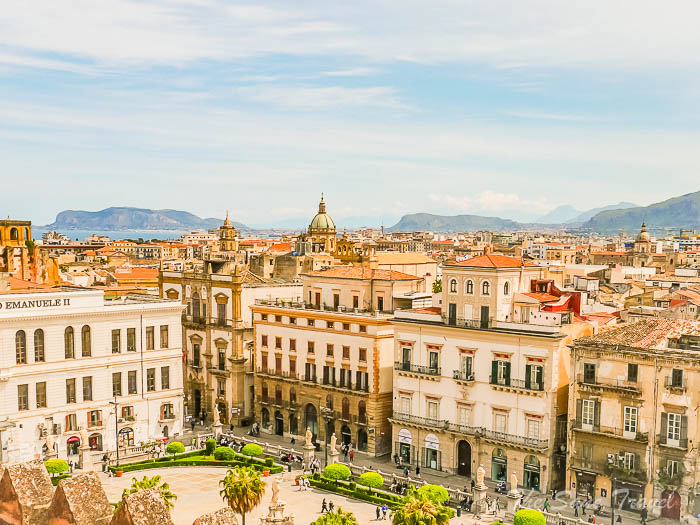
Politeama Garibaldi Theatre
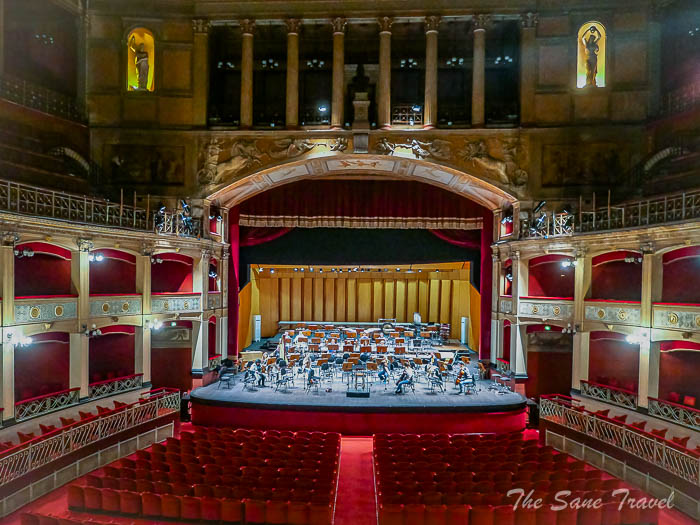
Located in Piazza Politeama, the Politeama Garibaldi Theatre is a showstopper. Built in a neoclassical style inspired by Pompeii, it is hard to miss. The entrance features a triumphal arch, while the roof is crowned by a bronze chariot of Apollo pulled by four horses. Officially opened in 1874, the theatre was designed to modernise and democratise Palermo’s cultural scene. Architect Giuseppe Damiani Almeyda combined neoclassical and eclectic elements to create a grand entrance and portico. Today, the Teatro Politeama Garibaldi is home to the Orchestra Sinfonica Siciliana, one of Italy’s most respected symphonic ensembles. The theatre hosts a diverse range of events, including classical concerts, contemporary music, plays, and cultural festivals. Beyond performances, it also serves as a community space for official functions, international gatherings, and art exhibitions.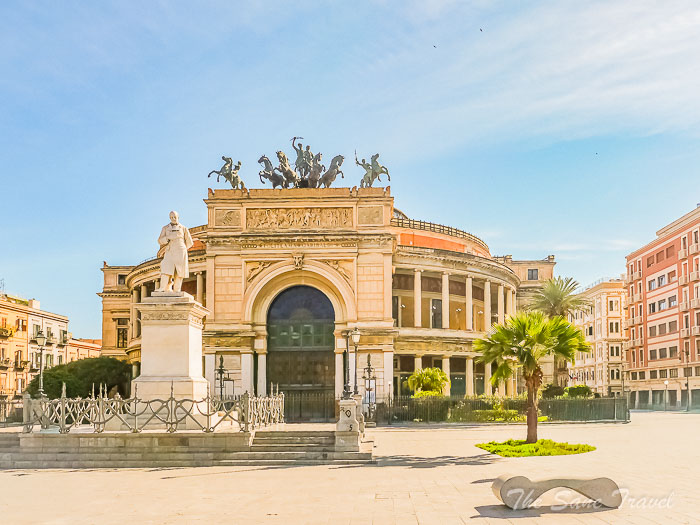
Address: Piazza Ruggero Settimo 15
Palermo’s theatrical grandeur: Teatro Massimo
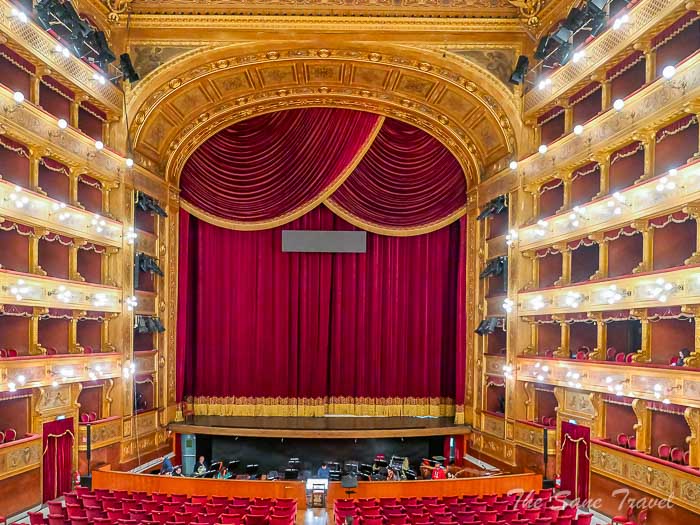
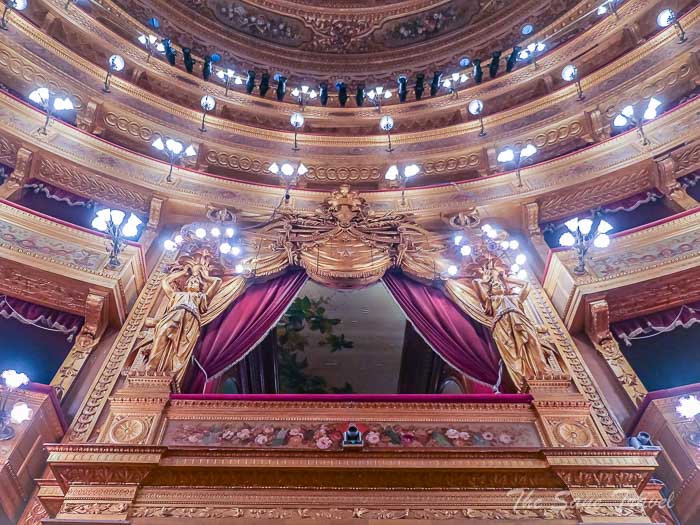
The Teatro Massimo, Italy’s largest opera house and one of Europe’s grandest, is an absolute must-see in Palermo. Construction began back in 1875, a monumental architectural undertaking that took years to complete. Today, the sheer scale of the building is breathtaking, with impressive halls, sweeping galleries, and magnificent staircases that draw the eye at every turn. Inside, you will be dazzled by ornate golden decorations, plush red brocade armchairs, antique mirrors, and glittering Murano chandeliers. Pure elegance and charm throughout. Be sure not to miss the Great Hall, famed for its exceptional acoustics and the Symbolic Wheel fresco by Luigi di Giovanni – a true masterpiece of art and engineering. Originally designed to hold 3,000 spectators, the auditorium now seats 1,381, with seven tiers of boxes curving around the traditional horseshoe-shaped stage. The Teatro Massimo is renowned for its opera, ballet, and classical music seasons, and also offers engaging educational programmes for schools, as well as daily guided tours. Tours run from 9:30 am to 6:00 pm, and you can grab your tickets at the box office or online.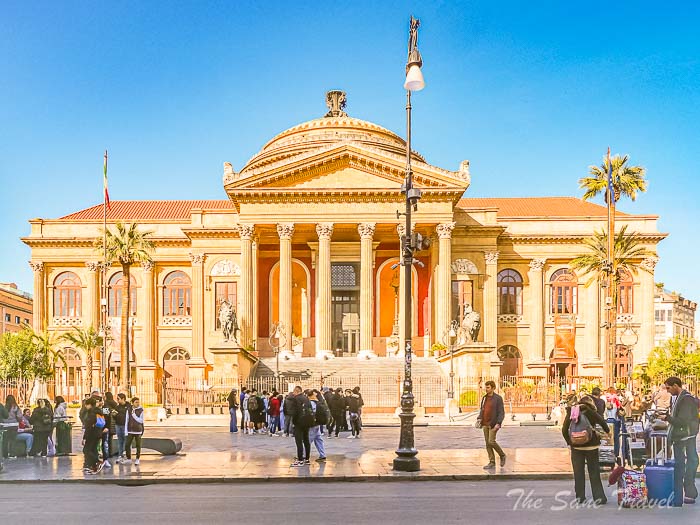
Address: Piazza Verdi
Quattro Canti: where Palermo’s heart beats
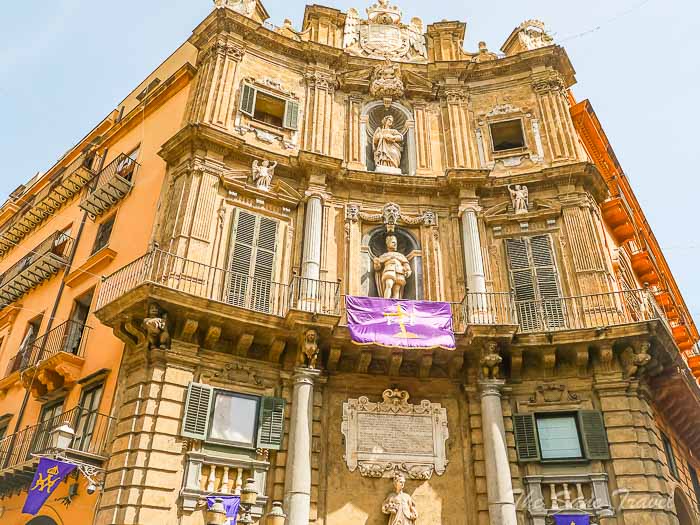
Right in the heart of Palermo’s historic centre, you will find the Quattro Canti, or Four Corners. Officially known as Piazza Vigliena, this Baroque square marks the intersection of Corso Vittorio Emanuele and Via Maqueda, effectively dividing the city into its four ancient neighbourhoods: Kalsa, Seralcadi, Albergaria, and Castellammare. Designed by architect Giulio Lasso in the early 17th century, Quattro Canti is an octagonal marvel, with stunning Baroque buildings gracing each corner. The square’s design is rooted in symmetry and order, reflecting early urban planning. Each building features three tiers of decoration, including fountains representing the seasons, statues of Spanish kings, and figures of Palermo’s patron saints. The square is a feast for the eyes and a perfect spot to soak up the city’s rich history.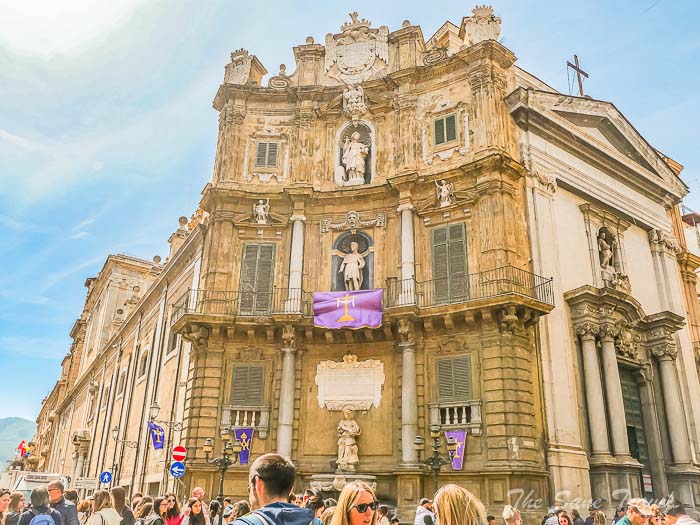
The Fountain of Shame: Palermo’s controversial masterpiece
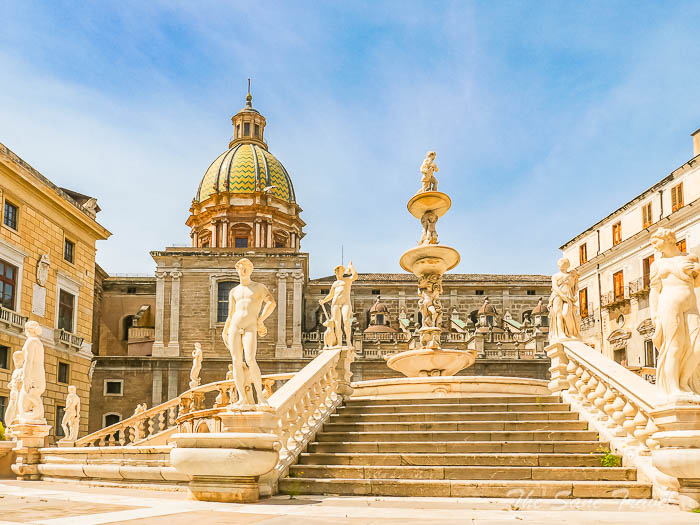
Just a short stroll away in Piazza Pretoria, near the town hall, lies the Fontana Pretoria, more affectionately known as the “Fountain of Shame”. This 16th-century fountain is a fine example of High Renaissance architecture in Sicily. Originally designed by Francesco Camilliani for the gardens of Peter of Toledo’s Tuscan villa, the fountain is adorned with around 50 statues depicting mythological figures – including monsters, harpies, sirens, and tritons. When first unveiled, it caused quite a stir, largely because of its nude figures. Today, however, the Fontana Pretoria is celebrated as one of Palermo’s most iconic landmarks and remains a favourite spot for photographers keen to capture its intricate details and beautiful surroundings.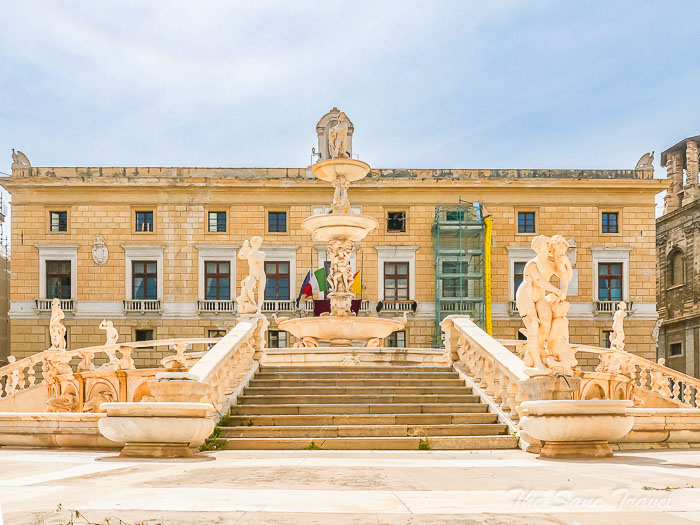
Palermo’s sacred spaces: a journey through art and history
Palermo is a city brimming with architectural wonders, and its churches are a testament to its rich history and artistic heritage. Prepare to be mesmerised as we explore some of the most stunning sacred spaces in the heart of the city. Visiting Palermo’s churches is an absolute must, and the Church of Saint Catherine is a great place to start, along with two other impressive churches nearby. Even if Baroque decoration might not usually be your thing, you may find yourself pleasantly surprised by the beauty of Palermo’s ecclesiastical treasures.
Saint Catherine of Alexandria Church and Monastery of Palermo
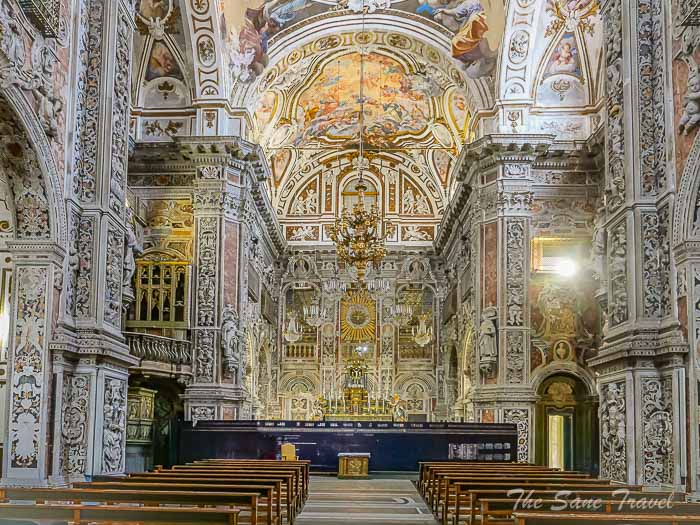
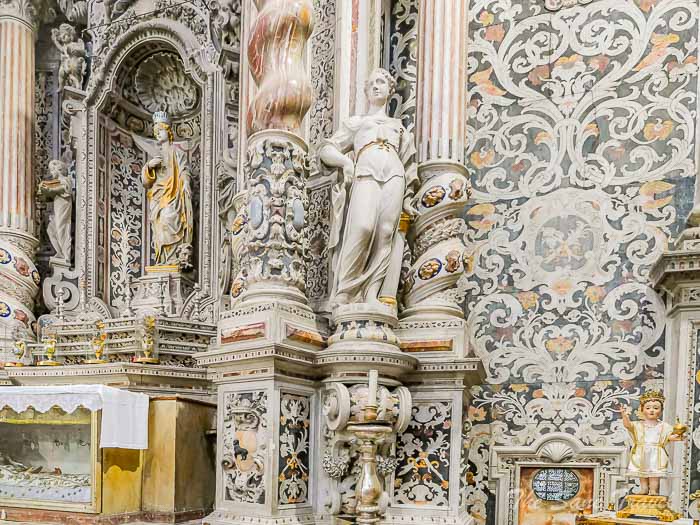
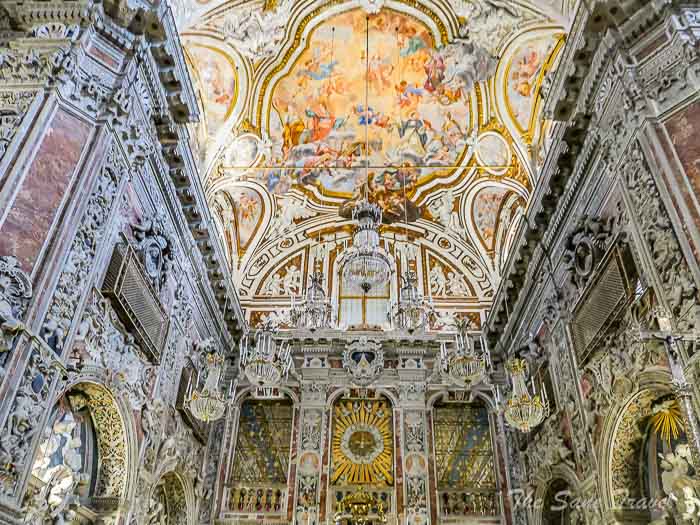
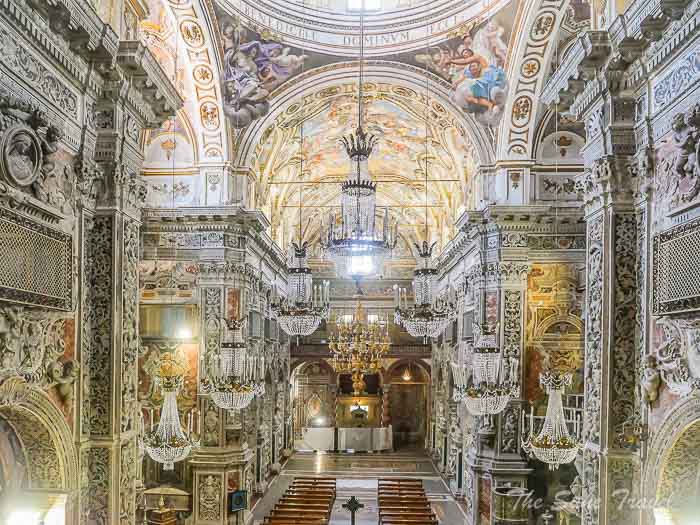
Stepping into the Church of Saint Catherine is like entering a time capsule. Built in the late 16th century as part of a Dominican convent that housed nuns until 2014, the church showcases a glorious mix of Renaissance, Baroque and Rococo styles, reminiscent of Italian churches of the period. Inside, almost every surface is covered in intricate paintings, decorative marble, and vibrant colours – most of which were added in the 17th and 18th centuries by talented yet unidentified artists. After the last Dominican nuns departed in 2014, the monastery was taken over by Palermo’s Curia and is now owned by the state, serving as a museum.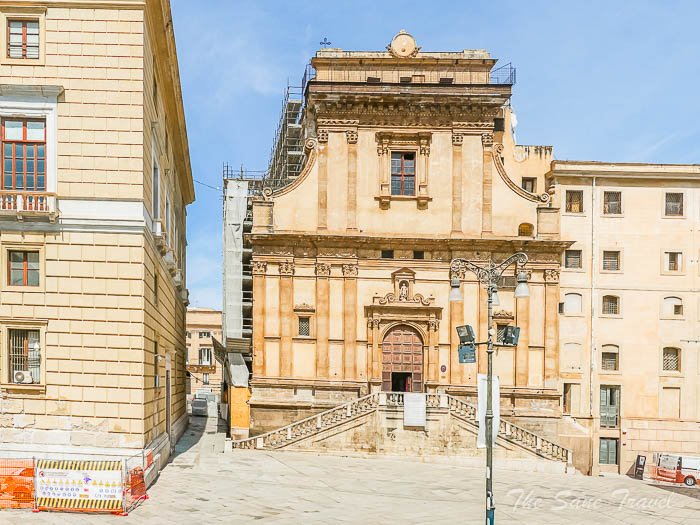
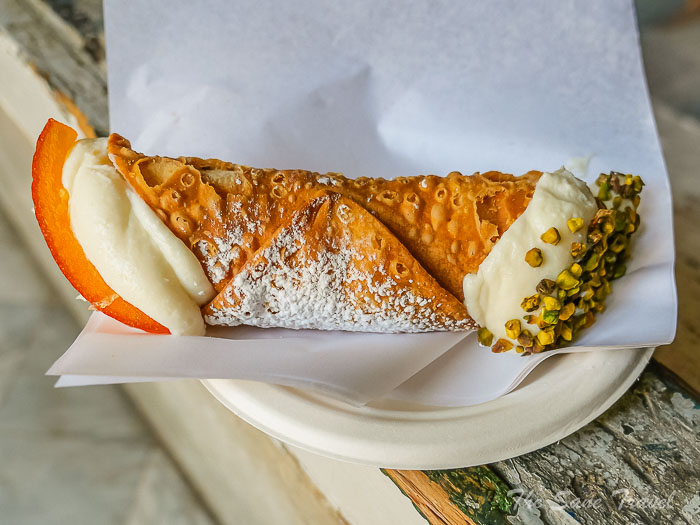
But here is a sweet secret: within the monastery walls, you will find a bakery selling traditional cakes and pastries made from recipes passed down through generations of nuns. Apparently, the Santa Catherina bakery was once famous for its biscuits, stuffed buns, pancakes, and jams when the monastery was still in operation. You can enter the bakery directly from Piazza Bellini – and the entrance is free!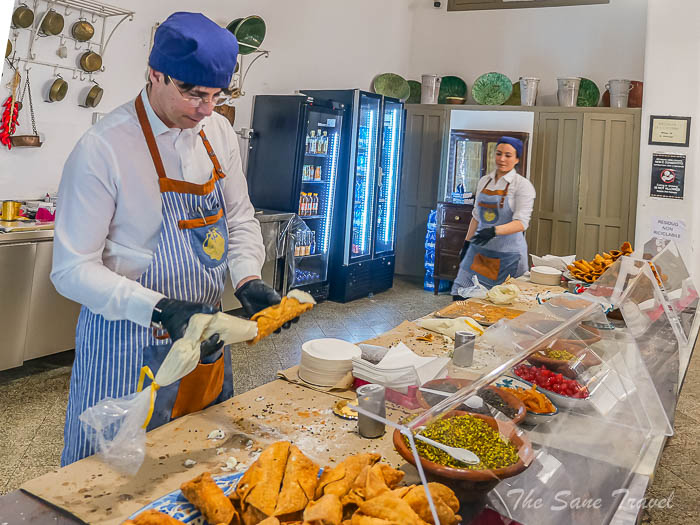
San Giuseppe dei Padri Teatini
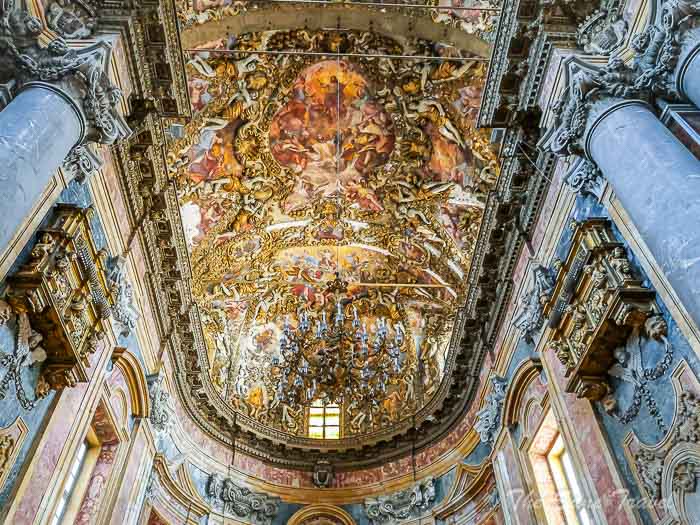
Located in Palermo’s historic centre, the Church of San Giuseppe dei Padri Teatini is an impressive 17th-century masterpiece. Its interior is lavishly adorned with artwork created over several centuries by numerous artists. Designed in the shape of a Latin cross with three naves, the church features sculptures by Andrea Palma and Giuseppe Musso, as well as paintings by Filippo Tancredi, among others. Keep an eye out for the monumental organ and sculptures by Ignazio Marabitti and Filippo Siracusa. Do not forget to look up at the dome, frescoed with scenes from the life of Gaetano da Thiene and the Apostles by Guglielmo Borremans.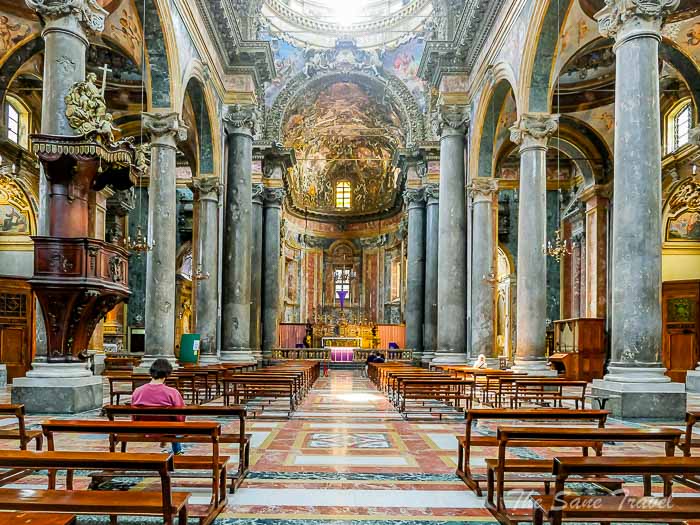
Santa Maria di Gesù Church
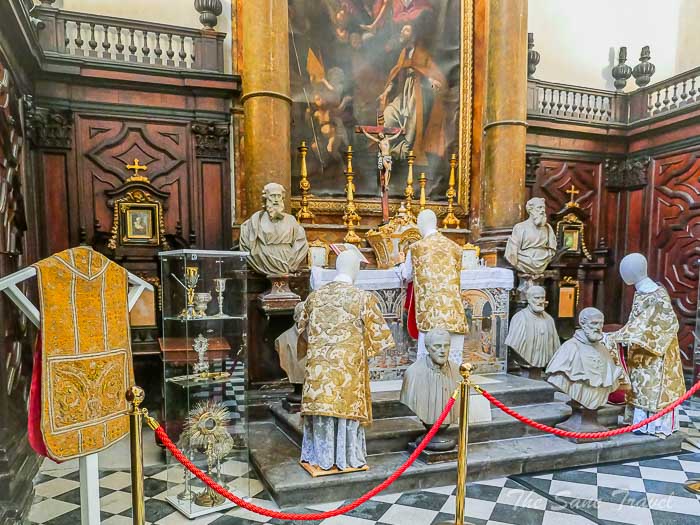
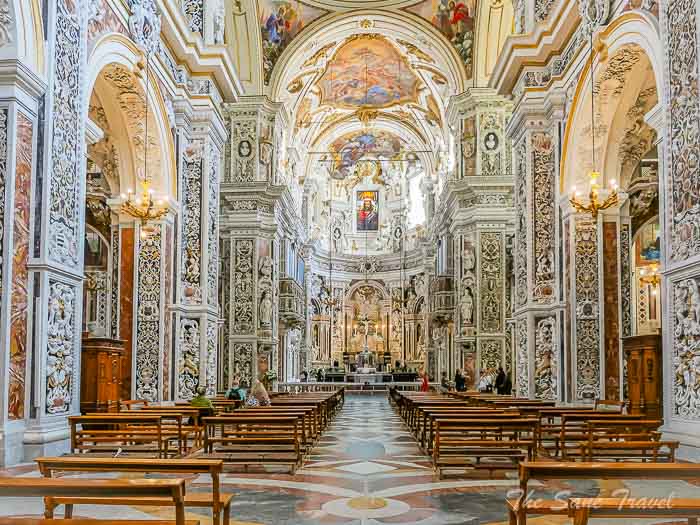
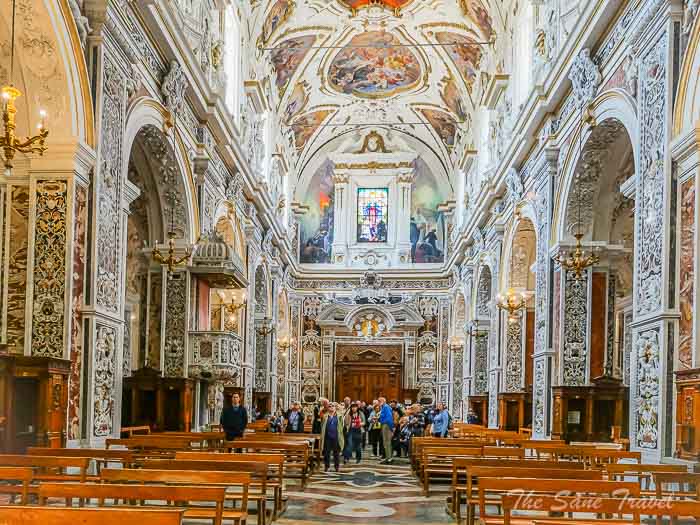
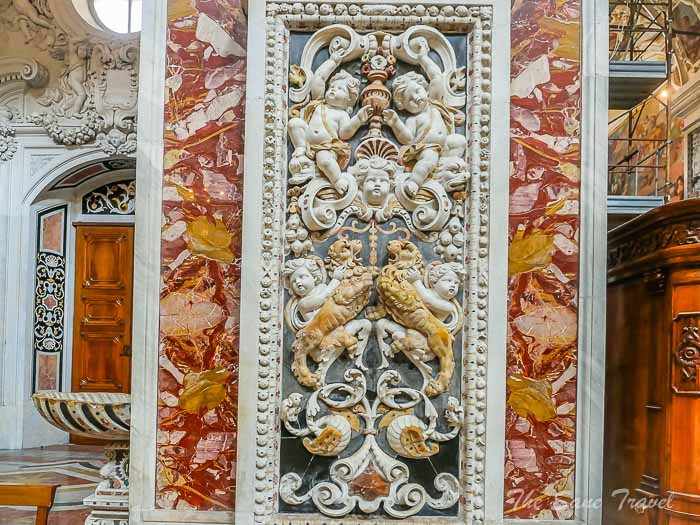
Also known as Chiesa del Gesù or Casa Professa, the Chiesa di Santa Maria di Gesù is a significant Baroque church steeped in history. The Jesuits arrived in Palermo in 1547 and soon began constructing this magnificent building. Over the years, artists like Vincenzo La Barbera and Orazio Ferrerano contributed to its decoration, with Ferrerano creating angel figures for the Chapel of the Holy Crucifix. Throughout the 17th and 18th centuries, the church was further embellished with frescoes, statues, and stuccoes by artists such as Lorenzo Ciprì and Giacomo Serpotta. Despite sustaining damage during World War II, Casa Professa was meticulously restored and today stands as a testament to enduring artistry and faith in Palermo. Take your time to explore its rich history and experience the beauty of Sicilian Baroque architecture.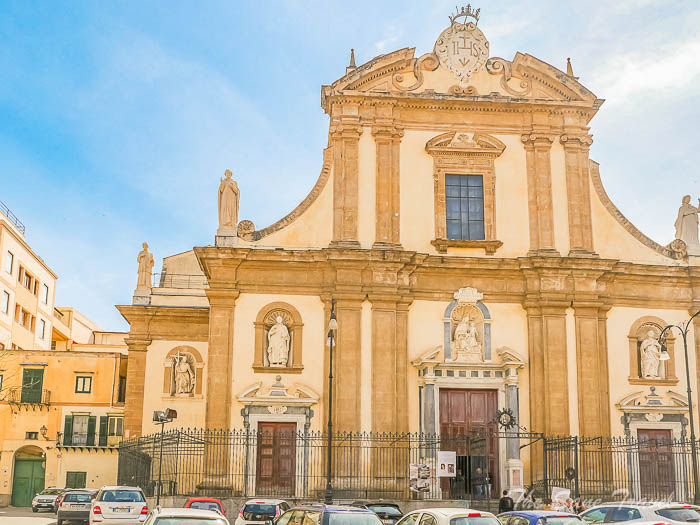
La Martorana Church
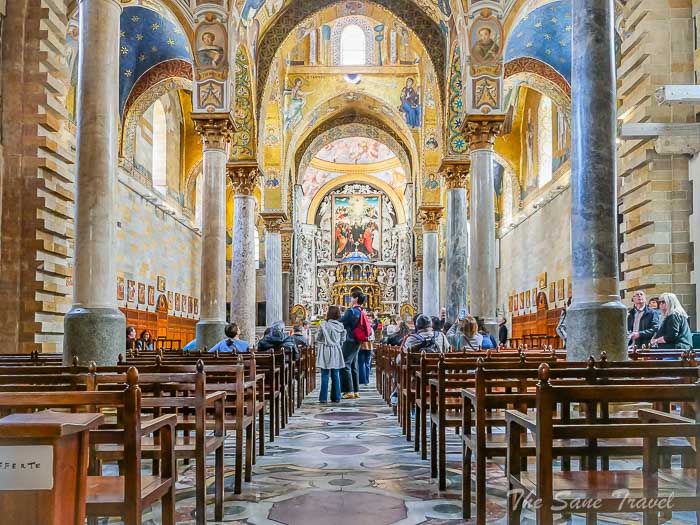
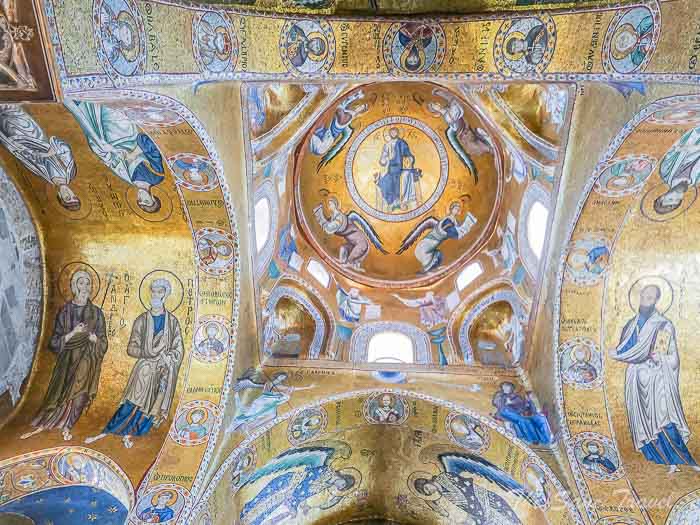
Let’s delve deeper into Palermo’s religious heart with a visit to a true architectural marvel: the Church of Santa Maria dell’Ammiraglio, affectionately known as La Martorana. This is not just any church; it is a stunning testament to Palermo’s unique cultural tapestry, seamlessly blending Byzantine, Norman, and Arab-Norman styles. Built in 1143 by George of Antioch, a high-ranking Byzantine admiral in King Roger II’s court, the church is dedicated to the Virgin Mary and serves as a powerful symbol of the city’s rich heritage. Over the centuries, La Martorana has undergone several renovations, most notably a 17th-century Baroque makeover that beautifully complements its original architectural elements.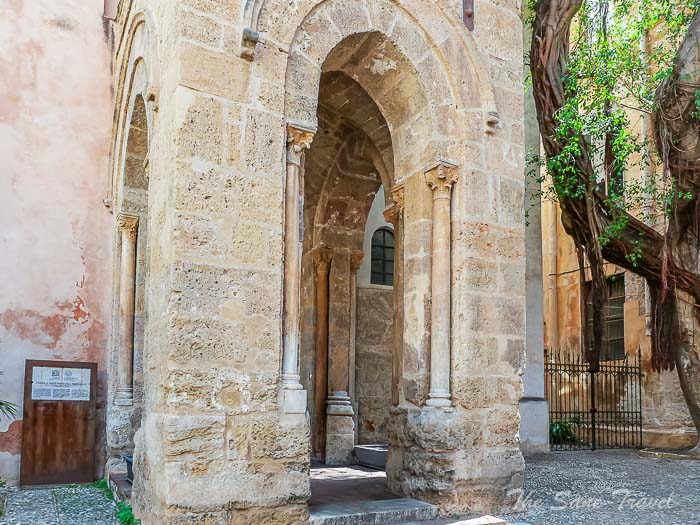
Having soaked up the atmosphere of the churches in the Quattro Canti area, our next stops are the magnificent Palermo Cathedral and the historic Norman Palace.
Palermo Cathedral
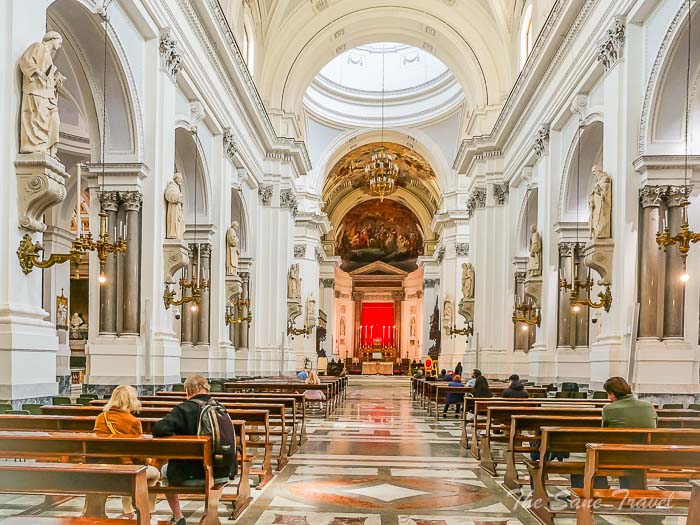
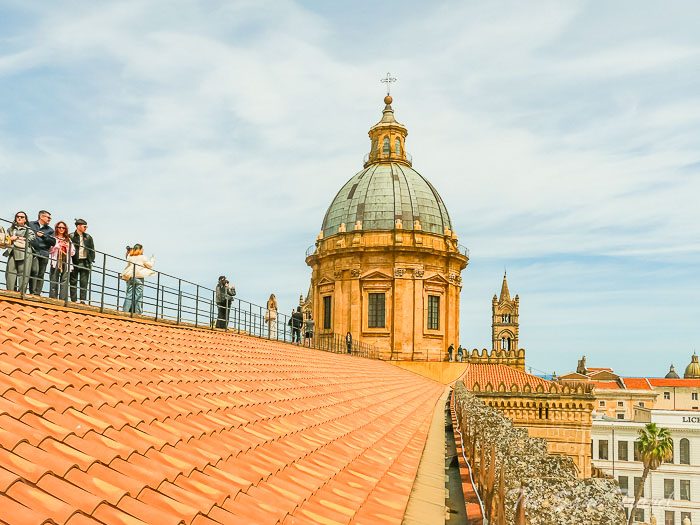
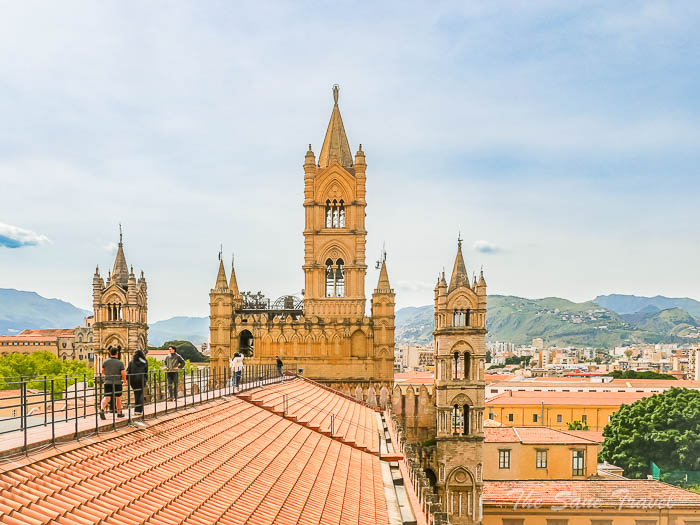
Dominating the skyline above the terracotta rooftops of Palermo’s historic centre, the 12th-century cathedral is undoubtedly one of Sicily’s most impressive structures. Its sheer size is captivating, with Gothic, Medieval, Arabic, and neoclassical elements all capturing the eye. Domes, towers, and battlements tell the story of centuries of architectural evolution. The interior, while beautiful, is less ornate than some of Palermo’s other gold-laden sites. Entry to the cathedral itself is free, but for a truly unforgettable experience, a “Rooftops Only” ticket is well worth purchasing. The climb up the narrow, winding staircase is well worth both the effort and the cost, as it rewards you with breathtaking panoramic views of the city, the sparkling sea, and the majestic mountains beyond. Walking on the cathedral’s roof is an experience you will not soon forget.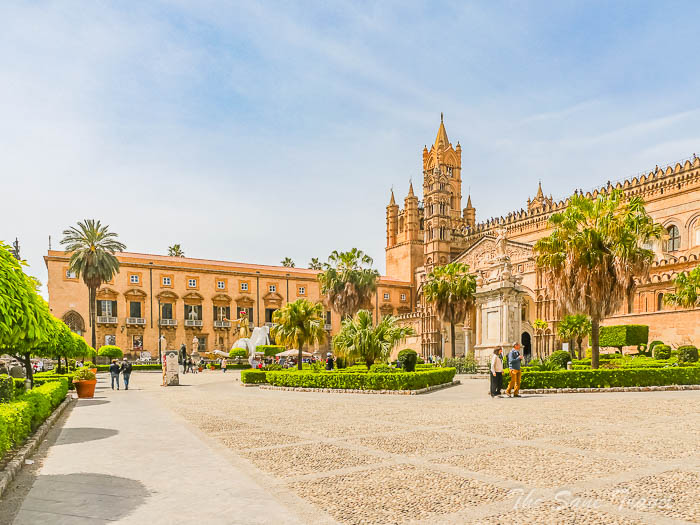
Santa Rosalia
As you approach Palermo Cathedral, you cannot miss the elaborate processional float dedicated to Santa Rosalia, affectionately known as “the Little Saint”, the patron saint of Palermo. Born into a noble Norman family, Rosalia chose a life of religious solitude, living as a hermit in a cave on Mount Pellegrino, where she passed away in 1166. According to legend, during a devastating plague in Palermo in 1624, Rosalia appeared to a sick woman and a hunter, revealing the location of her remains. Following her instructions, the hunter found her bones on the mountain and brought them to the city. A procession with her relics miraculously ended the plague, cementing Rosalia’s status as Palermo’s patron saint. In honour of this miracle, a sanctuary was built in the very cave where her remains were discovered. 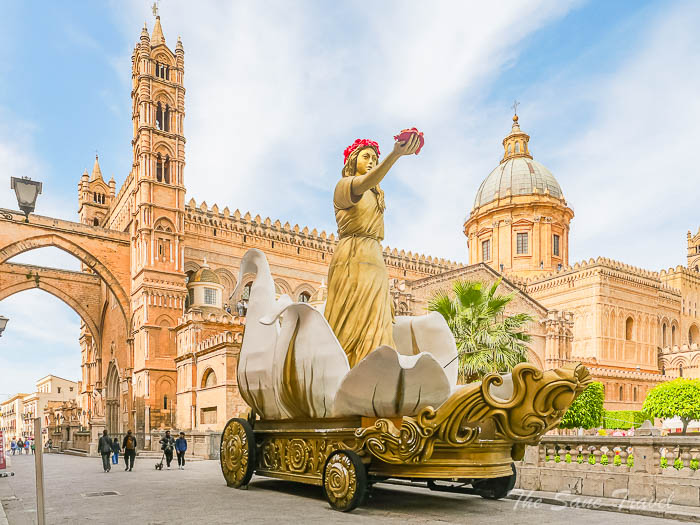
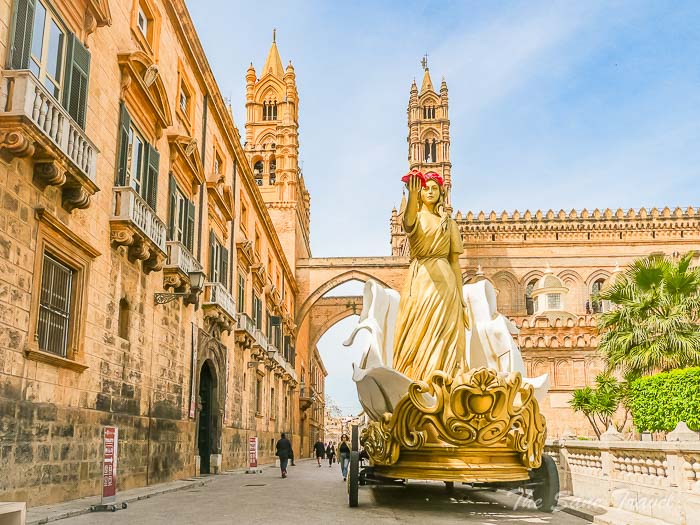
Next up on our itinerary is the legendary Norman Palace and its dazzling Palatine Chapel.
Norman Palace and Palatine Chapel
The Norman Palace, a testament to Palermo’s layered history, originated as the residence of an Arab emir during the 10th century. Later, the Norman kings, with their penchant for grandeur, transformed it into a lavish palace and formidable fortress. Now known as the Royal Palace, it was further expanded in the 16th and 17th centuries, resulting in the cohesive structure you see today. The true jewel of the palace, however, is the Palatine Chapel (Cappella Palatina), commissioned by Roger II and completed in 1140. A UNESCO World Heritage Site, it served as both a religious centre and a royal audience hall. Immerse yourself in its remarkable blend of Byzantine, Islamic, and Romanesque architectural styles – a vivid reflection of Palermo’s rich cultural diversity.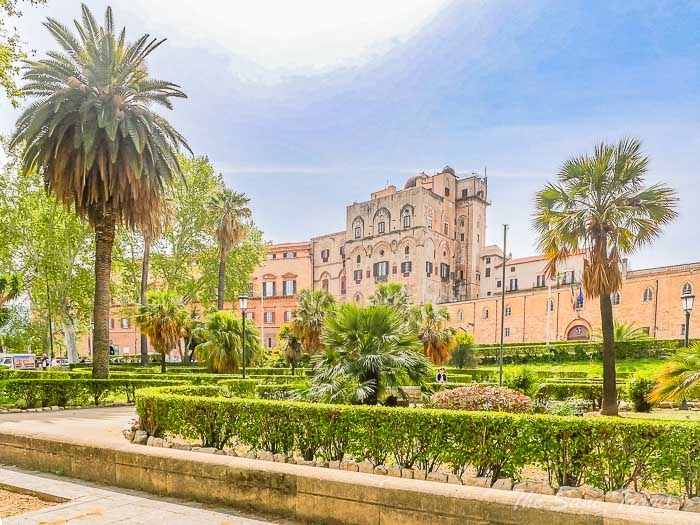
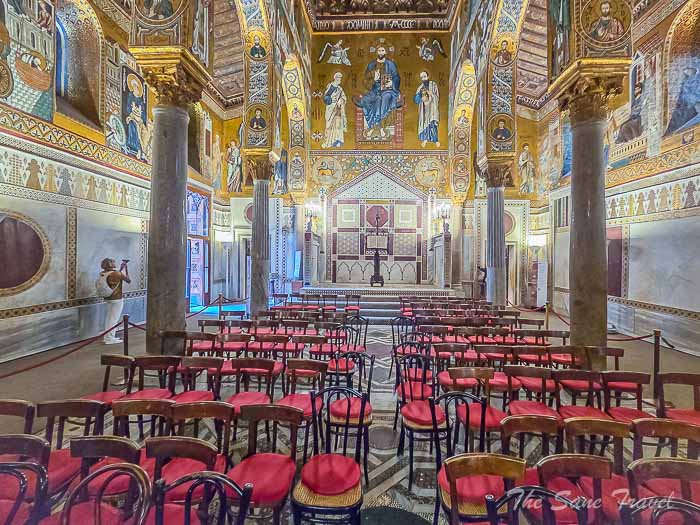
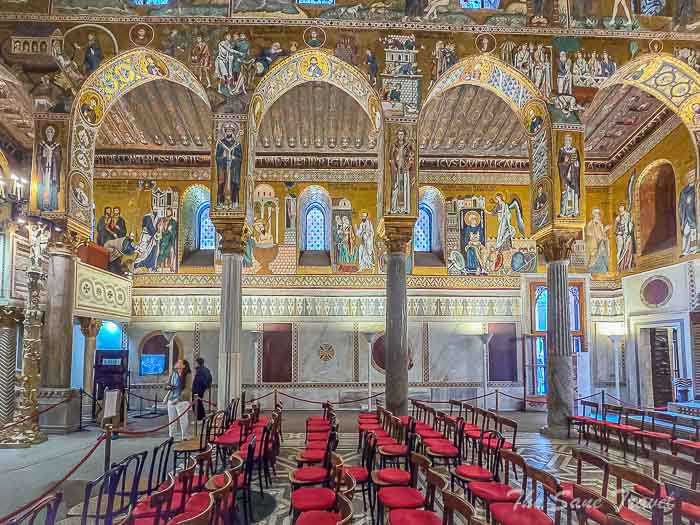
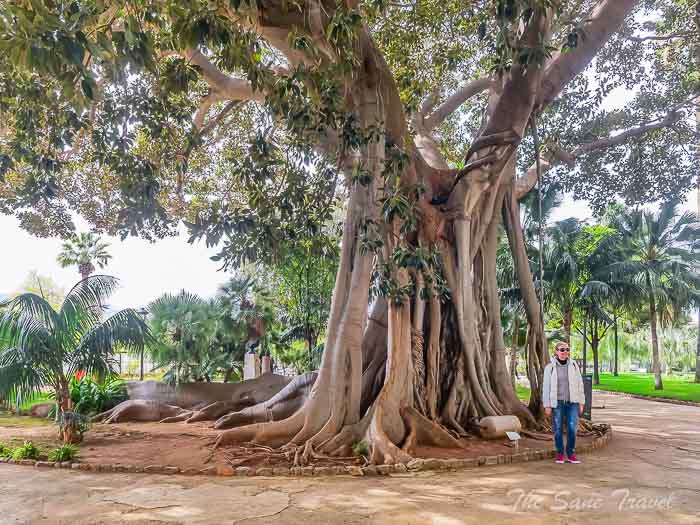
Beyond the chapel lies the Sala d’Ercole, or Hercules Hall, named for its striking paintings by Giuseppe Velasquez, added in 1560. If you find yourself with some free time, consider taking a stroll through the palace garden, which boasts some truly remarkable trees.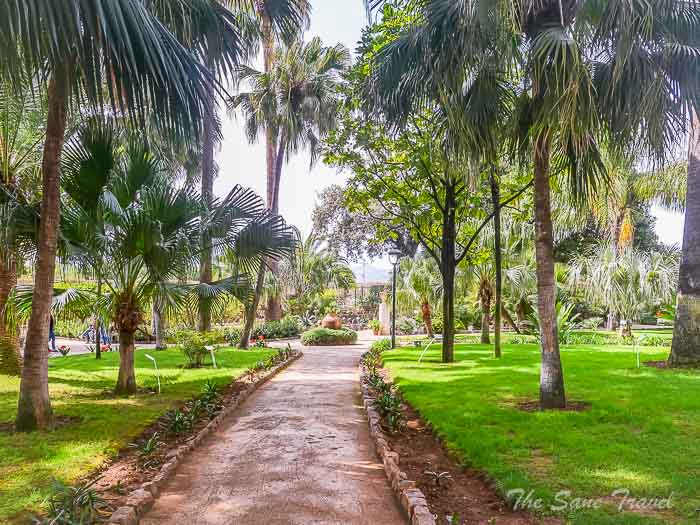
Capo Market
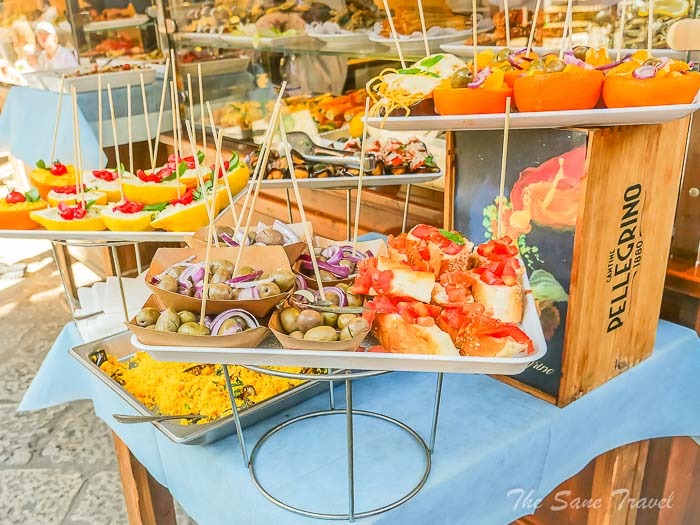
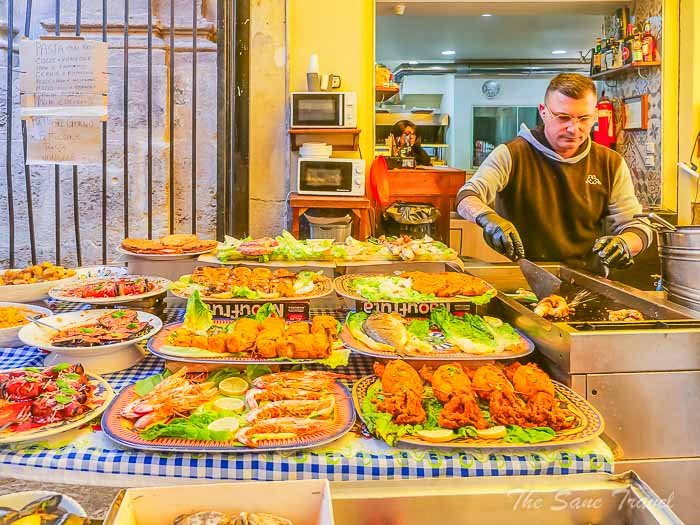
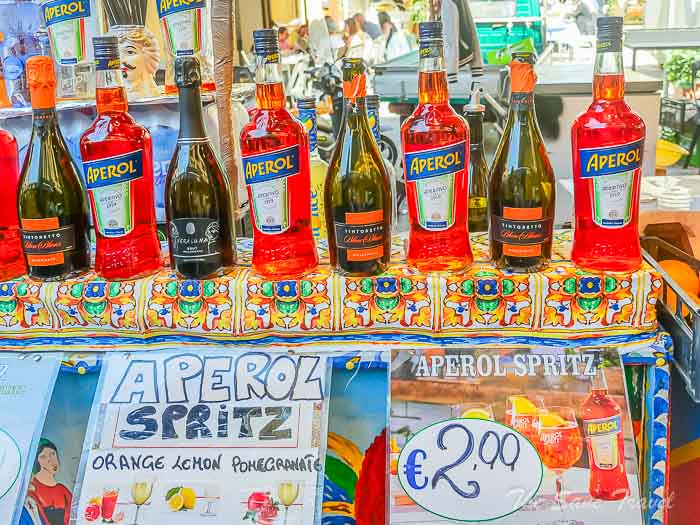
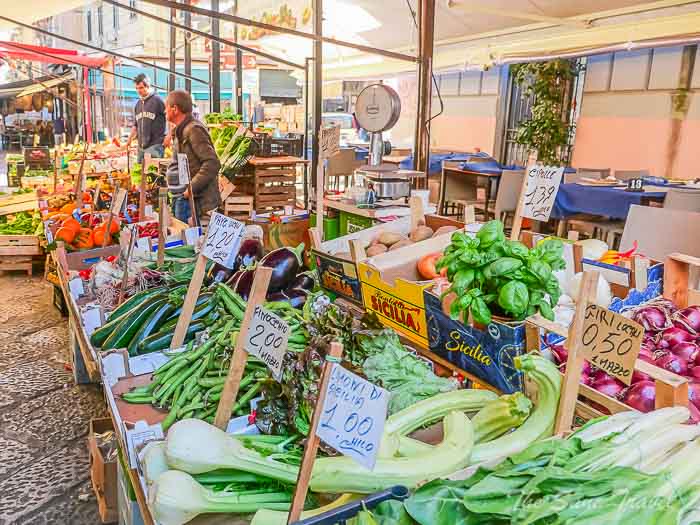
Next, dive into the vibrant chaos of the Capo Market (Mercato del Capo). This historic market, which originated in the Muslim era, is nestled in the historic Seralcadio neighbourhood and stretches across streets such as Via Carini, Via Beati Paoli, Via di S. Agostino, and Via Cappuccinelle. Traditionally known for its meat trade, the market has evolved to cater to tourists with street food and souvenirs, while still retaining an authentic Sicilian atmosphere. Wander through its maze-like streets, reminiscent of an oriental souk, and soak up the lively Palermitan commerce. Take the chance to sample local specialities such as sfincione (a thick Sicilian pizza), sfincionello (a smaller version), bread with spleen, bread with panelle (chickpea fritters), and potato croquettes. The market is open daily, with mornings and early afternoons being the busiest times.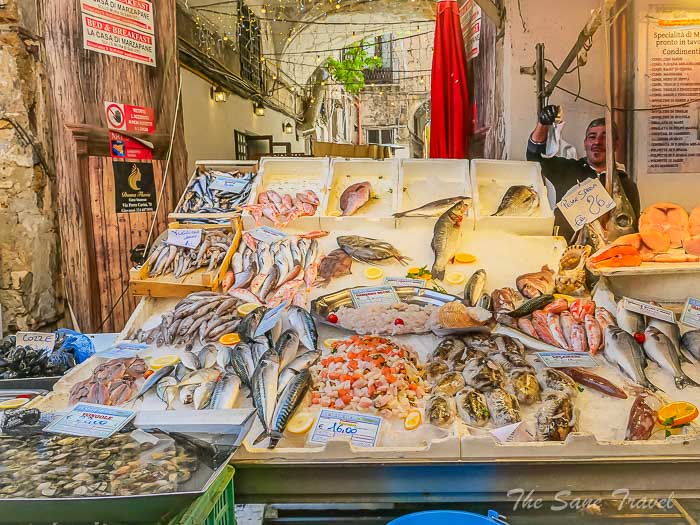
This enclosed map could be useful for the initial stage of your tour.
For a more relaxed experience, head to the waterfront in the afternoon or evening.
Seaside serenity: strolls and spectacles
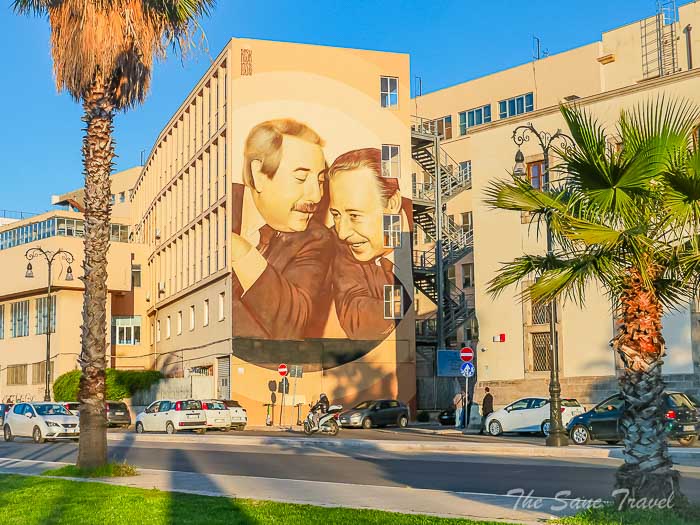
Escape the city’s hustle and bustle at the Foro Italico promenade, a picturesque waterfront park with stunning views of the Tyrrhenian Sea. With its swaying palm trees and inviting green lawns, it is the perfect spot for a leisurely walk, a bike ride, or simply relaxing by the water’s edge. Keep an eye out for architectural gems such as the Mura delle Cattive and the neoclassical Palchetto della Musica, where musicians once entertained the nobility and bourgeoisie during their summer strolls.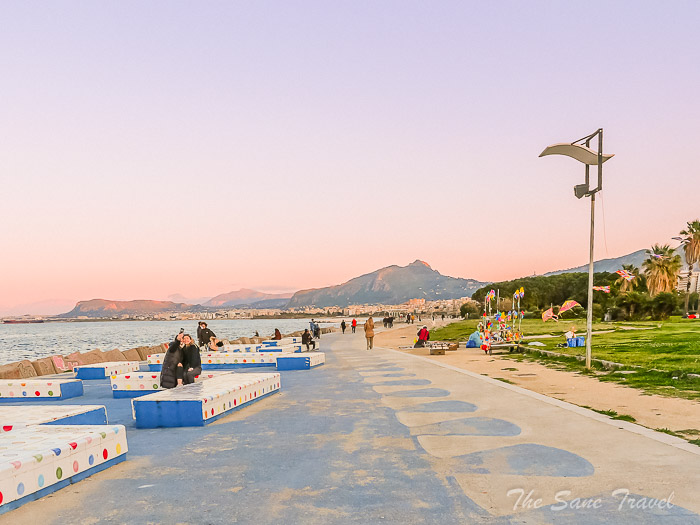
Finally, experience the transformation of Palermo’s waterfront at Palermo Marina Yachting.
Waterfront at Palermo Marina Yachting
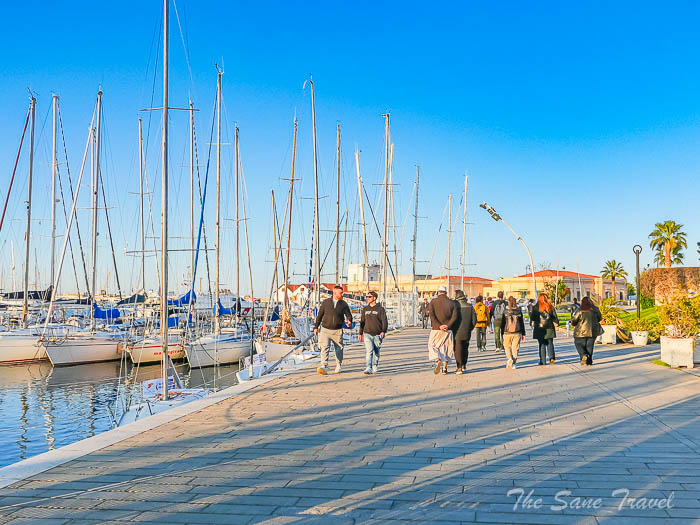
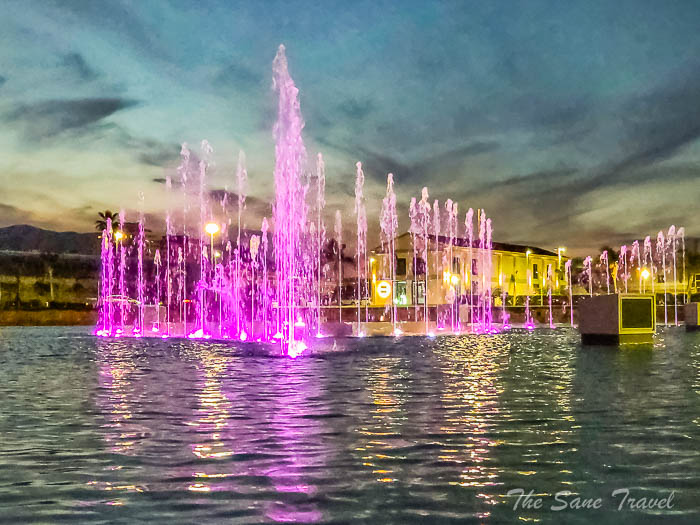
Situated near the Castle by the Sea, a remnant of a 9th-century Arab-Norman fortress, this renovated trapezoidal pier has been transformed into a visually stunning space. Now a pedestrian- and cyclist-friendly area, it highlights Palermo’s connection to the sea through a long promenade, an artificial lake with a picturesque fountain, a marina, an auditorium, a panoramic amphitheatre, and a variety of dining options. Do not miss the chance to see Marina, the largest musical dancing fountain in Italy, with its majestic choreographies of water and lights set to international music. A symbol of innovation, creativity, and sustainability, it has turned the Port of Palermo into a truly captivating stage..JPG)
Monreale Cathedral: a Sicilian treasure
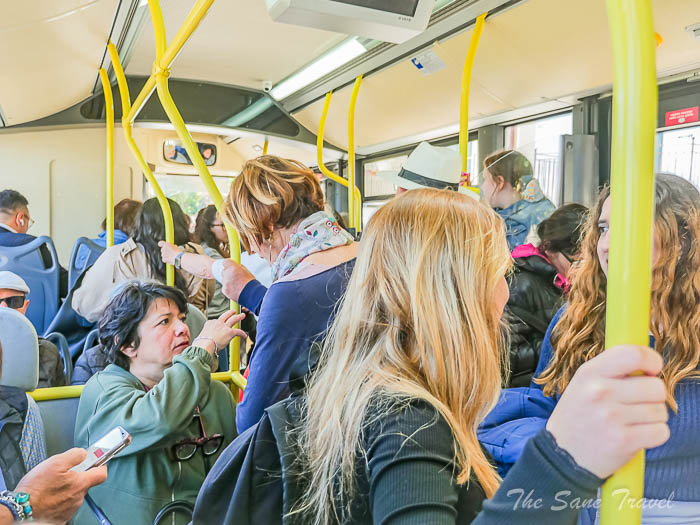
When visiting Palermo, be sure to visit the Cathedral of Monreale, one of the nine treasures that make up the UNESCO-listed Arab-Norman Palermo. Situated around 10 kilometres from the city, this magnificent cathedral is a brilliant testament to the fusion of architectural styles and traditions that define Sicily. The easiest way to get there is by bus number 389. A word to the wise: try to board at the first stop; otherwise, you will probably be standing for the half-hour journey, as the bus is usually packed.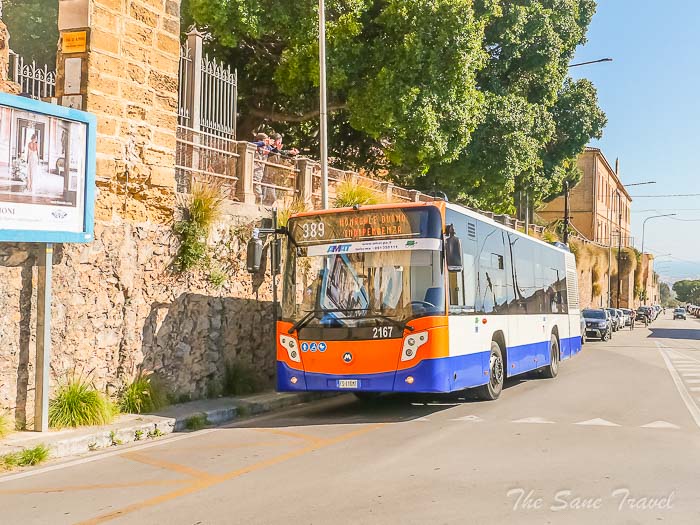
A Masterpiece of Norman Architecture
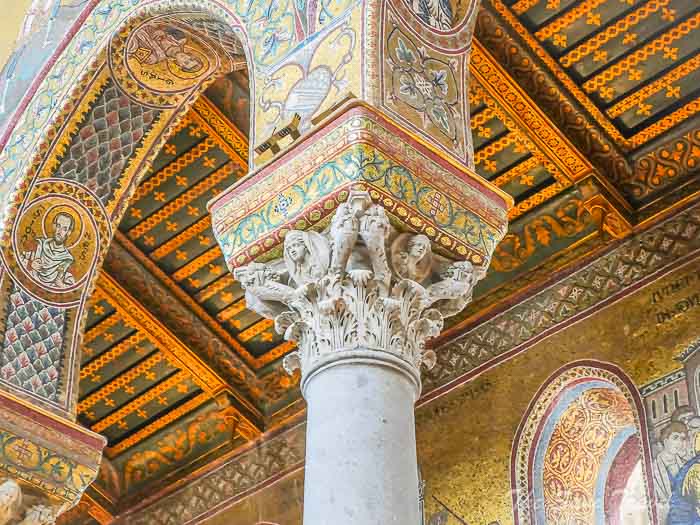
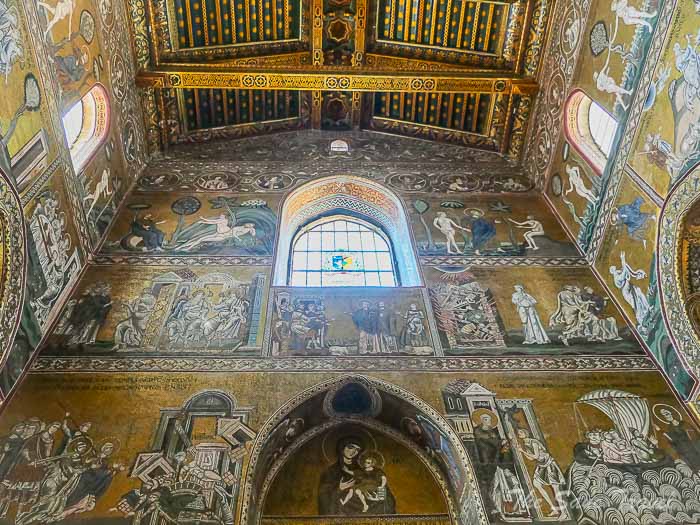
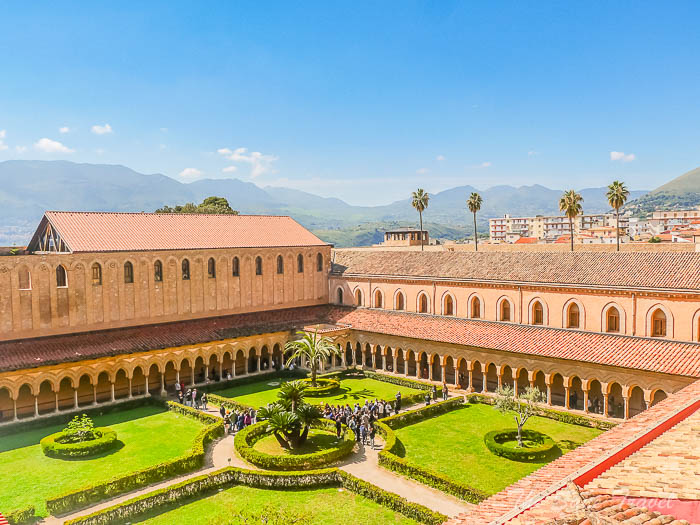
The Cathedral of Monreale stands as one of the finest examples of Norman architecture in Italy. Back in 1172, William II, the last Norman king who was affectionately known as “The Good”, decided to build an abbey complex on a promontory of Monte Caputo for the Benedictine monks. This complex, dedicated to the Mother of God (Santa Maria Nuova), houses the abbey cathedral. Inside, you will discover remarkable Byzantine-Norman, or Sicilian-Norman, art. The main façade features two grand towers in the Doric-Tuscan style. The cathedral is home to numerous works of great artistic and religious significance. Do not miss the largest bronze door of the Middle Ages, a silver altar by Luigi Valadier depicting the life of the Madonna in the Roman style, and a precious 12th-century icon from Constantinople. The interior is adorned with a staggering 6,400 square metres of mosaics, each illustrating various biblical stories.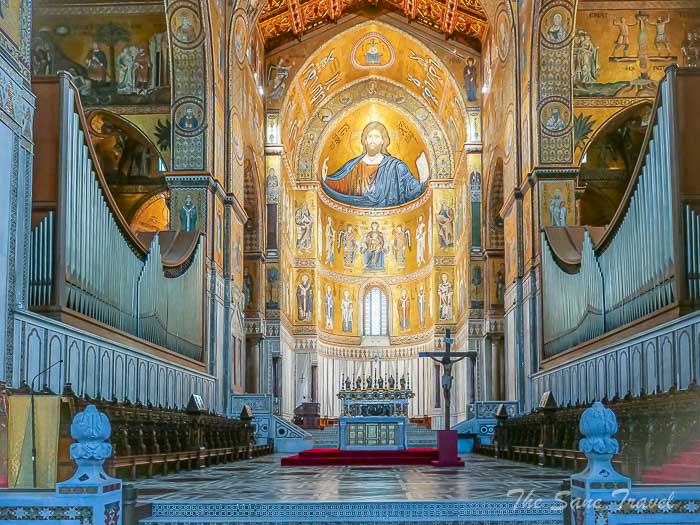
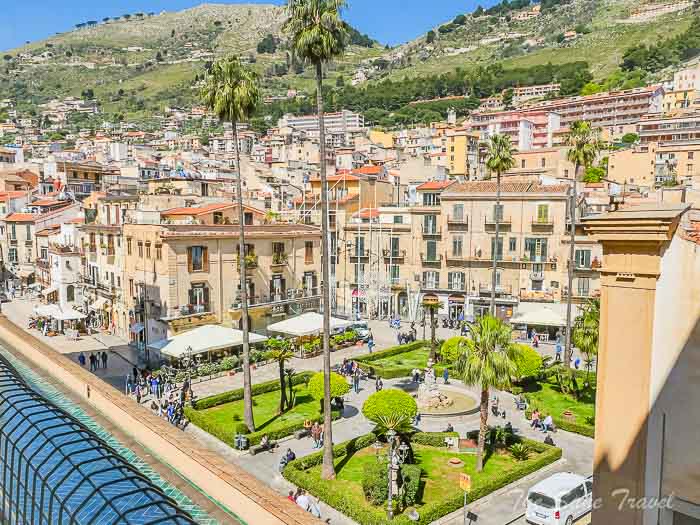
 For those keen to explore further, the Diocesan Museum, accessible from the right transept, displays sacred furnishings and vestments from the cathedral. Finally, be sure to visit the cathedral’s terraces to appreciate the entire abbey complex and its grandeur, which is the crowning jewel of the Norman era.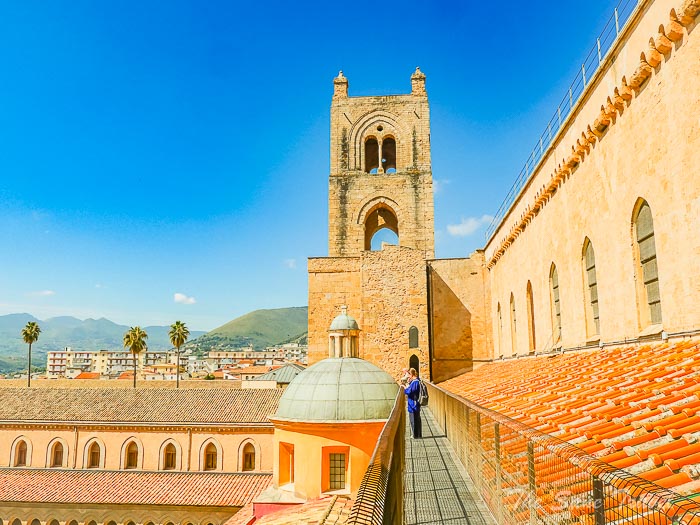
When to visit Palermo
Palermo enjoys a Mediterranean climate with hot, dry summers and mild, wet winters. Average temperatures range from 10°C in January to 30°C in August. The best times to visit are during spring (April to June) and autumn (September to November), when the weather is pleasant, and the city is less crowded. I visited Palermo in April, as spring was in full bloom. The temperatures were rising, and the sun was shining. The average high was around 15°C, dropping to about 11°C in the evenings. It was lovely during the day, but I would recommend packing an extra layer for the cooler nights. While April sees around 18 days of rain, the showers are usually brief and quickly followed by sunshine. In short, Sicily in April is an excellent choice for a warm and sunny spring getaway. Be sure to include Agrigento and Catania on your itinerary while visiting Sicily.
Like it? Pin it!
What did you think? Have you been to Palermo? I would love to hear from you, so please add your comment below.
Author: Anita Sane
About the author
Anita is a part-time traveller, passionate photographer and a retired career woman from Latvia, travelling mostly solo for more than 15 years. She is a skilled travel planner who plans and executes her travels by herself. Anita wants to show you how to travel the world and open your mind to new experiences. Follow her on Facebook, Instagram, Pinterest, Twitter and Bloglovin.
Report
My comments